
Table of Contents
Lithuania may be compact, but its stories stretch from Baltic dunes and primeval bogs to medieval courts, singing revolutions, and world-class laser laboratories. These interesting facts about Lithuania reveal a country whose landscapes, language, traditions, and technology regularly defy simple expectations.
You will meet book smugglers, basketball heroes, ancient oaks, pink soup enthusiasts, and scientists who helped measure the planet. Whether you are planning a trip or exploring from home, these fun facts about Lithuania offer an engaging introduction to Europe’s southernmost Baltic state.
Lithuania Fast Facts
| Official Name | Republic of Lithuania |
| Form of Government | Unitary semi-presidential republic |
| Capital | Vilnius |
| Population | 2,890,664 (2026) |
| Official Language | Lithuanian |
| Money | Euro (€) |
| Area | 25,206 square miles (65,284 square kilometers) |
| Major Mountain Ranges | Lithuania has no major mountain ranges |
| Major Rivers | Nemunas River 582 miles (937 kilometers) |
| Country Code | +370 |
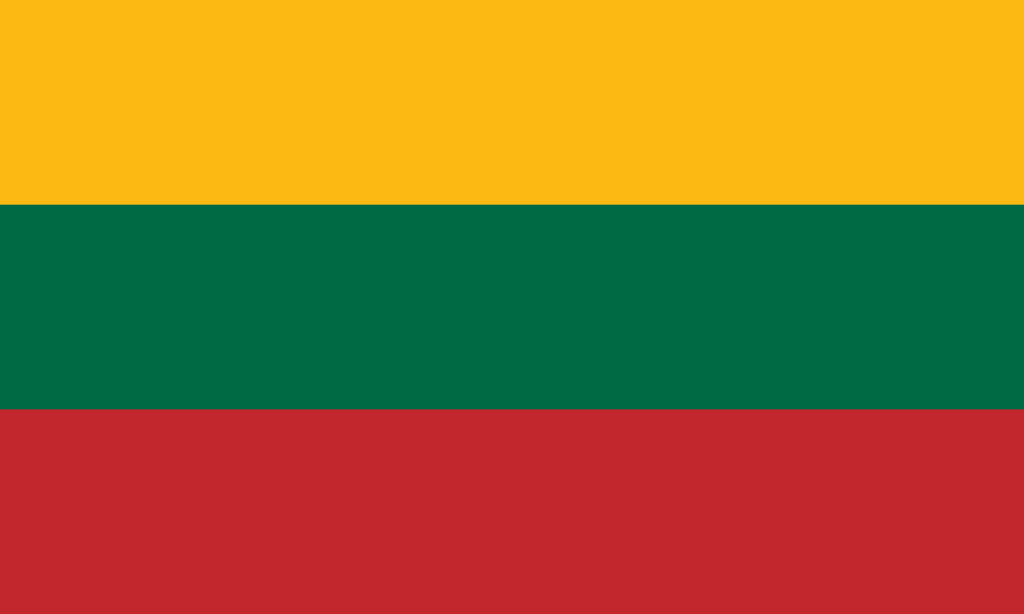
Flag of Lithuania
Lithuania Interesting Facts: Geography
1. A Slender Sand Peninsula Is Shared with Russia – The Curonian Spit runs for about 98 kilometers between the Baltic Sea and the Curonian Lagoon. Lithuania contains its northern 52 kilometers, while the southern portion belongs to Russia’s Kaliningrad region, making this narrow UNESCO-listed landscape both a natural barrier and an international borderland.
2. Moving Dunes Once Buried Entire Settlements – Windblown sand on the Curonian Spit overwhelmed villages during several centuries of deforestation and grazing. Residents eventually planted deep-rooted grasses and forests to restrain the dunes, so the scenery celebrated today is also a human-made rescue project built through generations of careful coastal management.
3. One Calculation Places Europe’s Center Near Vilnius – In 1989, researchers at France’s National Geographic Institute calculated a geographic center of Europe about 26 kilometers north of Vilnius. Other methods produce other answers, but the Lithuanian site near Purnuškės became a marked destination, complete with an open-air art park nearby.
4. Lithuania’s Highest Point Does Not Reach 300 Meters – Aukštojas Hill rises only 293.84 meters above sea level, reflecting a country shaped more by ice sheets than mountain building. A precise survey in 2004 established that Aukštojas narrowly exceeds nearby Juozapinė Hill, which earlier maps had identified as the national high point.
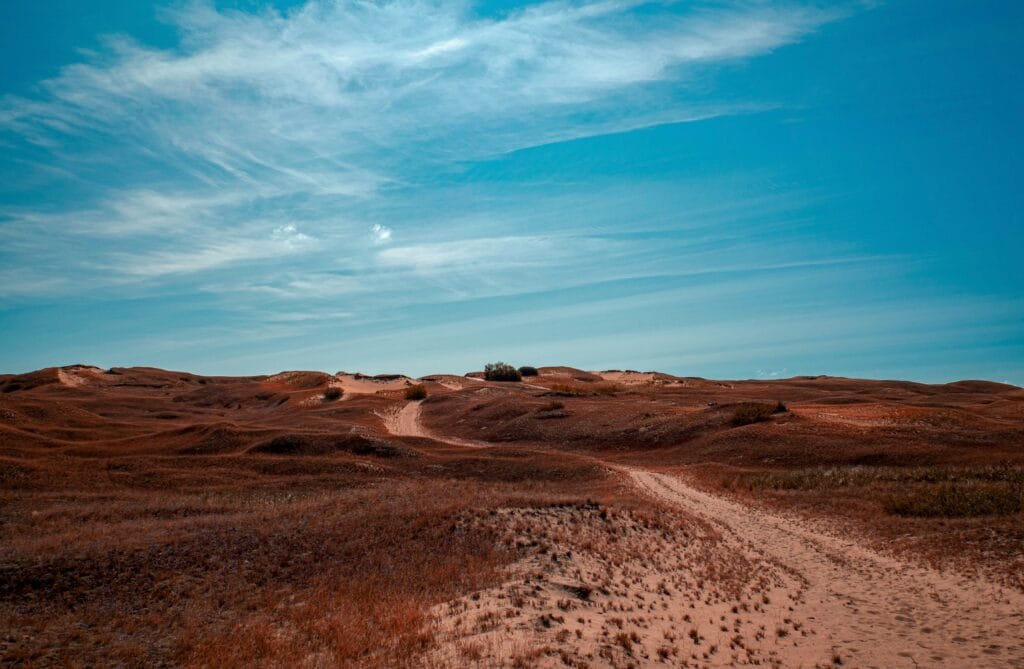
Curonian Spit National Park, Lithuania
5. Northern Lithuania Keeps Opening New Sinkholes – Beneath Biržai Regional Park, water dissolves layers of gypsum, dolomite, and other soluble rock. The resulting karst landscape contains thousands of sinkholes, and fresh collapses still appear; at Kirkilai, roughly 30 water-filled depressions have joined to form a strangely scalloped lake.
6. Lake Tauragnas Descends More Than 60 Meters – Tauragnas is Lithuania’s deepest lake, reaching about 62.5 meters below its surface. It lies within Aukštaitija National Park, where glaciers left a dense patchwork of ridges, channels, and connected waters that now makes northeastern Lithuania the country’s best-known lake district.
7. The Nemunas River Draws Three Giant Loops – Near Birštonas and Prienai, Lithuania’s longest river bends through an extraordinary sequence of broad meanders. The protected Nemunas Loops landscape includes steep slopes, forests, exposed geological layers, and river islands that continue changing as currents deposit sediment and erode the banks.
8. The Country’s Longest Lake Is Narrow and Winding – Lake Asveja stretches through the glacial landscape of eastern Lithuania in a long, branching ribbon. Some sections approach 50 meters in depth, and wooded shores hide coves and islands, giving the lake a much more intricate outline than a simple oval basin.
9. A Medieval Castle Occupies an Island in a Lake – Trakai Island Castle stands in Lake Galvė, surrounded by water and a landscape crowded with other lakes and wooded islands. Footbridges now connect its red-brick towers to shore, but its original setting gave Lithuania’s medieval rulers both a defensive stronghold and a striking residence.
10. Three Lithuanian Markers Helped Measure Earth – Lithuania preserves three points of the Struve Geodetic Arc, a chain of 19th-century survey stations stretching more than 2,800 kilometers from Norway to the Black Sea. Triangulation along the arc produced the first accurate measurement of a long meridian segment and improved knowledge of Earth’s size and shape.
Fun Facts about Lithuania: Plants and Wildlife
11. A Hollow Oak May Be More Than 1,000 Years Old – The Stelmužė Oak is commonly estimated at between 1,000 and 1,500 years old, making it one of Europe’s oldest living oaks. Its hollow trunk prevents scientists from counting a complete set of growth rings, so its impressive age remains an informed estimate rather than an exact birthday.
12. European Bison Returned After Centuries of Absence – Lithuania began rebuilding a European bison population in 1969, when animals were brought to an enclosure near Pašiliai. The first group was released into the wild in 1973, restoring Europe’s heaviest land mammal to Lithuanian forests after the native population had disappeared long before.
13. White Storks Have an Exceptional Lithuanian Stronghold – A conservation survey estimated roughly 12,500 to 13,000 breeding pairs of white storks in Lithuania, around seven percent of the European population. The large birds commonly nest on poles, roofs, and platforms, and their annual return is so familiar that the species serves as a national bird.
14. An Ornithological Station Has Ringed Birds Since 1929 – Ventė Cape projects into the Curonian Lagoon along a major migration corridor. Its bird-ringing station, among the oldest in Europe, uses enormous funnel traps and smaller nets to record tens of thousands of migrating birds in many years before releasing them to continue their journeys.
15. Lithuania’s First Nature Reserve Is a Haven for Rare Birds – Protection at Žuvintas began in 1937, establishing the country’s first nature reserve. The wider UNESCO biosphere reserve now safeguards shallow lakes, reed beds, bogs, and forests used by species including the aquatic warbler and ferruginous duck, as well as otters and beavers.
16. Conservationists Give Turtle Eggs a Safer Start – European pond turtles sometimes lay eggs beside roads or cultivated fields where nests are unlikely to survive. Specialists move endangered clutches to the Lithuanian Zoo, where hatchlings receive care and may overwinter before being returned to protected wetlands in southern Lithuania.
17. Čepkeliai Is Lithuania’s Largest Raised Bog – Čepkeliai Strict Nature Reserve protects the country’s largest raised bog, surrounded by continental dunes, pine forests, and lakes left from the Ice Age. Its mosaic of wet and dry habitats supports hundreds of plant species and makes the reserve one of Lithuania’s most important wilderness areas.
18. A Rare Carnivorous Plant Grows in Kamanos Bog – The spoon-leaved sundew survives in Kamanos Strict Nature Reserve, one of the few Lithuanian places where this insect-eating plant occurs. Its sticky leaves trap tiny prey, supplying nutrients that are scarce in acidic bog soils and demonstrating how plants can adapt to remarkably lean conditions.
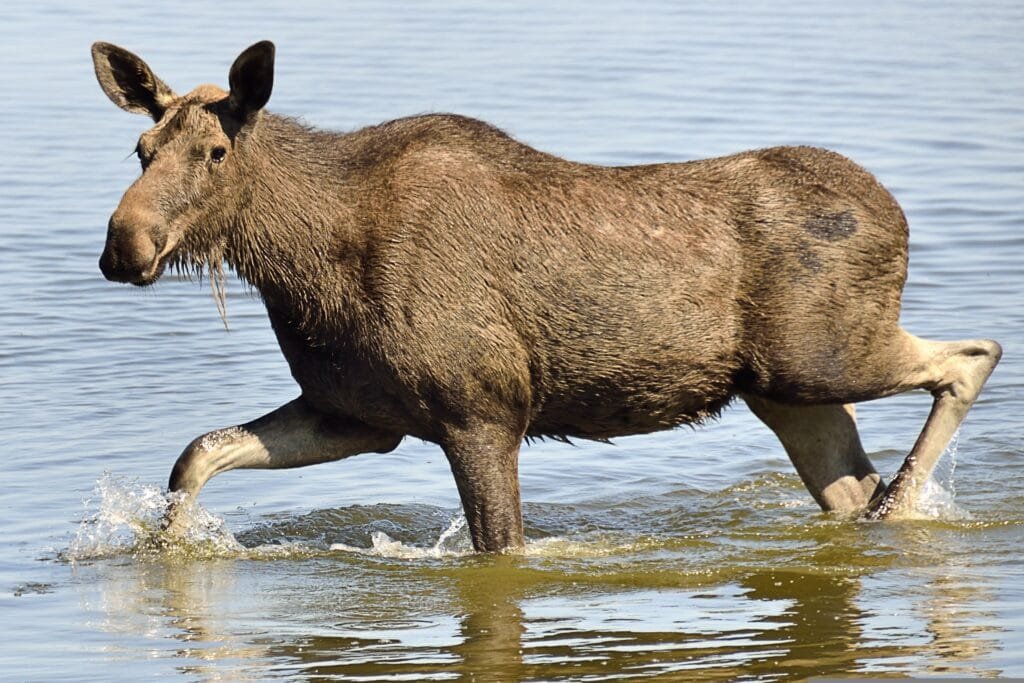
19. Forests Cover About One-Third of the Country – Woodland accounts for roughly 34 percent of Lithuania’s territory. Scots pine, Norway spruce, and silver birch dominate much of that cover, creating habitats that range from dry, sandy pinewoods to damp mixed forests where elk, wolves, lynx, and many woodland birds can live.
20. Baltic Amber Can Preserve Tiny Eocene Time Capsules – Amber washing onto Lithuania’s coast began as sticky tree resin tens of millions of years ago. Some pieces trapped insects, spiders, plant fragments, or hairs before hardening, preserving minute details of an ancient forest ecosystem inside the golden material long associated with Baltic jewelry and trade.
Cool Facts about Lithuania: Culture
21. Lithuanian Fascinates Historical Linguists – Lithuanian is a living Baltic language with unusually conservative grammar and sounds for an Indo-European tongue. It has changed like every language, yet it preserves features that disappeared elsewhere, making it especially useful when scholars compare modern speech with ancient languages such as Sanskrit, Greek, and Latin.
22. Traditional Songs Turn Separate Melodies into One Pattern – Sutartinės are multipart songs from northeastern Lithuania, traditionally performed by women whose voices interweave distinct melodies and rhythms. Their name comes from sutarti, meaning to agree or be in concord, an apt description of music built from precise cooperation rather than everyone singing the same line.
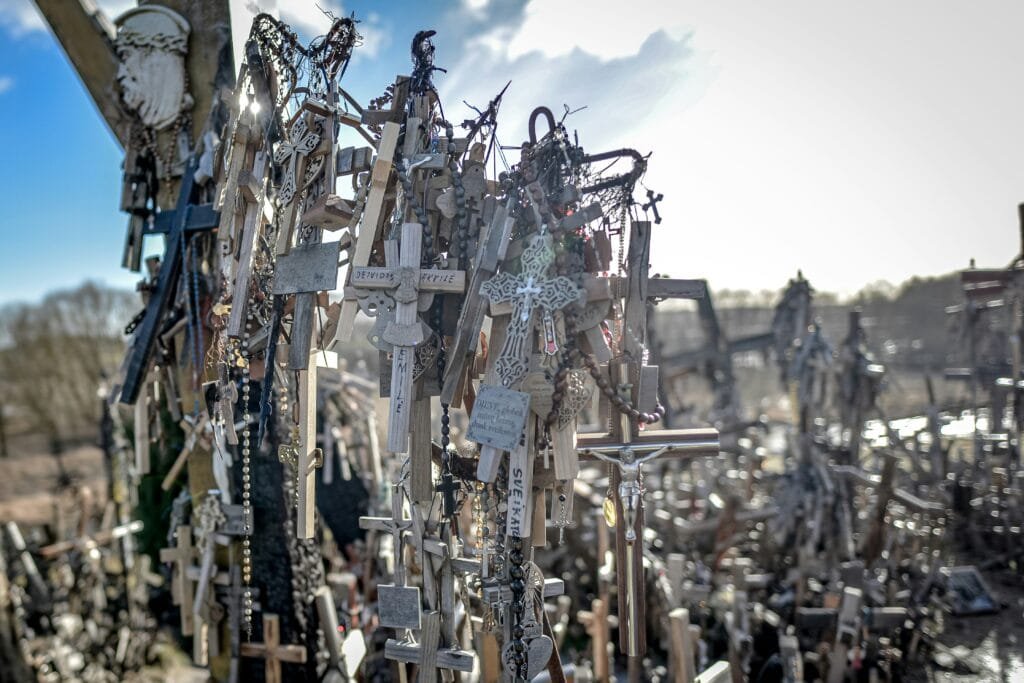
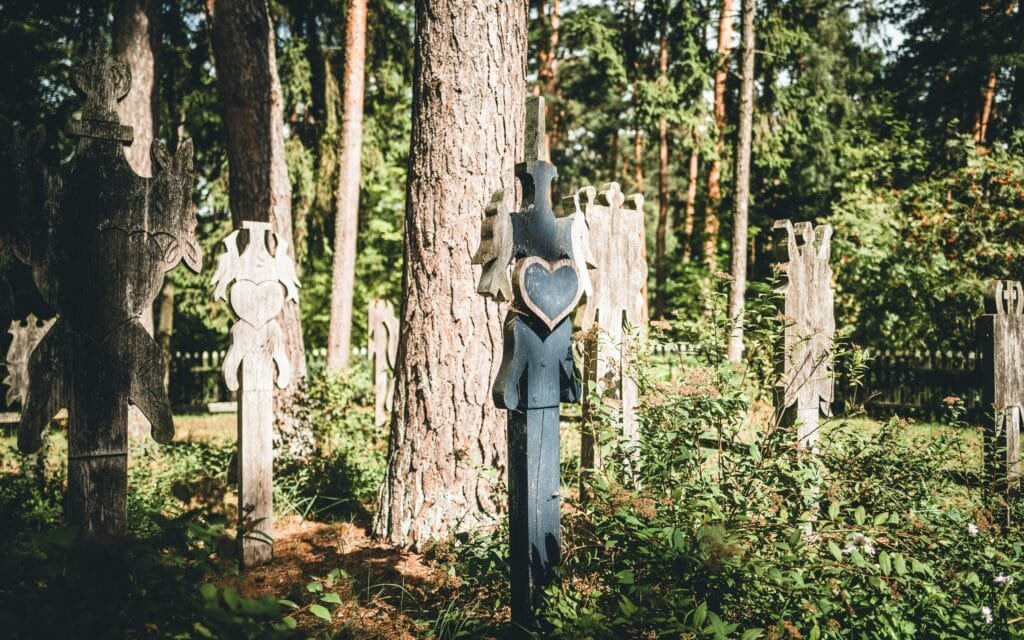
23. Cross-Making Is a Living Art, Not Just Woodwork – Lithuanian cross-crafting joins carving, metalwork, religious ritual, and community memory. Crosses may mark roadsides, farmsteads, cemeteries, or significant events, while their ornament blends Christian imagery with sunbursts and plant motifs; UNESCO recognizes both the craft and its symbolism as intangible cultural heritage.
24. A Mass Song Festival Has Filled Stadiums for a Century – Lithuania held its first national Song Celebration in 1924. Usually staged every four years, the event gathers huge choirs, dancers, musicians, and folk ensembles; its 2024 centenary program brought together around 37,000 performers for a week of communal art on an extraordinary scale.
25. Lithuanian Basketball Won Three Straight Olympic Bronzes – After independence was restored, Lithuania’s men reached the Olympic podium at Barcelona 1992, Atlanta 1996, and Sydney 2000. That run of three bronze medals helped make basketball a powerful symbol of national confidence, while packed arenas and youth clubs keep the sport embedded in everyday culture.
26. Vilnius Throws a Festival for Bright Pink Soup – Šaltibarščiai combines beetroot, kefir, cucumber, dill, and boiled egg into a cold soup usually served with hot potatoes. Vilnius now celebrates the vividly colored dish with an annual Pink Soup Fest featuring costumes, tastings, art, and citywide activities that turn a familiar summer meal into public spectacle.
27. Potato Dumplings Are Named After Airships – Cepelinai are large grated-potato dumplings filled with meat, curd cheese, or mushrooms and commonly served with sour cream and bacon. Their tapered oval shape resembles a Zeppelin, explaining the name; the hearty dish is a restaurant staple, although homemade versions often inspire the fiercest family loyalties.
28. Christmas Eve Dinner Traditionally Counts to Twelve – A Lithuanian Kūčios table commonly holds 12 meatless dishes, a number linked either to the apostles or the months of the year. Fish, mushrooms, rye bread, beans, cranberry drink, poppy-seed milk, and tiny kūčiukai pastries may appear, with the meal beginning when the first star is visible.
29. Midsummer Revelers Search for an Impossible Flower – During Joninės, the night of June 23–24, people light bonfires, weave flower crowns, sing, and hunt for a mythical fern blossom said to bring good fortune. Real ferns reproduce without flowers, but that botanical obstacle has never spoiled one of Lithuania’s most atmospheric seasonal traditions.
30. Masked Characters Stage Winter’s Defeat – Užgavėnės, Lithuania’s Shrove Tuesday festival, sends people into the streets wearing carved masks of devils, witches, goats, and other characters. Pancakes fuel a noisy mock battle between personifications of winter and spring, and burning the effigy called Morė symbolically clears the way for warmer days.
Interesting Facts About Lithuania: Government & Economy
31. Citizens Can Force Parliament to Consider a Draft Law – Lithuania’s single chamber parliament, the Seimas, has 141 members. The Constitution also gives ordinary voters a direct route into national lawmaking: if 50,000 citizens with electoral rights submit a draft law, the Seimas is required to place it under consideration.
32. The President Is Chosen by a Nationwide Vote – Lithuanian citizens directly elect their president by secret ballot for a five-year term. No person may hold the office for more than two consecutive terms, while executive authority is shared with a government led by the prime minister and accountable to parliament.
33. Lithuania Joined NATO and the European Union Weeks Apart – Lithuania formally entered NATO on March 29, 2004, as part of the alliance’s largest enlargement round. It joined the European Union on May 1, only 33 days later, anchoring the restored republic within two major Euro-Atlantic institutions in a single transformative spring.
34. The Euro Replaced the Litas in 2015 – Lithuania adopted the euro on January 1, 2015, becoming the currency union’s 19th member. The switch completed a Baltic sequence after Estonia and Latvia, while the former litas survives in collections and memories as the currency used during much of Lithuania’s first and restored periods of independence.
35. The Power Grid Changed Its Continental Rhythm in 2025 – On February 9, 2025, Lithuania, Latvia, and Estonia synchronized their electricity systems with continental Europe through Poland. The coordinated switch ended the Baltic grids’ long-standing reliance on a system controlled by Russia and Belarus, marking a major infrastructure and energy-security milestone.
36. Lithuania Became Part of the Schengen Area in 2007 – Internal land-border checks with Latvia and Poland were lifted when Lithuania joined the Schengen Area on December 21, 2007. The change made most travel across participating European borders passport-free, while Lithuania’s boundaries with Belarus and Russia remained external Schengen frontiers.
37. Lithuanian Lasers Reach Laboratories Around the World – A specialized photonics cluster designs and manufactures scientific lasers, optical components, and systems in Lithuania. Its companies hold more than half of the global market for ultrashort-pulse scientific lasers, an outsized share built through decades of cooperation between university researchers, engineers, and export-focused manufacturers.
38. A Floating Terminal Called Independence Diversified Gas Supplies – The floating storage and regasification unit Independence arrived in Klaipėda in 2014. Moored to a purpose-built jetty, the vessel can store liquefied natural gas and convert it back into gas, giving Lithuania and its neighbors another supply route beyond eastern pipelines.
39. Klaipėda Is the Eastern Baltic’s Northernmost Ice-Free Port – Lithuania’s main seaport operates around the clock where sea, rail, and road routes converge. Its ice-free access keeps traffic moving through winter, while shipbuilding, repair, cargo handling, ferries, and cruise calls make the port a central gateway for the national economy.
40. Lithuania’s Central Bank Issued a Blockchain Collector Coin – In 2020, the Bank of Lithuania launched LBCOIN, described as the world’s first blockchain-based digital collector coin. Each issue combined six digital tokens with the option to redeem a physical silver coin, and its design honored the 20 signatories of Lithuania’s 1918 Act of Independence.
Lithuania History Facts
41. Lithuania’s Name First Appeared in Writing in 1009 – The Annals of Quedlinburg recorded a Latin form of Lithuania’s name while describing the death of missionary Bruno of Querfurt near the region’s frontier. The brief entry is not a founding document, but it provides the earliest surviving written reference to the country’s name.
42. Mindaugas Became Lithuania’s Only Crowned King – Mindaugas consolidated power, accepted baptism, and was crowned King of Lithuania on July 6, 1253, with papal approval. His assassination a decade later ended the kingdom, and later rulers used the title grand duke, making Mindaugas the country’s first and only generally recognized crowned monarch.
43. The Grand Duchy Stretched from the Baltic Toward the Black Sea – Under rulers including Gediminas, Algirdas, and Vytautas, medieval Lithuania expanded far beyond its modern borders. At its 15th-century height, the multiethnic Grand Duchy governed large parts of today’s Belarus and Ukraine and ranked among Europe’s largest states by territory.
44. Lithuania Was Europe’s Last Pagan State to Convert Officially – Grand Duke Jogaila’s baptism and Lithuania’s Christianization in 1387 brought the core Lithuanian lands into Catholic Europe later than any other European state. Older Baltic beliefs did not vanish overnight, however, and traces survived in seasonal customs, folklore, symbols, and rural ritual.
45. A 1410 Battle Broke the Teutonic Order’s Power – At the Battle of Grunwald, known in Lithuania as Žalgiris, allied Polish-Lithuanian forces defeated the Teutonic Knights. Grand Duke Vytautas led Lithuanian and Ruthenian contingents in one of medieval Europe’s largest battles, a victory still echoed in the name of Lithuania’s famous Žalgiris sports clubs.
46. The Union of Lublin Created a Two-Nation Commonwealth – In 1569, the Grand Duchy of Lithuania and the Kingdom of Poland formed the Polish-Lithuanian Commonwealth. They shared an elected monarch and parliament while retaining separate laws, treasuries, armies, and administrations, producing an unusual federated political system that lasted until the late-18th-century partitions.
47. Book Smugglers Defended the Lithuanian Alphabet – During the Russian Empire’s 1864–1904 ban on Lithuanian publications in Latin letters, knygnešiai secretly carried books printed abroad across the border and distributed them through hidden networks. The dangerous trade supported literacy and national identity, turning the Lithuanian word for “book carrier” into a title of honor.
48. A Temporary Capital Built a Modern City at Remarkable Speed – After independence was declared in 1918 and Vilnius became inaccessible to the Lithuanian government, Kaunas served as provisional capital from 1919 to 1939. Rapid construction transformed it with offices, apartments, schools, banks, and cultural venues whose distinctive modernist architecture is now UNESCO-listed.
49. Successive Occupations Devastated Lithuania During World War II – The Soviet Union occupied Lithuania in 1940, Nazi Germany invaded in 1941, and Soviet rule returned in 1944. German occupiers and local collaborators murdered about 90 percent of Lithuania’s Jews, destroying communities that had shaped towns, scholarship, commerce, and culture for centuries.
50. A Human Chain Helped Carry Lithuania Back to Independence – On August 23, 1989, about two million people joined hands across Lithuania, Latvia, and Estonia in the 600-kilometer Baltic Way. Lithuania restored independence on March 11, 1990; civilians then defended key institutions during the Soviet assault of January 1991, when 14 people were killed.