

Table of Contents
Timor-Leste is a small Southeast Asian nation shaped by rugged mountains, tropical coastlines, coral reefs, and a long struggle for independence. Occupying the eastern half of the island of Timor, along with the Oecusse exclave and the islands of Atauro and Jaco, the country combines dramatic landscapes with a distinctive blend of Indigenous, Portuguese, and Southeast Asian influences.
In this article, we’ll explore 50 fun facts about Timor-Leste covering its geography, plants and wildlife, culture, government and economy, and history. Along the way, you’ll discover unusual islands, rare marine environments, traditional customs, important independence figures, surprising languages, and remarkable details about one of the world’s youngest nations.
Timor-Leste Fast Facts
| Official Name | Democratic Republic of Timor-Leste |
| Form of Government | Unitary Semi-Presidential Representative Democratic Republic |
| Capital | Dili |
| Population | 1.44 Million (est. 2026) |
| Official Language | Tetum Portuguese |
| Money | United States Dollar ($) |
| Area | 14,874 square kilometers (5,743 square miles) |
| Major Mountain Ranges | The Ramelau |
| Major Rivers | Lois (Mota Lois): 123 KM (76 miles) North Laclo (Mota Lakló): 110 KM (68 miles) |
| Country Code | +670 |
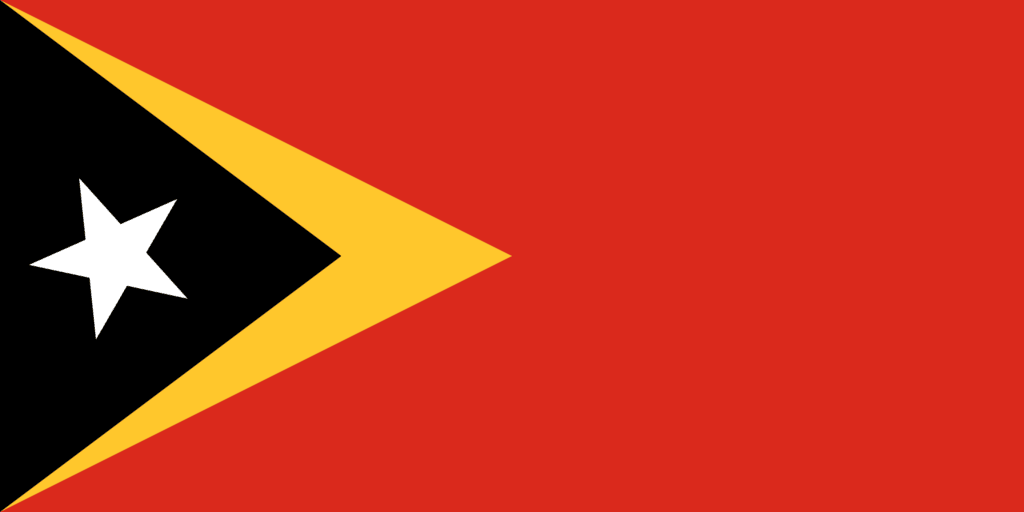
Timor-Leste Flag
Timor-Leste Interesting Facts: Geography
1.Timor-Leste Includes an Enclave and Two Offshore Islands – Timor-Leste occupies the eastern portion of Timor, but its territory is not completely connected. The country also includes Oecusse on the island’s northwestern side, Atauro Island north of Dili, and tiny Jaco Island off the eastern tip of Timor.
2. The Country Stretches About 265 Kilometers From East to West – Timor-Leste is a long, narrow country measuring approximately 265 kilometers (165 miles) from one end to the other. At its widest point, the main territory reaches only about 97 kilometers (60 miles) across.
3. Oecusse Is Cut Off From the Rest of the Country by Indonesia – The Timorese territory of Oecusse lies on the northwestern coast of Timor and is surrounded on three sides by Indonesian territory. Reaching the exclave overland from the rest of Timor-Leste requires crossing an international border and traveling through Indonesian West Timor.
4. Almost Half of Timor-Leste Has Extremely Steep Slopes – Mountains dominate much of Timor-Leste, with roughly 44% of the country consisting of slopes steeper than 40%. Deep valleys cut through the mountainous interior, creating dramatic scenery while making road construction, farming, and travel between communities unusually challenging.
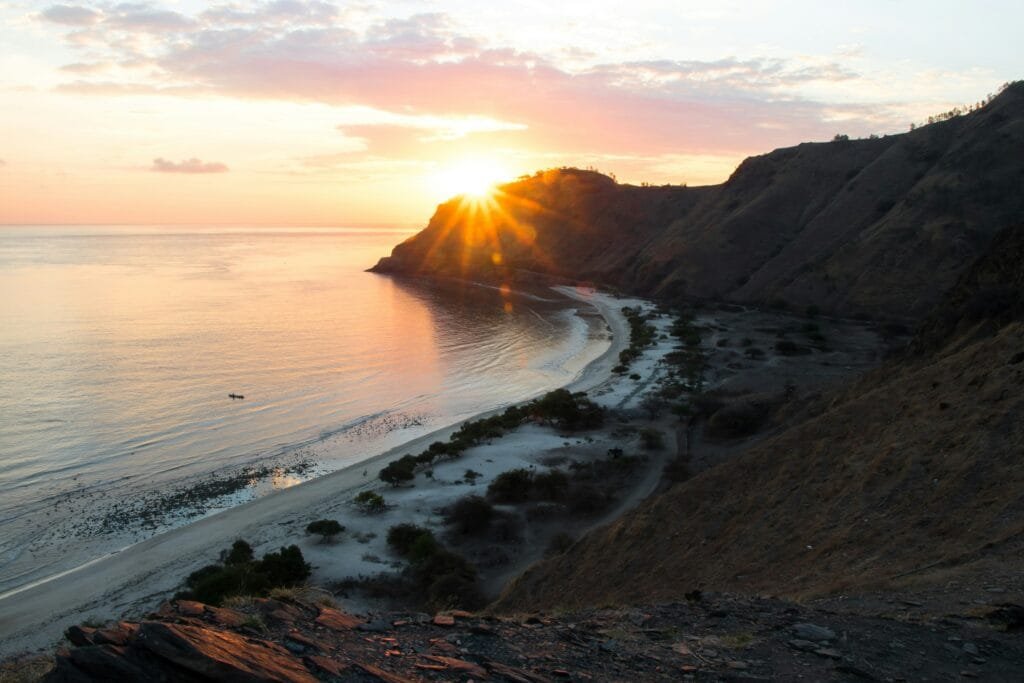
Cristo Rei, Dili, Timor-Leste
5. Mount Tatamailau Rises Nearly 3,000 Meters Above Sea Level – Mount Tatamailau, also known as Mount Ramelau, is the highest mountain in Timor-Leste at approximately 2,963 meters (9,721 feet). The peak rises from the mountainous interior southwest of Dili and towers above a country where numerous summits exceed 2,000 meters.
6. The Northern and Southern Coasts Have Surprisingly Different Landscapes – Along much of Timor-Leste’s north coast, steep mountains descend almost directly toward the sea, leaving only narrow strips of level ground. On the southern side, the mountains retreat farther inland, creating broader coastal plains and larger areas of relatively flat terrain.
7. More Than 100 Rivers Cross Timor-Leste, but Few Flow All Year – Timor-Leste has more than 100 rivers and streams, yet its steep terrain and strongly seasonal rainfall produce short waterways that can change dramatically between seasons. The longest rivers are only about 80 kilometers long, and just a small number maintain consistent year-round flows.
8. Timor-Leste’s Largest Lake Can Change Dramatically in Size – Lake Ira Lalaro sits in a large limestone basin on the Lospalos Plateau in the country’s far east. Depending on seasonal conditions, its surface area can range from roughly 10 to 55 square kilometers, making the landscape around the lake look very different between wet and dry periods.
9. Atauro Island Rises Nearly 1,000 Meters From the Sea – Atauro lies approximately 25 kilometers (16 miles) north of Dili, across the Wetar Strait. Despite its small size, the island is remarkably steep, with Mount Manucoco reaching about 995 meters (3,264 feet) above sea level.
10. Timor-Leste Lies Only About 550 Kilometers North of Australia – Although Timor-Leste is part of Southeast Asia, it sits surprisingly close to northern Australia. The mountainous country lies between the Banda Sea to the north and the Timor Sea to the south, placing it near the meeting point of Southeast Asia and the Australian region.
Fun Facts about Timor-Leste: Plants and Wildlife
11. Atauro Island’s Reefs Set a World Record for Fish Diversity – A 2015 biological survey around Atauro Island recorded the highest average number of reef fish species per survey site documented anywhere in the world. The island’s exceptionally rich reefs sit within the Coral Triangle, one of the planet’s great centers of marine biodiversity.
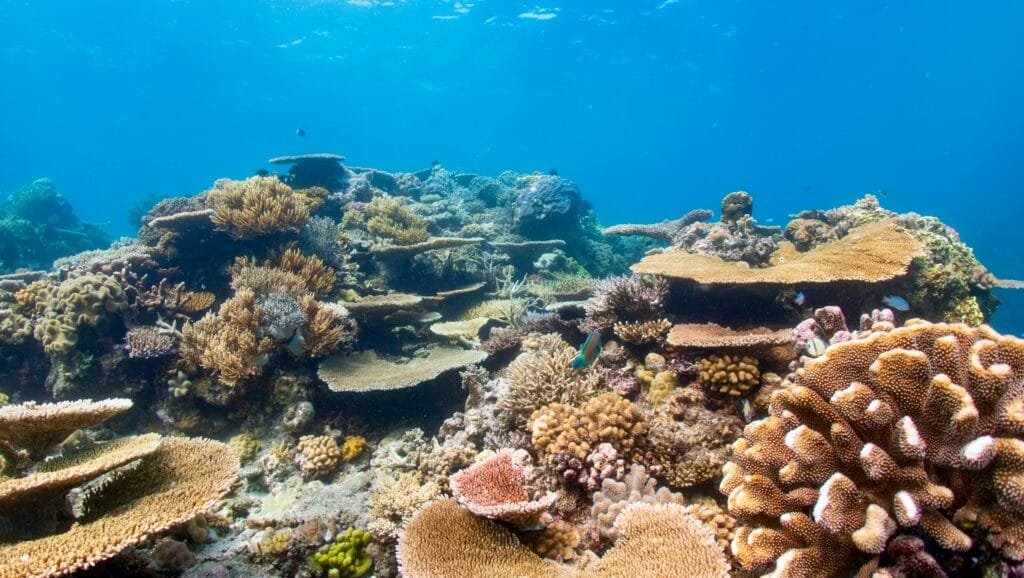
12. More Than 400 Coral Species Grow in Timor-Leste’s Waters – Marine surveys around Timor-Leste have documented more than 400 species of reef-building coral. The reefs surrounding Atauro Island are particularly diverse, with coral richness comparable to some areas of Australia’s much larger Great Barrier Reef.
13. Thousands of Whales and Dolphins Can Pass Through Timor-Leste’s Seas – At least 25 species of whales and dolphins frequent the country’s waters, including pygmy blue whales and sperm whales. During one five-day survey, researchers counted more than 2,280 cetaceans and encountered groups containing as many as 600 animals.
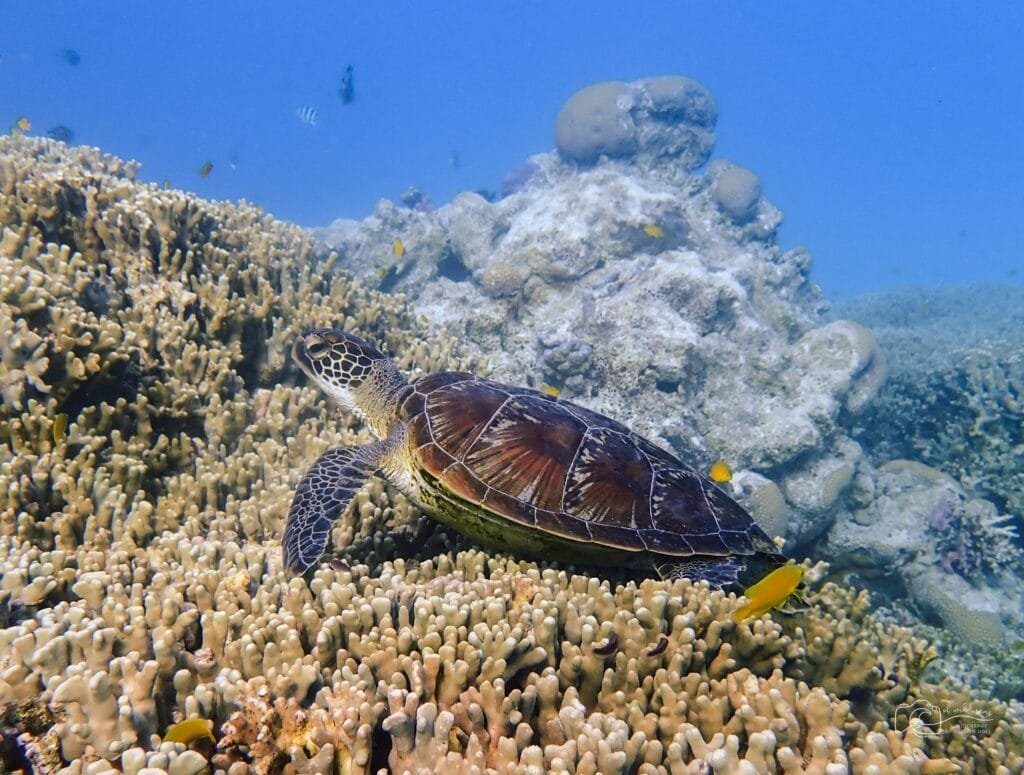
14. Six Species of Sea Turtle Occur in Timor-Leste’s Marine Territory – Timor-Leste’s tropical waters provide habitat for an impressive variety of sea turtles. Species recorded around the country include green, hawksbill, leatherback, loggerhead, and olive ridley turtles, making beaches, coral reefs, and coastal waters important areas for marine conservation.
15. Dugongs Graze in Timor-Leste’s Coastal Seagrass Meadows – Shallow reef flats around Timor-Leste support beds of seagrass that provide feeding habitat for dugongs, the large marine mammals sometimes called “sea cows.” These underwater meadows also help trap sediment before it reaches coral reefs and provide habitat for numerous fish and other marine animals.
16. Thirty-One Restricted-Range Bird Species Live in Timor-Leste – Timor-Leste lies within the Timor and Wetar Endemic Bird Area, a region recognized for birds with unusually limited geographic ranges. Of the 35 restricted-range species identified across the wider region, 31 have been recorded within Timor-Leste.
17. Fewer Than 500 Timor Green Pigeons May Remain – The fruit-eating Timor green pigeon has disappeared from much of its former range on Timor and nearby islands. Research published in 2026 estimated only about 100 to 500 mature birds remain globally, with Timor-Leste possibly supporting the species’ last viable population.
18. The Timor Monitor Is a Tiny Relative of the Komodo Dragon – Timor monitors grow to less than about 70 centimeters (28 inches) long, including their tails, making them dramatically smaller than their giant Komodo dragon relatives. These agile lizards spend much of their time in trees and hunt smaller lizards and large invertebrates.
19. About One in Ten Plant Species Is Estimated to Be Endemic – Botanical research has recorded more than 1,000 plant species in Timor-Leste, with species-level plant endemism estimated at about 10.3%. The country’s vegetation ranges from dry deciduous woodland and savanna to moist mountain forests and coastal mangroves.
20. A Native Eucalyptus Grows Almost to Timor’s Highest Summit – Eucalyptus urophylla naturally grows across Timor and several neighboring Lesser Sunda islands, but on Timor it has been recorded at elevations approaching 2,960 meters (9,711 feet). At high elevations it forms sparse woodland adapted to the island’s steep terrain and strongly seasonal climate.
Cool Facts about Timor-Leste: Culture
21. Four Languages Have Official or Working Status – Tetum and Portuguese are Timor-Leste’s two official languages, while English and Indonesian are recognized as working languages. Numerous Indigenous languages are also spoken across the country, giving this small nation an unusually rich linguistic landscape.
22. Traditional Tais Weaving Is Recognized by UNESCO – Tais are colorful handwoven textiles used for clothing, ceremonies, decoration, and important gifts throughout Timor-Leste. In 2021, UNESCO placed the tradition on its List of Intangible Cultural Heritage in Need of Urgent Safeguarding as the number of skilled weavers and traditional materials declined.
23. A Piece of Cloth Can Reveal Where Someone Comes From – Tais patterns, colors, and designs vary between communities and can express ancestry, identity, status, and regional pride. Traditionally woven by women on simple looms, the textiles may be presented at weddings, used to welcome newborns, or exchanged to strengthen relationships between families.
24. Sacred Houses Are More Than Just Traditional Buildings – Known as uma lulik, Timor-Leste’s sacred houses serve as centers of ancestral memory, spiritual belief, customary law, and community identity. Important ceremonies and decisions can take place around them, while knowledge connected to the houses is passed from elders to younger generations.
25. A Crocodile Is Said to Have Become the Island of Timor – One of Timor-Leste’s best known creation stories tells of a boy who rescued a young crocodile and was later rewarded with journeys across the sea. When the crocodile died, its body supposedly became Timor, which helps explain why crocodiles are traditionally referred to as “Grandfather.”
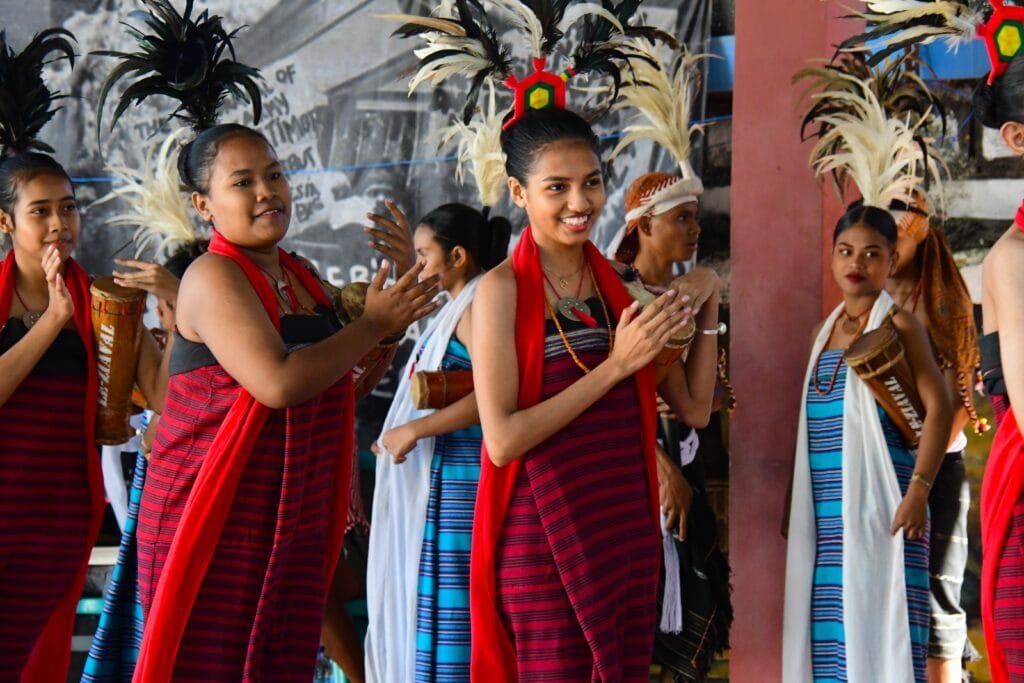
26. Catholicism and Older Spiritual Traditions Often Exist Side by Side – Roughly 97% of Timor-Leste’s population identifies as Catholic, reflecting centuries of Portuguese influence. At the same time, older traditions remain important in many communities, including respect for ancestors, offerings at sacred places, harvest ceremonies, and beliefs connected with lulik, or sacred spiritual power.
27. Some Traditional Dances Can Continue for Hours – Tebe and related group dances bring men and women together for singing and rhythmic movement during ceremonies, celebrations, and community gatherings. Some forms are performed for hours at a time and may be used to welcome visitors or mark an important event in village life.
28. An Ancient Customary Law Can Temporarily Ban Fishing or Harvesting – Tara bandu allows communities to establish restrictions on activities such as fishing, cutting trees, collecting crops, or entering certain places. The tradition combines customary authority, community agreements, and spiritual beliefs and has increasingly been used to protect forests, reefs, mangroves, and other shared resources.
29. Corn, Beans, and Pumpkin Come Together in a Traditional Dish – Batar da’an is a traditional Timorese meal made from corn, beans, and pumpkin, reflecting ingredients widely grown in rural communities. Other local favorites include ikan sabuko, grilled fish flavored with tamarind and basil, and katupa, packets of rice commonly served during celebrations.
30. Timor-Leste Celebrates National Culture Day Every October 14 – The country established October 14 as a national day devoted to celebrating and protecting Timorese cultural traditions. Events can feature traditional dance and music, textiles, painting, poetry, local crafts, and other artistic expressions representing communities from across the country.
Timor-Leste Facts: Government & Economy
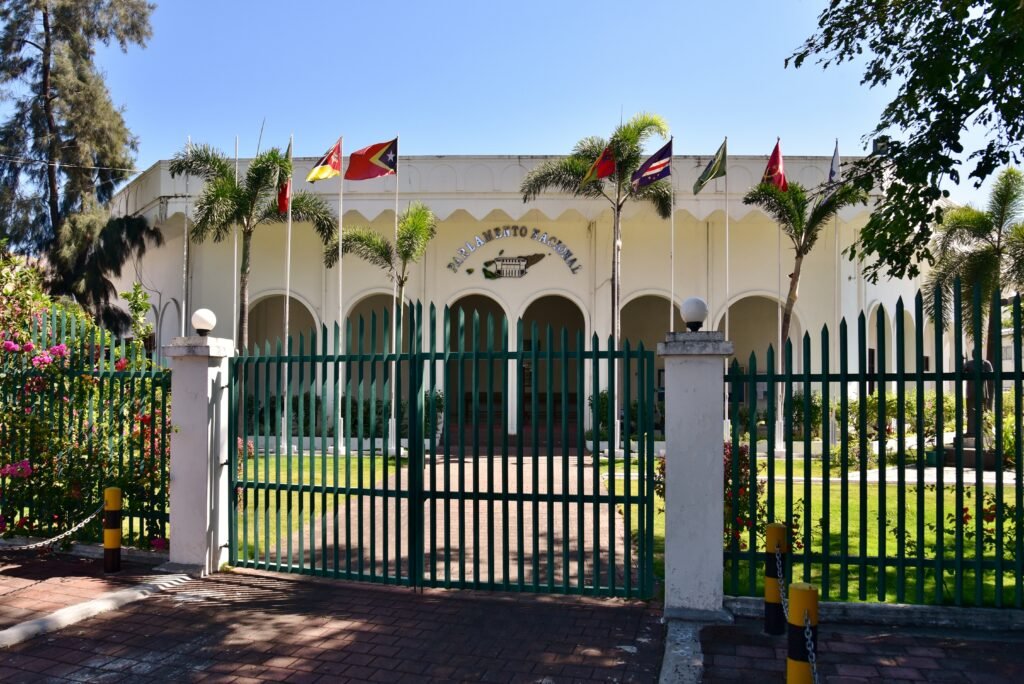
31. Timor-Leste Uses a Semi-Presidential System of Government – Timor-Leste has both a president and a prime minister, with political authority divided between the two offices. The president serves as head of state and is elected for a five-year term, while the prime minister leads the government and oversees its day-to-day policies.
32. One Out of Every Three Parliamentary Candidates Must Be a Woman – Timor-Leste’s election law requires party lists to include at least one woman among every group of three candidates. Women currently hold 23 of the 65 seats in the National Parliament, giving them more than a third of the country’s legislative seats.
33. Timor-Leste Uses U.S. Dollars but Mints Its Own Coins – The United States dollar is Timor-Leste’s official currency, so American banknotes circulate throughout the country. For smaller purchases, however, Timor-Leste issues its own centavo coins, with 100 Timorese centavos having the same value as one U.S. dollar.
34. The Country Has Built an $18 Billion Petroleum Fund – Timor-Leste invested much of the money earned from offshore oil and gas into a sovereign wealth fund designed to benefit future generations. By July 2026, the Petroleum Fund held about $18.4 billion, an extraordinary financial reserve for a country with fewer than 1.5 million people.
35. Offshore Oil Production Ended After More Than Two Decades – Commercial offshore petroleum production began in 2004 and became a major source of government revenue for Timor-Leste. Production from existing fields ended in 2025, leaving the country with the challenge of developing agriculture, tourism, manufacturing, and other industries to reduce its dependence on petroleum wealth.
36. Coffee Supports the Livelihoods of Hundreds of Thousands of People – Coffee is Timor-Leste’s most important non-petroleum export and is grown primarily in the country’s mountainous interior. The crop provides income for an estimated 35% of the population, and many rural families depend heavily on coffee sales for their annual earnings.
37. Government Spending Drives Much of the Country’s Economy – Unlike economies dominated by large private companies, Timor-Leste still relies heavily on public spending to generate economic activity. Revenue accumulated in the Petroleum Fund has financed roads, public services, government salaries, infrastructure, and development programs throughout the young nation.
38. Timor-Leste Became the World Trade Organization’s 166th Member – Timor-Leste officially joined the World Trade Organization on August 30, 2024, after nearly a decade of negotiations and economic reforms. The date was especially symbolic because August 30 also commemorates the 1999 referendum that set the country on the path toward independence.
39. Timor-Leste Became ASEAN’s 11th Member in 2025 – On October 26, 2025, Timor-Leste was formally admitted to the Association of Southeast Asian Nations during an ASEAN summit in Kuala Lumpur. The milestone completed a membership effort lasting more than a decade and tied the young country more closely to Southeast Asia’s regional economy.
40. A Giant Offshore Gas Field Is Shared With Australia – The Greater Sunrise fields contain substantial natural gas resources beneath the Timor Sea and straddle the maritime boundary between Timor-Leste and Australia. Developing the resource has become one of the country’s most important long-term economic questions as its older petroleum fields reach the end of production.
Timor-Leste History Facts
41. People Were Living in Timor-Leste More Than 40,000 Years Ago – Archaeologists have uncovered evidence of human occupation dating back roughly 42,000 to 44,000 years at sites such as Jerimalai and Laili. Ancient remains include stone tools, marine shells, pigments, and evidence that early inhabitants were already exploiting coastal resources.
42. Portuguese Traders and Missionaries Reached Timor in 1515 – When the Portuguese first arrived, Timor was divided among numerous local kingdoms and political communities rather than ruled as a single state. Portuguese influence expanded gradually through trade, Catholic missions, and colonial administration, beginning a relationship that would last for centuries.
43. An 1859 Treaty Helped Divide Timor Between Two European Empires – Portugal and the Netherlands signed a treaty in 1859 that helped establish their competing territories on the island. Portuguese Timor eventually became modern Timor-Leste, while Dutch controlled western Timor later became part of independent Indonesia.
44. Japanese Forces Invaded Timor During World War II – Japan invaded the island in February 1942, turning Portuguese Timor into a battlefield despite Portugal’s neutrality. Timorese civilians supplied food, intelligence, shelter, and guidance to Australian commandos fighting a guerrilla campaign, and tens of thousands of Timorese are believed to have died during the occupation.
45. Portugal’s 1974 Revolution Opened the Door to Timorese Independence – The Carnation Revolution overthrew Portugal’s authoritarian government on April 25, 1974, and accelerated decolonization throughout the Portuguese Empire. Political organizations quickly emerged in Timor, including FRETILIN, UDT, and APODETI, each advocating a different future for the territory.
46. Indonesia Invaded Just Nine Days After Timor-Leste Declared Independence – FRETILIN proclaimed the Democratic Republic of Timor-Leste on November 28, 1975. Indonesian forces invaded Dili on December 7, beginning an occupation and resistance struggle that continued for nearly a quarter of a century.
47. The Santa Cruz Massacre Drew Worldwide Attention to the Independence Struggle – On November 12, 1991, Indonesian troops opened fire on a peaceful procession at Santa Cruz Cemetery in Dili. Foreign journalists witnessed and recorded the violence, helping bring international attention to a conflict that had received relatively little global coverage.
48. Two Timorese Leaders Shared the Nobel Peace Prize in 1996 – Bishop Carlos Filipe Ximenes Belo and independence advocate José Ramos-Horta jointly received the Nobel Peace Prize for their efforts to achieve a peaceful solution to the conflict. The award dramatically increased international attention on Timor-Leste’s struggle for self-determination.
49. Nearly 80% of Voters Chose a Path Toward Independence in 1999 – In a United Nations-organized referendum on August 30, 1999, about 98% of registered voters participated. Of the ballots cast, 78.5% rejected a proposal for special autonomy within Indonesia, setting Timor-Leste on the path toward full independence despite severe violence that followed the result.
50. Timor-Leste Restored Its Independence on May 20, 2002 – After the 1999 referendum, the United Nations administered the territory during its transition to self-government. Timor-Leste became fully independent on May 20, 2002, and joined the United Nations later that year as its 191st member state.