
Table of Contents
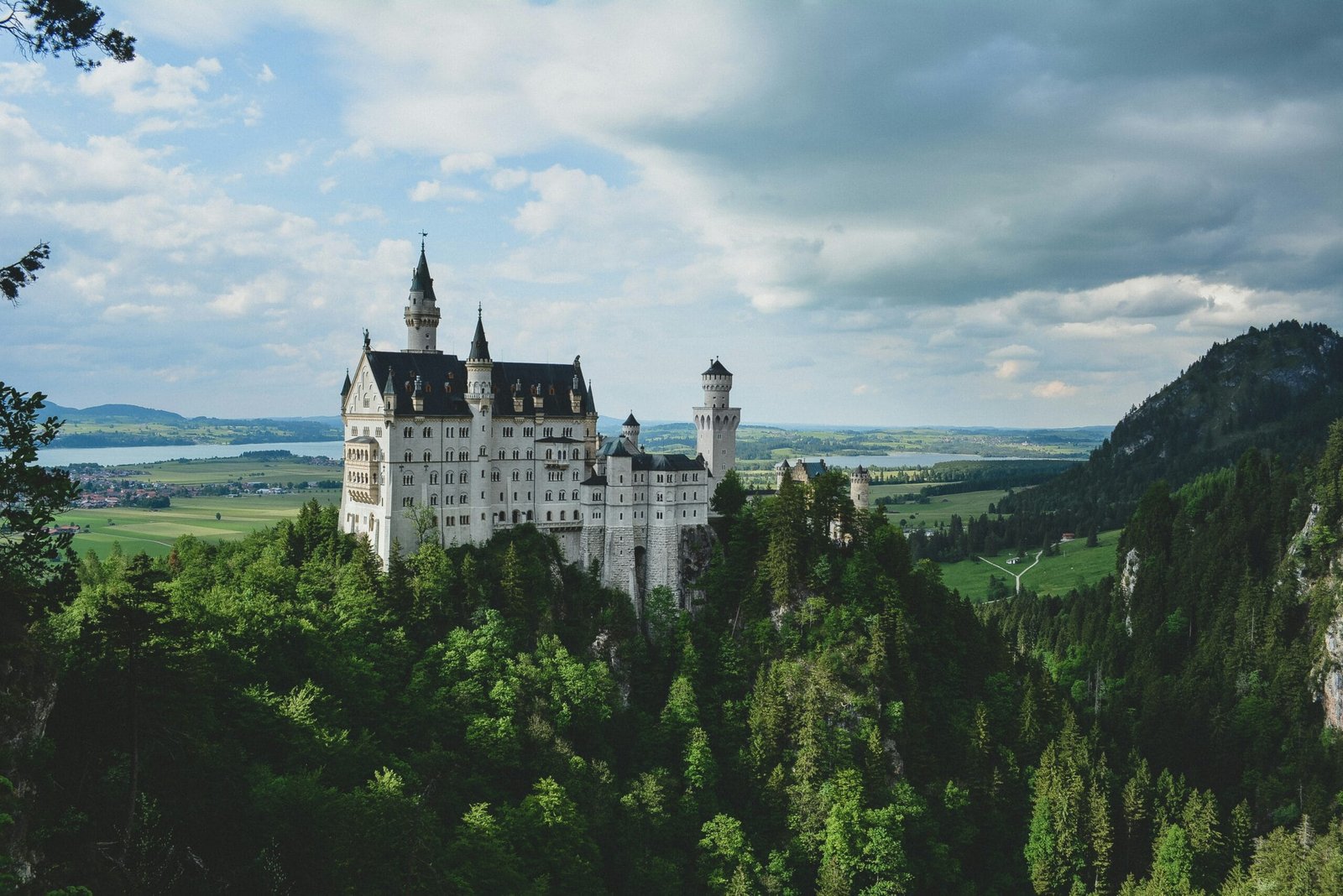
Germany is a country filled with striking landscapes, deep traditions, influential ideas, and more than a few surprises. From the Bavarian Alps and the Black Forest to historic cities, famous rivers, and centuries-old castles, there is far more to discover than the stereotypes of beer, bratwurst, and autobahns.
In this article, we’ll explore 50 fun facts about Germany covering its geography, plants and wildlife, culture, government and economy, and fascinating history. Along the way, you’ll discover unusual customs, remarkable inventions, natural wonders, historic milestones, and other details that help explain why Germany has played such an important role in Europe and the wider world.
Germany Fast Facts
| Official Name | Federal Republic of Germany |
| Form of Government | Federal Parliamentary Republic |
| Capital | Berlin |
| Population | 83,500,000 (est. 2026) |
| Official Language | German |
| Money | Euro (€) |
| Area | 357,022 Square Kilometers |
| Major Mountain Ranges | Bavarian Alps |
| Major Rivers | Danube (Donau): 2,857 KM (1,775 miles) Rhine (Rhein): 1,320 KM (820 miles) Berbice 454 km (282 miles) Oder: 854 KM (531 miles) Weser: 452 KM (281 miles) |
| Country Code | +49 |
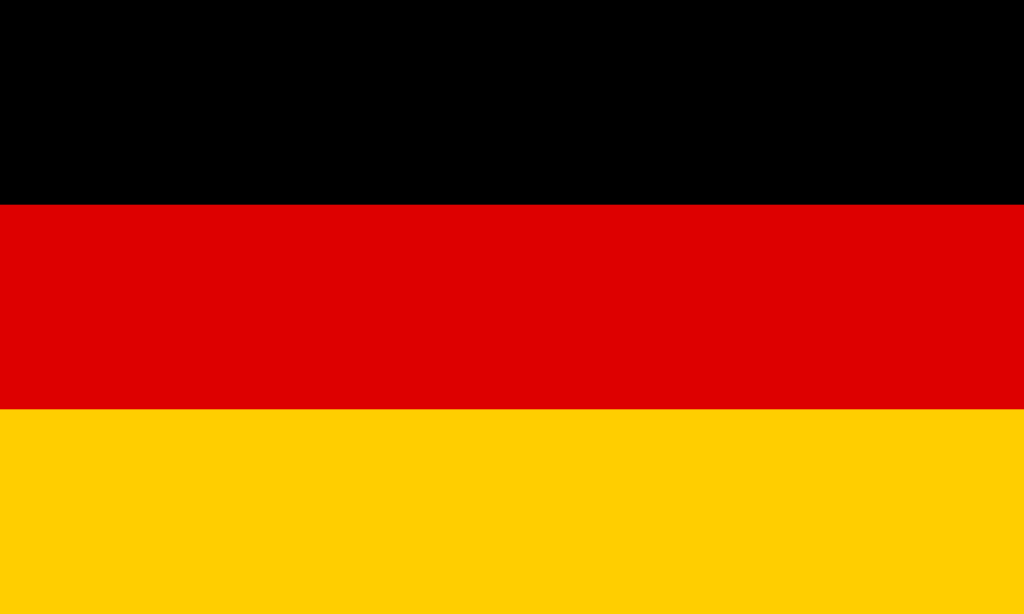
German Flag
Germany Interesting Facts: Geography
1.Germany Sits Near the Heart of Europe – Germany covers about 357,569 square kilometers (138,058 square miles) and stretches from the North and Baltic seas in the north to the Alps in the south. Despite its relatively compact size, its landscape ranges from coastal marshes and broad plains to forests, river valleys, and high mountains.
2. Germany Has Nine Neighboring Countries – Germany shares land borders with Denmark, Poland, Czechia, Austria, Switzerland, France, Luxembourg, Belgium, and the Netherlands. Its central position gives it one of the largest numbers of neighboring countries in Europe and places it at an important geographic crossroads.
3. It Is Longer North to South Than East to West – From Germany’s northernmost point to its southernmost, the country measures about 876 kilometers (544 miles). Its maximum east-to-west span is considerably shorter at roughly 640 kilometers (398 miles).
4. One German State Sits Between Two Seas – Schleswig-Holstein occupies the narrow northern portion of Germany between the North Sea and Baltic Sea. Because it touches both bodies of water, Germany’s northernmost state is sometimes known as the “land between the seas.”
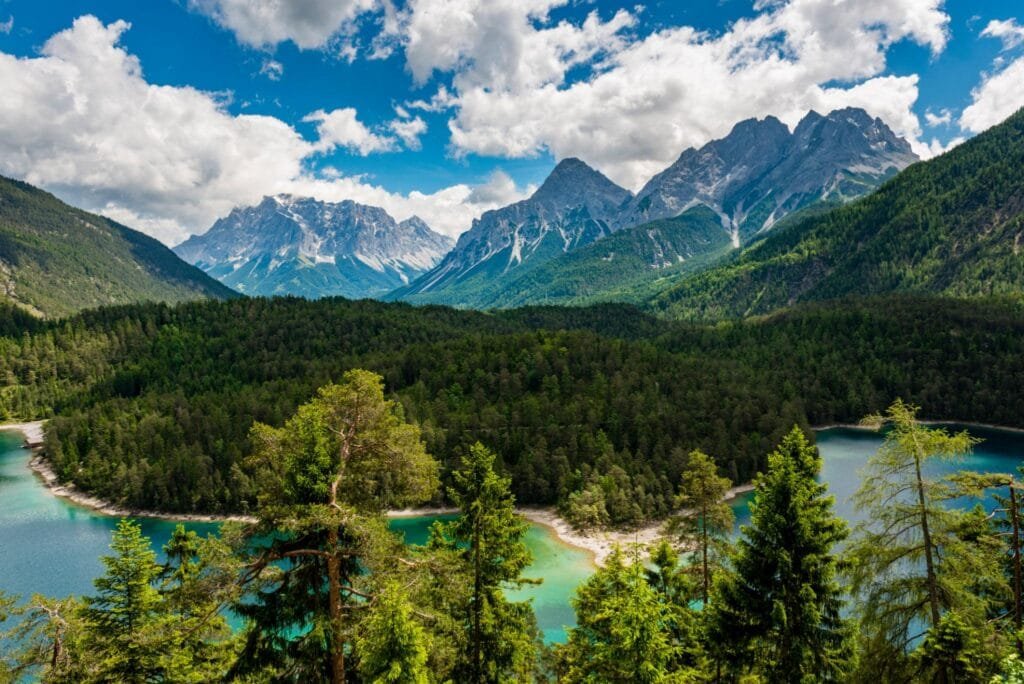
Zugspitze Towers, Germany
5. The Zugspitze Towers 2,962 Meters Above Sea Level – Located in the Bavarian Alps along Germany’s border with Austria, the Zugspitze is the highest mountain in Germany at 2,962 meters, or 9,718 feet. From its summit area, visitors can see hundreds of Alpine peaks spread across four countries on clear days.
6. Germany’s Largest Island Has Towering White Cliffs – Rügen covers more than 900 square kilometers (347 square miles) in the Baltic Sea, making it Germany’s largest island. Its Jasmund Peninsula is famous for brilliant white chalk cliffs, including the 118-meter-high (387-foot) Königsstuhl, or “King’s Chair.”
7. The North Sea Coast Contains the World’s Largest Tidal-Flat System – Germany shares the Wadden Sea with the Netherlands and Denmark. UNESCO describes it as the world’s largest continuous system of intertidal sand and mud flats, where enormous areas of seabed are exposed and submerged again as the tides rise and fall.
8. A 65-Kilometer Stretch of the Rhine Holds Around 40 Castles – The UNESCO-listed Upper Middle Rhine Valley runs for about 65 kilometers (40 miles) between Bingen, Rüdesheim, and Koblenz. Steep hills, vineyards, historic towns, and roughly 40 castles and fortresses line this dramatic section of one of Europe’s great rivers.
9. Saxon Switzerland Has More Than 1,000 Sandstone Peaks – Despite its name, Saxon Switzerland is entirely in Germany, near the Czech border. The region’s national park contains more than 1,000 free-standing sandstone peaks carved into unusual towers, cliffs, and gorges above the Elbe River.
10. The Black Forest Reaches Nearly 1,500 Meters High – Germany’s famous Black Forest is not simply a dense woodland—it is a mountainous region of lakes, valleys, waterfalls, and high peaks. Feldberg, its highest mountain, rises 1,493 meters (4,898 feet), while the eastern edge of the Southern Black Forest region reaches Donaueschingen, traditionally associated with the source of the Danube.
Fun Facts about Germany: Plants and Wildlife
11. Almost One-Third of Germany Is Covered in Forest – Germany has approximately 11.5 million hectares, or 44,400 square miles, of forest. The 2022 National Forest Inventory found that woodland covers nearly one-third of the country despite Germany being one of Europe’s most densely populated nations.
12. Germany Protects Ancient Beech Forests as World Heritage Sites – Five German forest areas joined UNESCO’s Ancient and Primeval Beech Forests World Heritage Site in 2011. They include forests in Jasmund, Hainich, Kellerwald-Edersee, Müritz, and Grumsin, preserving remnants of the beech forests that once dominated much of Central Europe.
13. Hainich Contains Germany’s Largest Continuous Deciduous Woodland – The Hainich region in Thuringia contains about 160 square kilometers (62 square miles) of connected deciduous forest. Roughly 50 square kilometers within Hainich National Park are left unmanaged, allowing beech woodland to develop with minimal human interference.
14. Thousands of Species Thrive in Germany’s Oldest National Park – Bavarian Forest National Park has documented at least 3,849 animal species, 757 vascular plants, 488 mosses, 344 lichens, and more than 2,000 species of fungi. Dead and fallen trees are intentionally left in place because they provide vital habitat for insects, fungi, and birds.
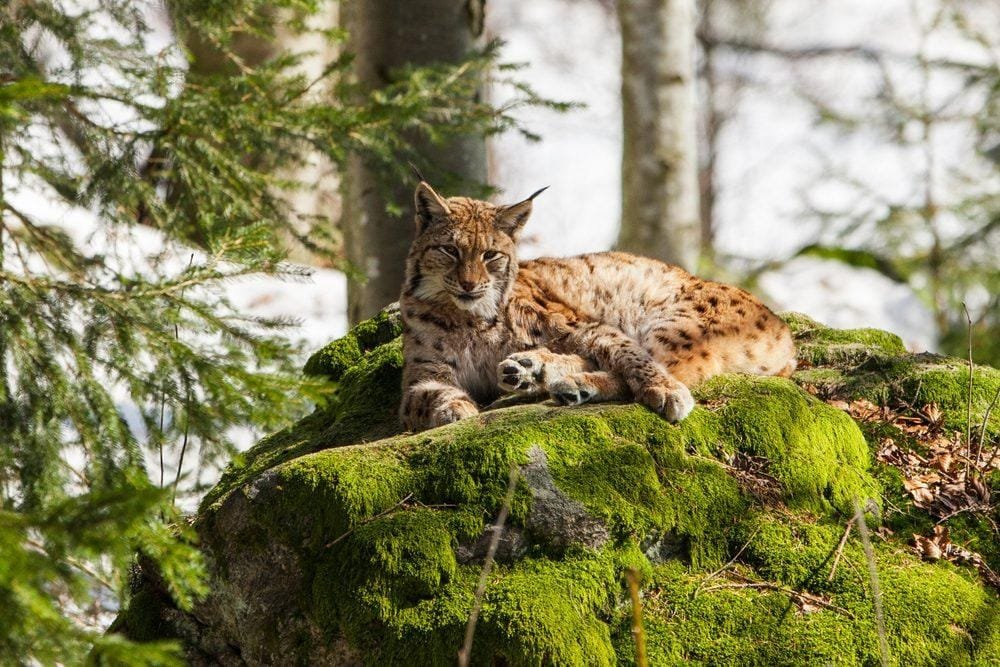
15. Eurasian Lynx Returned After Disappearing for a Century – Lynx vanished from the Bavarian Forest during the 19th century after years of persecution. A reintroduction program across the border in what is now Czechia during the 1980s helped the large spotted cats return to the forests of southeastern Germany.
16. Capercaillies Swallow Stones to Help Digest Their Food – The rare capercaillie survives winters in the Bavarian Forest by eating foods such as spruce needles, mountain-pine buds, shoots, and blueberries. Because this vegetation is difficult to digest, the birds swallow small stones that remain in the stomach and help grind their food.
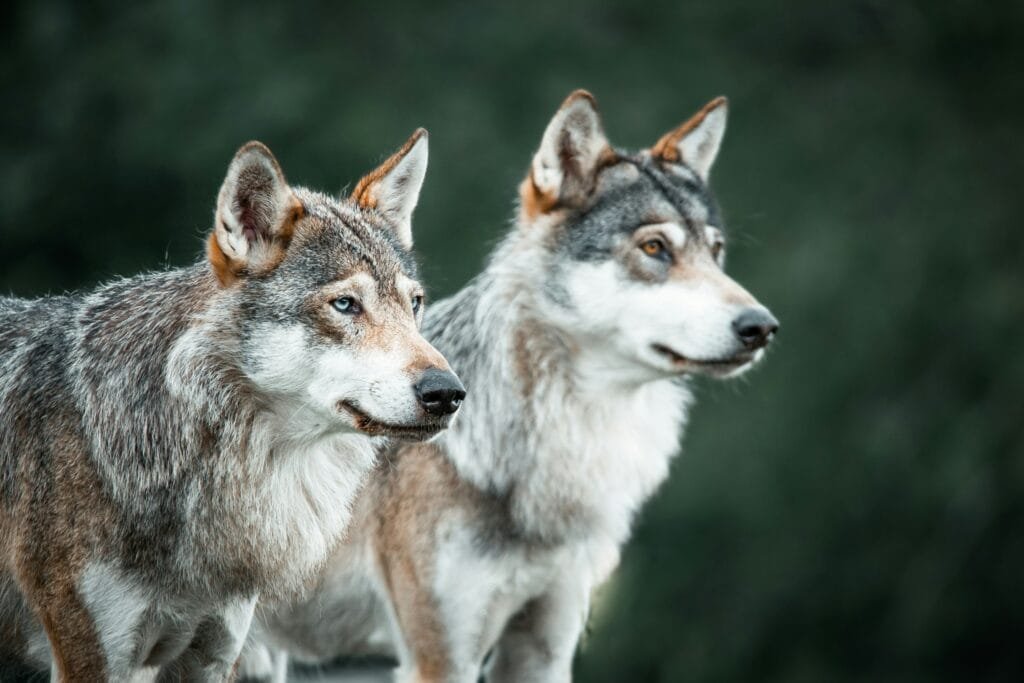
17. Wild Wolves Returned to Germany on Their Own – Wolves were effectively absent from Germany for around 150 years, but animals began crossing naturally from Poland during the late 1990s. In 2000, a wolf pair in eastern Germany produced the country’s first confirmed wild litter in generations—without humans reintroducing them.
18. The Former Iron Curtain Became a 1,393-Kilometer Wildlife Corridor – Germany’s old East-West border has been transformed into the Green Belt, a habitat network stretching about 1,393 kilometers (866 miles). Surveys have identified 146 habitat types there and more than 1,200 plant and animal species listed on Germany’s Red Lists.
19. Millions of Migrating Birds Stop Along Germany’s North Sea Coast – The German Wadden Sea provides feeding and resting habitat for enormous numbers of migratory birds traveling along the East Atlantic Flyway. Around 10 to 12 million birds use Schleswig-Holstein’s Wadden Sea National Park each year, alongside harbor seals, gray seals, and harbor porpoises.
20. One of Germany’s Venomous Snakes Lives in Just Two Black Forest Valleys – The asp viper (Vipera aspis) has an extraordinarily restricted German range. Within Germany, this endangered snake survives only in two rocky valleys of the southern Black Forest, while the more widespread European adder is Germany’s other native viper.
Cool Facts about Germany: Culture
21. Oktoberfest Began as a Royal Wedding Celebration – Munich’s famous Oktoberfest traces its origins to the 1810 wedding of Crown Prince Ludwig of Bavaria and Princess Therese of Saxe-Hildburghausen. The public festivities ended with a horse race on the fields later named Theresienwiese, where Oktoberfest is still held today.
22. German Children Receive Giant Cones on Their First Day of School – A traditional Schultüte is a large decorated cardboard cone filled with sweets, school supplies, and small gifts. Parents give them to children at Einschulung, their ceremonial first day of primary school.
23. Germany Has More Than 3,000 Types of Bread and Baked Goods – German bakeries sell an extraordinary variety of breads made from grains such as wheat, rye, and spelt. German bread culture has been included in the country’s national inventory of intangible cultural heritage since 2014.
24. Dresden’s Christmas Market Dates Back to 1434 – The Dresden Striezelmarkt was first documented in 1434 and remains one of Germany’s oldest and best-known Christmas markets. Its name is connected to Striezel, an early form of the fruit-filled Christmas bread now known as Dresden Stollen.
25. Carnival Is Known as Germany’s “Fifth Season” – In Rhineland cities such as Cologne, Düsseldorf, and Mainz, carnival celebrations traditionally begin on November 11 before reaching their peak before Lent. Cologne staged its first organized Rose Monday procession in 1823, beginning a tradition that continues today.
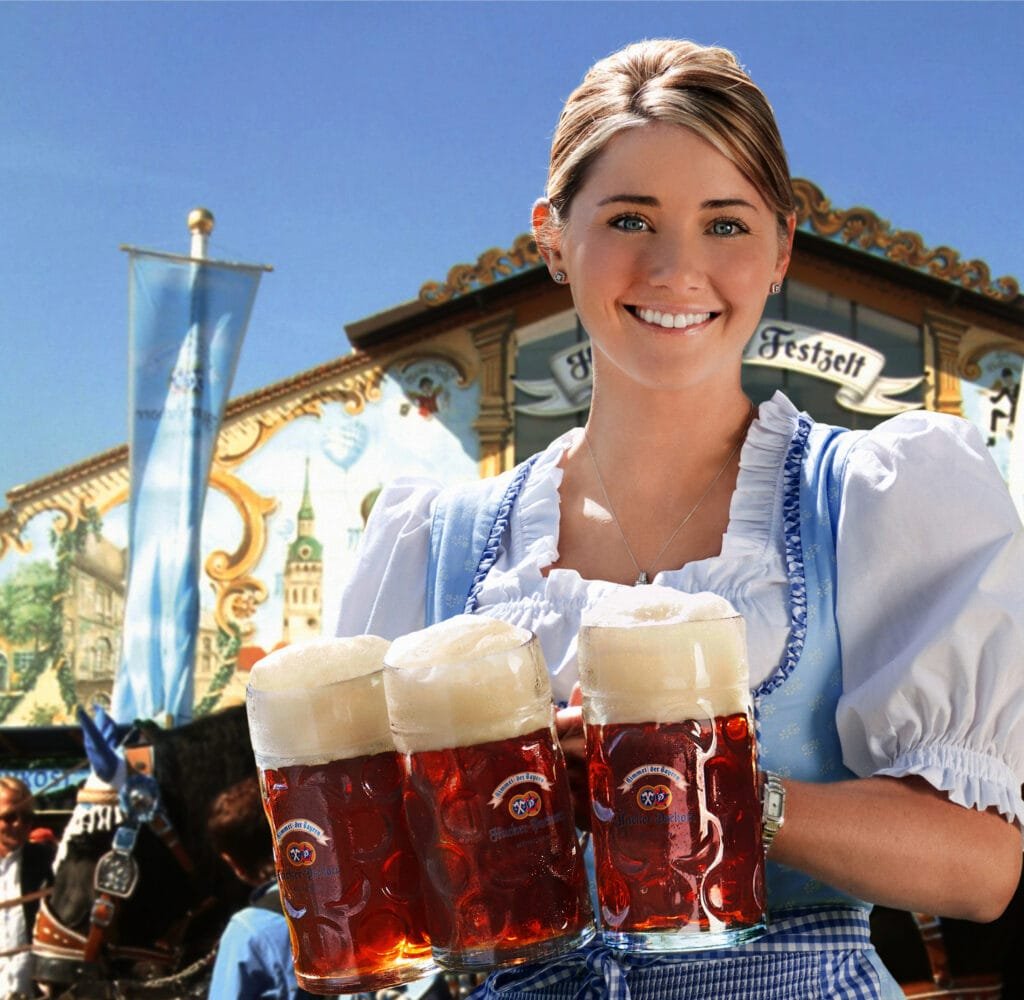
26. German Beer Traditions Include a Rule Dating to 1516 – Bavaria’s famous Reinheitsgebot, or beer purity regulation, was established in 1516 and restricted the ingredients used for brewing. The historic rule became one of the best-known symbols of Germany’s centuries-old brewing culture.
27. Germany Has a 600-Kilometer Fairy-Tale Route – The German Fairy Tale Route stretches roughly 600 kilometers, or 373 miles, from Hanau to Bremen. It connects around 70 places associated with the Brothers Grimm, traditional legends, castles, half-timbered towns, and stories such as Sleeping Beauty and Rapunzel.
28. Berlin Turned Currywurst Into a Cultural Icon – Berlin tradition credits Herta Heuwer with serving currywurst at her Charlottenburg snack stand in 1949. The dish combines sliced sausage with a tomato-based curry sauce and became one of the foods most closely associated with Germany’s capital, although its exact invention story remains debated.
29. The Bauhaus Changed Design Around the World – Architect Walter Gropius founded the Bauhaus school in Weimar in 1919 before it moved to Dessau in 1925. Its emphasis on combining art, craftsmanship, architecture, and functional design had a lasting international influence on buildings, furniture, typography, and modern design.
30. German Organ Building Is Recognized by UNESCO – Centuries of German organ craftsmanship and organ music were added to UNESCO’s Representative List of the Intangible Cultural Heritage of Humanity in 2017. The tradition combines woodworking, metalworking, acoustics, musical performance, and highly specialized tuning skills.
Germany Facts: Government & Economy
31. Germany Is Made Up of 16 Federal States – Germany is a federal parliamentary republic divided into 16 states, known as Länder. Each state has its own constitution and government, and three, Berlin, Hamburg, and Bremen, are city-states where the city itself also functions as a federal state.
32. German Voters Get Two Votes in Federal Elections – When Germans elect the Bundestag, each voter casts a first vote for a local constituency candidate and a second vote for a political party. The second vote is particularly important because it determines the proportional distribution of seats among the parties.
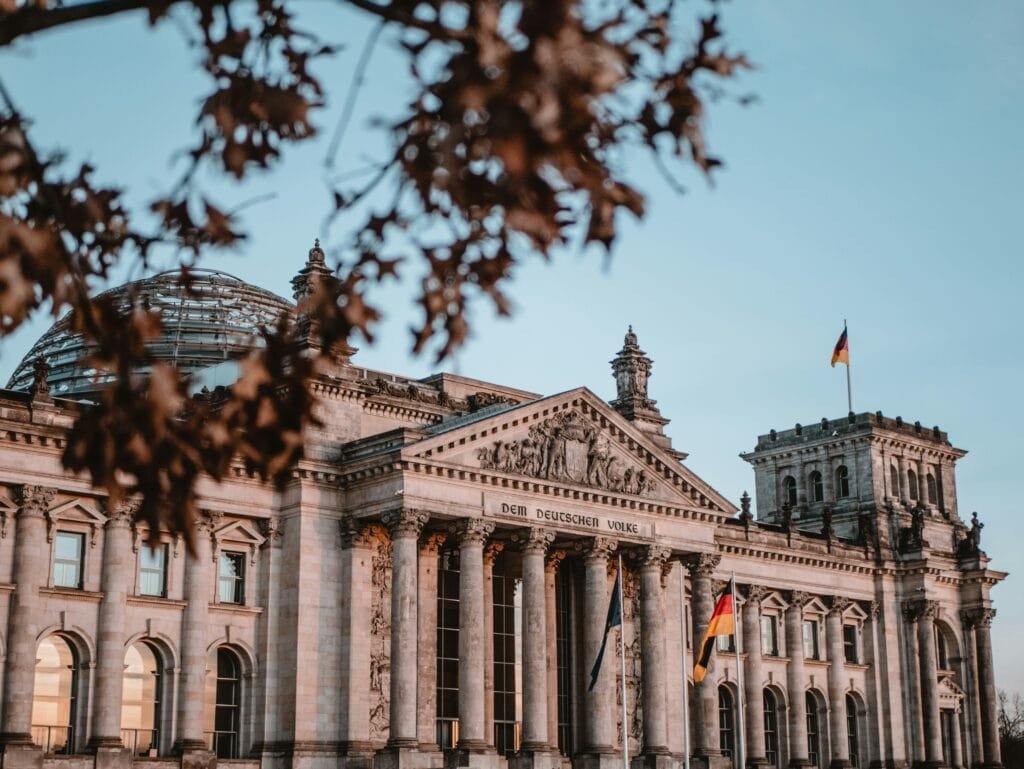
33. Germany’s Parliament Was Recently Capped at 630 Members – Electoral reforms reduced the size of the Bundestag, which now has 630 seats. Before the reform, the parliament could expand considerably through additional overhang and balancing seats; the previous Bundestag finished its term with 733 members.
34. Germany’s States Have Their Own Voice in Federal Lawmaking – The Bundesrat represents the governments of Germany’s 16 states at the national level. Through it, state governments participate directly in federal legislation, and certain laws affecting the states cannot take effect without Bundesrat approval.
35. The Chancellor Runs the Government, Not the President – Germany has both a federal president and a federal chancellor, but their roles are very different. The president serves primarily as head of state with representative duties, while the chancellor is head of government and is elected by the Bundestag.
36. Germany Produced Nearly €4.47 Trillion in Goods and Services in 2025 – Germany’s gross domestic product at current prices reached approximately €4.47 trillion in 2025. After two consecutive years of contraction, the economy returned to slight growth, with price-adjusted GDP increasing by 0.2%.
37. More Than 99% of German Businesses Are SMEs – Germany’s famous Mittelstand is made up largely of small and medium-sized companies, including many specialized family businesses. More than 99% of German companies fall into the SME category, making these firms a major foundation of the country’s economy.
38. Cars Are Still Germany’s Biggest Export Product – Motor vehicles and automotive parts accounted for 16.2% of all German goods exports in 2025, making them the country’s largest export category. Machinery followed at 13.8%, demonstrating the continuing importance of advanced manufacturing to Germany’s economy.
39. Germany Exported About €200 Billion More Than It Imported in 2025 – Germany recorded a goods trade surplus of approximately €200.4 billion in 2025. The country has long been strongly export-oriented, shipping automobiles, machinery, chemicals, pharmaceuticals, electronics, and other manufactured products around the world.
40. The Bank Behind the Euro Is Headquartered in Germany – Germany adopted the euro as part of the original euro area in 1999, and the European Central Bank is headquartered in Frankfurt am Main. From Frankfurt, the ECB helps set monetary policy for all countries that use the euro not just Germany.
German History Facts
41. A 550-Kilometer Roman Frontier Crossed Ancient Germany – The Upper German Raetian Limes stretched approximately 550 kilometers (342 miles) between the Rhine and Danube. Built mainly during the second century AD, the frontier included forts, watchtowers, roads, walls, and ditches separating Roman territory from lands inhabited by Germanic peoples.
42. The Gutenberg Bible Was Printed in Mainz – Johannes Gutenberg revolutionized European bookmaking by developing a practical system of printing with movable metal type. His famous Bible, completed in Mainz around 1455, was the first major book printed with movable metal type in Western Europe.
43. Martin Luther Translated the New Testament at Wartburg Castle – After being declared an outlaw in 1521, Martin Luther secretly took refuge at Wartburg Castle near Eisenach. There he translated the New Testament into German, producing a work that became enormously influential in the Protestant Reformation and development of written German.
44. Germany’s First National Parliament Met Inside a Church – On May 18, 1848, representatives gathered inside St. Paul’s Church in Frankfurt for the first German national parliament. They attempted to create a liberal constitution and unified German nation-state, although their revolutionary effort ultimately failed.
45. Modern Germany Was Unified in a French Palace – The German Empire was proclaimed on January 18, 1871, inside the Hall of Mirrors at the Palace of Versailles in France. King Wilhelm I of Prussia became German Emperor, bringing numerous German states together under a single national government.
46. German Women Gained National Voting Rights After World War I – The creation of the Weimar Republic dramatically expanded German democracy. Women received the right both to vote and to run for office, and they participated in a German national election for the first time in 1919.
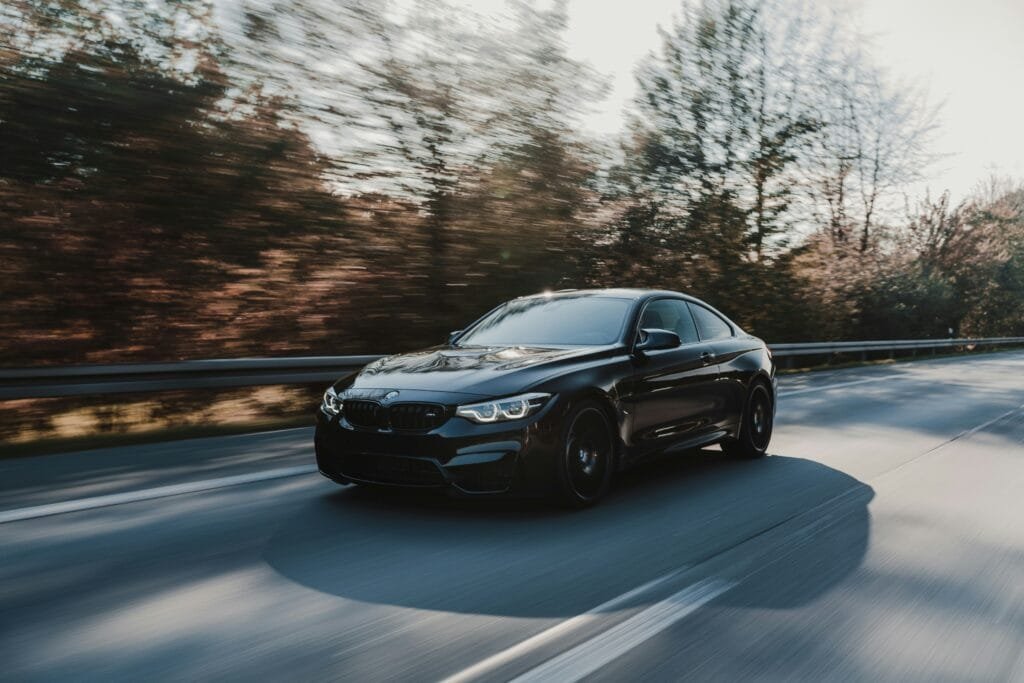
47. The Nazi Government Dramatically Expanded Germany’s Autobahn Network – After taking power in 1933, Adolf Hitler’s government made highway construction a major national infrastructure program. By 1945, approximately 3,800 kilometers (2,360 miles) of the planned Reichsautobahn network had been completed, creating new high-speed connections between German cities.
48. Germany Reunified Less Than a Year After the Berlin Wall Fell – The Berlin Wall opened on November 9, 1989, amid peaceful protests and political upheaval in East Germany. Less than eleven months later, on October 3, 1990, East Germany joined the Federal Republic, officially reunifying the country after more than four decades of division.
49. Thirty German Kings Were Crowned in One Cathedral – Aachen Cathedral became the traditional coronation church of medieval German rulers. Between 936 and 1531, a total of 30 kings were crowned there, sitting on the cathedral’s famous stone imperial throne as part of the ceremony. Charlemagne, who made Aachen an imperial center, was also buried there in 814.
50. Germany Was Split Into Two Countries for More Than 40 Years – In 1949, postwar Germany became the Federal Republic of Germany in the west and the German Democratic Republic in the east. Beginning in 1961, the 155 kilometer (96 mile) Berlin Wall surrounded West Berlin and became one of the most recognizable symbols of the Cold War.