
Table of Contents
Get ready to discover 50 fun facts about Guyana, one of South America’s most fascinating and often overlooked countries. Known for its vast rainforests, powerful waterfalls, diverse wildlife, and rich blend of cultures, Guyana is filled with remarkable stories and surprising details.
In this article, we’ll explore Guyana’s geography, natural wonders, people, traditions, food, history, government, and economy. Whether you are planning a trip, researching the country, or simply enjoy learning new things, these fun facts about Guyana will show what makes this unique nation so memorable.
Guyana Fast Facts
| Official Name | Co-operative Republic of Guyana |
| Form of Government | Parliamentary Democracy |
| Capital | Georgetown |
| Population | 835,986 |
| Official Language | English |
| Money | Guyanese Dollar ($ or G$) |
| Area | 214,970 Square Kilometers |
| Major Mountain Ranges | Pakaraima Mountains |
| Major Rivers | Essequibo 893 km (555 miles) Courantyne 677 km (421 miles) Berbice 454 km (282 miles) Demerara 360 km (224 miles) |
| Country Code | +592 |
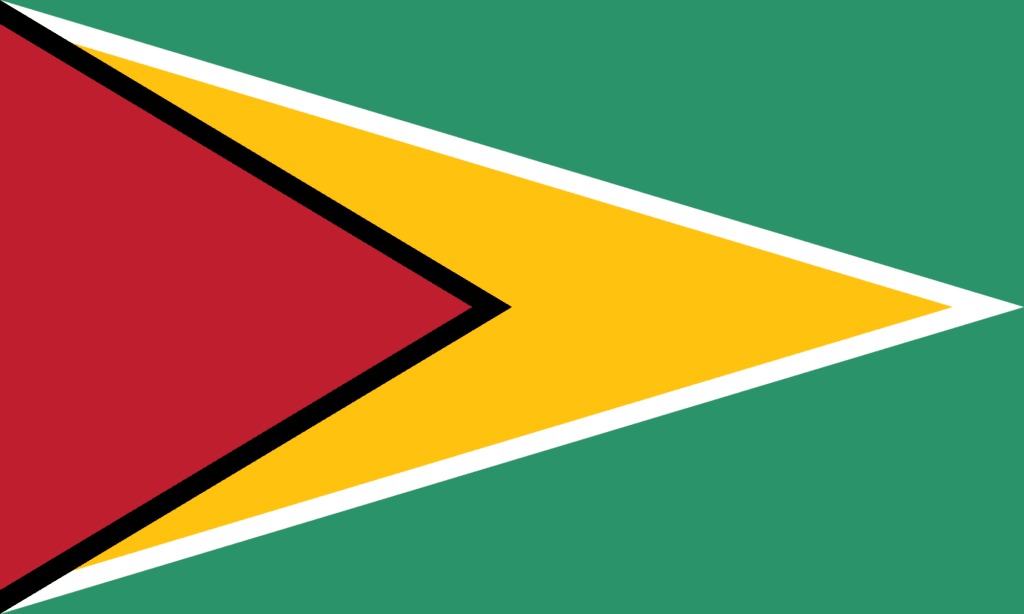
Guyana Flag
Guyana Interesting Places: Geography
1. Located Where South America Meets the Atlantic – Guyana occupies approximately 214,970 square kilometers (83,000 square miles) on the northeastern coast of South America. The Atlantic Ocean lies to the north, while Venezuela borders it to the west, Brazil to the south and southwest, and Suriname to the east.
2. Divided into Four Natural Regions – Guyana has four major natural regions: the Low Coastal Plain, the Hilly Sand and Clay Region, the Forested Highland Region, and the Interior Savannahs. Traveling inland from the coast reveals dramatic changes from flat farmland and sandy hills to rainforest-covered mountains and open grasslands.
3. Much of the Coast Lies Below High-Tide Level – Guyana’s fertile coastal plain measures roughly 8 to 65 kilometers (5 to 40 miles) wide. Some populated sections lie approximately 1 to 1.5 meters below sea level at high tide, so seawalls, drainage canals, pumps, and sluices are needed to control water and reduce flooding.
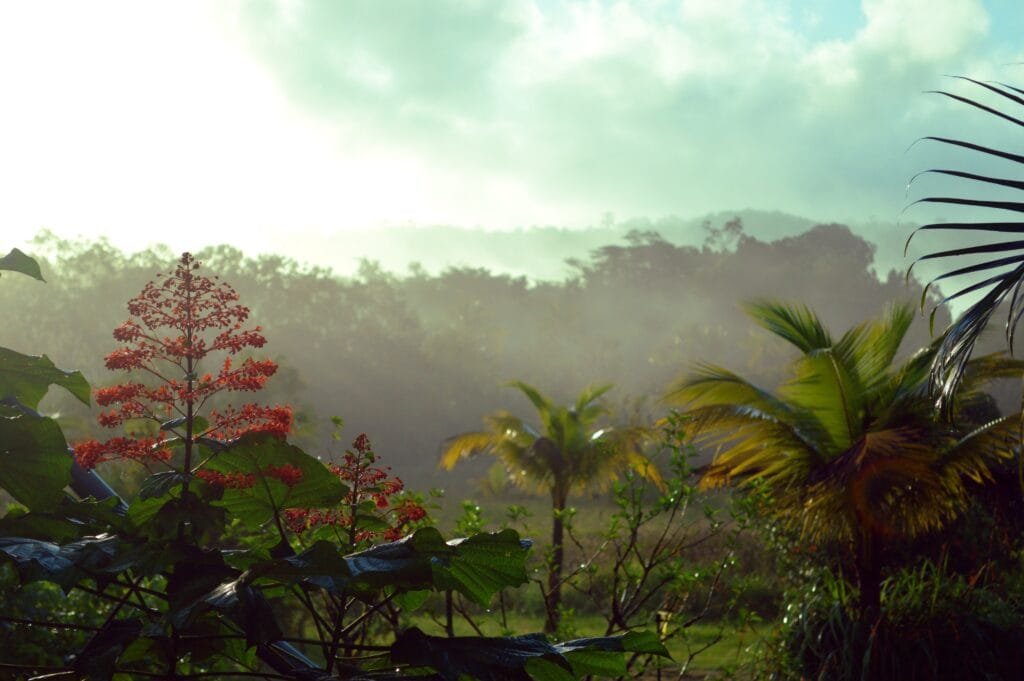
4. Home to the Iwokrama Rainforest – The Iwokrama Rainforest covers 371,681 hectares, or about 1,435 square miles, in central Guyana. It is divided into a 187,175-hectare Wilderness Preserve and a 184,506-hectare Sustainable Utilization Area, allowing conservation and carefully managed economic activities to take place within the same forest.
Iwokrama Rainforest, Guyana
5. More Than 87% of the Land Is Forested – Forest covered approximately 87.1% of Guyana’s land area in 2023. These forests include coastal swamp forests as well as rainforest, seasonal forest, and dry evergreen forest across the country’s vast interior.
6. Kaieteur Falls Drops 226 Meters in One Plunge – Kaieteur Falls sends the Potaro River over a sandstone plateau in a single 226 meter or 741ft. drop. The waterfall stands within Kaieteur National Park in the Pakaraima Highlands, where elevations range from about 75 to 1,066 meters above sea level.
7. The Essequibo River Runs for About 1,000 Kilometers – Guyana’s longest river begins in the Acarai Mountains near the country’s southern border and flows northward to the Atlantic Ocean. Its headwaters lie within the Kanashen Amerindian Protected Area, and numerous rivers from the interior eventually join its enormous drainage system.
8. The Rupununi Savannahs Cover Around 15,540 Square Kilometers – Spreading across southwestern Guyana, the Rupununi Savannahs cover approximately 6,000 square miles. Seasonal rainfall floods large portions of the northern savannah, connecting wetlands, creeks, rivers, forests, and grasslands into one changing landscape.
9. The Rupununi River Splits the Kanuku Mountains – The Kanuku mountain range covers roughly 5,000 square kilometers in southwestern Guyana and is divided into eastern and western sections by the Rupununi River. The surrounding Kanuku Mountains Protected Area is even larger, covering approximately 611,000 hectares, or 2.8% of Guyana’s land surface.
10. Shell Beach Extends for 120 Kilometers – Shell Beach Protected Area stretches approximately 120 kilometers, or 75 miles, along Guyana’s northwestern coast. Instead of being made entirely from ordinary sand, parts of the shoreline contain broken mollusk shells, with mudflats facing the ocean and mangroves and swamp forests farther inland.
Fun Facts about Guyana: Plants and Wildlife
11. The National Flower Has Giant Floating Leaves – Guyana’s national flower is the Victoria amazonica, traditionally called the Victoria Regia lily. Its enormous floating leaves can grow up to 3 meters, or nearly 10 feet, across, while its fragrant flowers open white before turning pink the following night.
12. Bulletwood Trees Produce a Natural Sculpting Material – Latex collected from Guyana’s bulletwood trees is known as balata. Indigenous artisans heat and shape this natural material into detailed figurines representing jaguars, birds, monkeys, and other Guyanese wildlife.
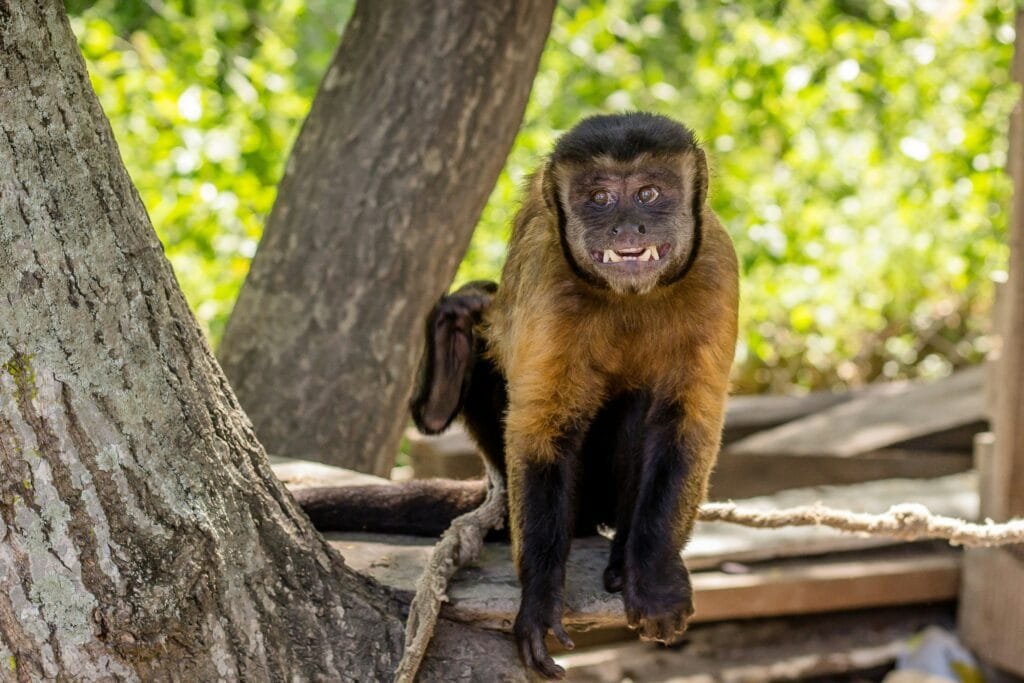
13. Tufted Capuchins Can Coil Their Tails – The tufted capuchin, or brown capuchin (Sapajus apella), lives in Guyana’s forests and has been recorded inside the Iwokrama Forest. Its long prehensile tail can curl into a tight coil, while its deep jaw and powerful muscles help it open large fruits and eat tough vegetation.
14. A Tiny Frog Lives Inside Bromeliads – The golden rocket frog (Anomaloglossus beebei) is endemic to the Kaieteur region, meaning it is found naturally nowhere else. It lives among cabbage-head bromeliads, whose overlapping leaves collect miniature pools of rainwater used by the frogs and their tadpoles.
15. Four Sea Turtle Species Nest at Shell Beach – Leatherback, green, hawksbill, and olive ridley turtles come ashore at Guyana’s Shell Beach Protected Area. Their annual nesting season usually takes place between February and August along the country’s northwestern coastline.
16. Guyana Has a Fish That Must Breathe Air – The arapaima lives in the Essequibo River basin and can grow longer than 3 meters, or 10 feet, and weigh around 200 kilograms, or 440 pounds. Unlike most fish, adult arapaima must regularly rise to the surface and gulp atmospheric air to survive.
17. The Kanuku Mountains Hold 1,577 Plant Species – Scientists have recorded approximately 1,577 plant species in and around the Kanuku Mountains Protected Area. The region’s rainforests, savannas, wetlands, and mountain slopes create numerous habitats within a relatively compact area.
18. All of Guyana’s Wild Cat Species Live in the Kanukus – The Kanuku Mountains provide habitat for all six wild cat species recorded in Guyana. These include the jaguar, puma, ocelot, margay, jaguarundi, and northern tiger cat, making the protected area exceptionally important for feline conservation.
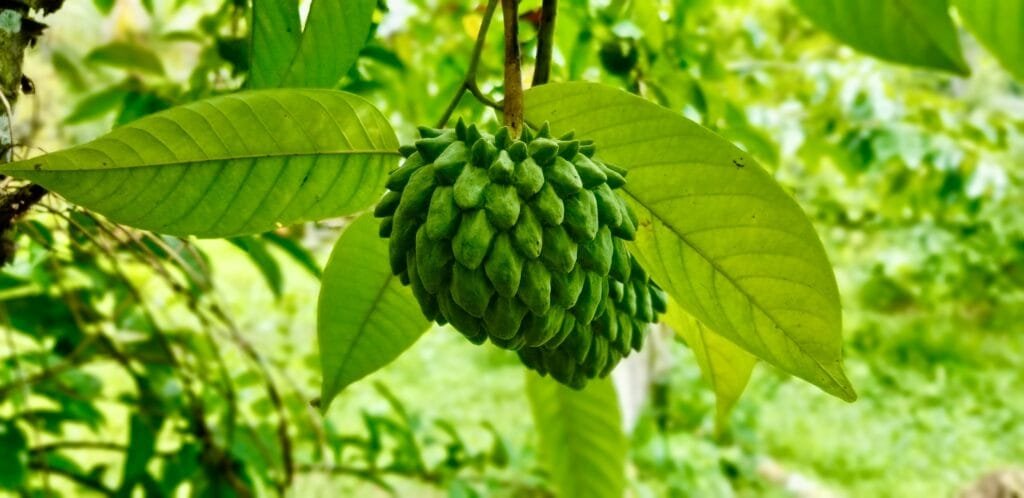
19. Sugar Apples Separate into Sweet Segments – The sugar apple (Annona squamosa) was introduced to Guyana and now grows in the country’s tropical climate. Its knobby fruit is formed from loosely connected segments that separate when ripe, revealing soft, creamy-white pulp surrounding numerous dark seeds.
20. The World’s Largest Rodent Roams Guyana – Capybaras live near rivers, wetlands, forests, and savannas across Guyana. These highly aquatic animals are the largest living rodents in the world and use their partially webbed feet to move efficiently through the water.
Guyana Culture Facts
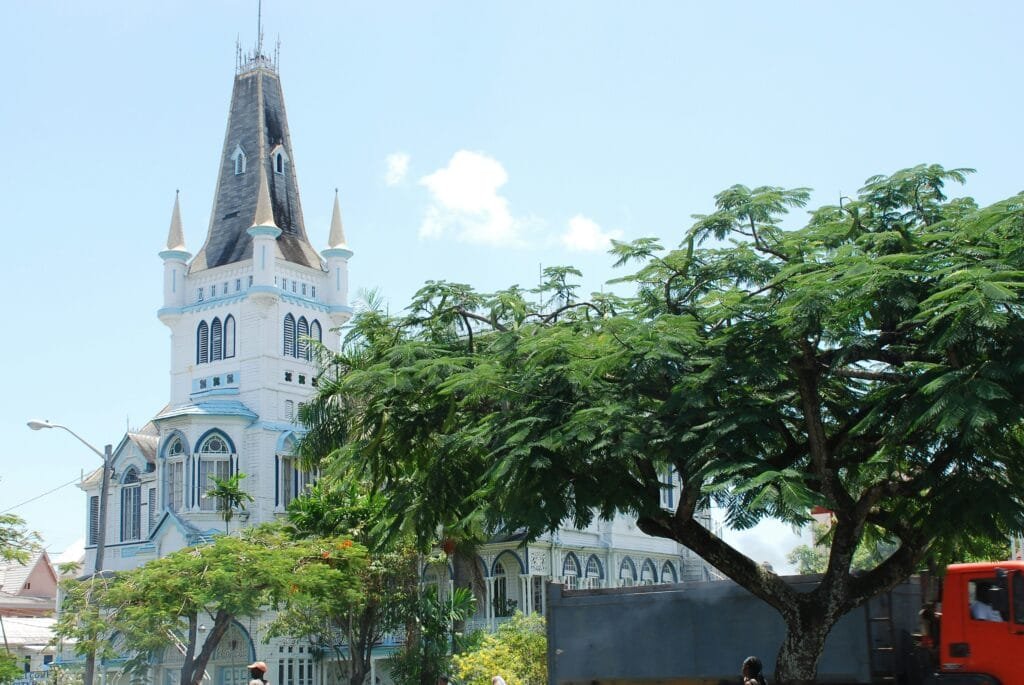
21. A Caribbean Culture on the South American Mainland – Although Guyana is geographically part of South America, its language, food, music, festivals, and colonial history connect it closely with the Caribbean. Georgetown is also home to the headquarters of the Caribbean Community, better known as CARICOM.
22. Creolese Is Heard Throughout Everyday Life – English is Guyana’s official language, making it the only sovereign South American country with English in that role. In casual conversation, however, many Guyanese speak Creolese, an English-based Creole with its own expressions, pronunciation, and regional variations.
23. Mashramani Celebrates Work Accomplished – Every February 23, Guyana celebrates becoming a republic with Mashramani, commonly shortened to “Mash.” The name comes from an Arawak expression meaning “celebration after hard work,” while the festivities feature elaborate costumes, dancing, music, competitions, and colorful street parades.
24. Nine Indigenous Nations Preserve Distinct Traditions – Guyana recognizes nine Indigenous Nations: the Akawaio, Arekuna, Arawak or Lokono, Carib or Kalina, Macushi, Patamona, Wai Wai, Wapishana, and Warrau. Their cultures include distinct languages, oral traditions, farming practices, crafts, foods, and knowledge of the country’s forests and waterways.
25. Several Religions Share the National Calendar – Christian, Hindu, and Muslim celebrations are all prominent in Guyana. Christmas and Easter are observed alongside Phagwah, Diwali, Eid al-Adha, and Youman Nabi, reflecting the religious traditions introduced and preserved by the country’s diverse communities.
26. Pepperpot Is a Christmas-Morning Tradition – Guyanese pepperpot is a dark, slow-cooked meat stew flavored with spices and cassareep, a sauce produced from processed cassava. The dish has Indigenous roots and is traditionally served with homemade bread, especially at breakfast on Christmas morning.
27. Cook-Up Rice Welcomes the New Year – Many Guyanese families prepare a large pot of cook-up rice on “Old Year’s Night,” the local name for New Year’s Eve. Rice, peas or beans, coconut milk, seasonings, and meat are cooked together in one pot for a filling final meal of the year.
28. Easter Skies Fill with Singing Kites – Kite flying is one of Guyana’s most recognizable Easter customs. Families gather at parks, beaches, and the Georgetown seawall with homemade designs such as bird kites, box kites, and “singing” kites fitted with vibrating paper that produces a buzzing sound in the wind.
29. Kwe-Kwe Brings Two Families Together Before a Wedding – Kwe-Kwe is an Afro-Guyanese celebration traditionally held on the night before a marriage. Through drumming, singing, dancing, playful performances, food, and advice for the couple, the gathering gives the bride’s and groom’s families an opportunity to become better acquainted.
30. Different Drumming Styles Reflect Guyana’s Heritage – Tassa drums are strongly associated with Indo-Guyanese weddings and festivals, while African drumming accompanies traditions such as Kwe-Kwe, ancestral observances, healing ceremonies, and community dances. Steelpan music adds another distinctly Caribbean sound to Guyanese celebrations.
Guyana Facts: Government & Economy
31. Guyana Is Officially a Co-operative Republic – Guyana became independent from Britain in 1966 and was declared the Co-operative Republic of Guyana in 1970. Its current constitution, adopted in 1980, makes the president both head of state and the country’s supreme executive authority.
32. The President Is Actually Part of Parliament – Guyana’s Parliament has an unusual structure: it consists of the president together with the National Assembly. The National Assembly has 65 elected members, with 40 chosen from national party lists and 25 representing the country’s 10 geographical constituencies.
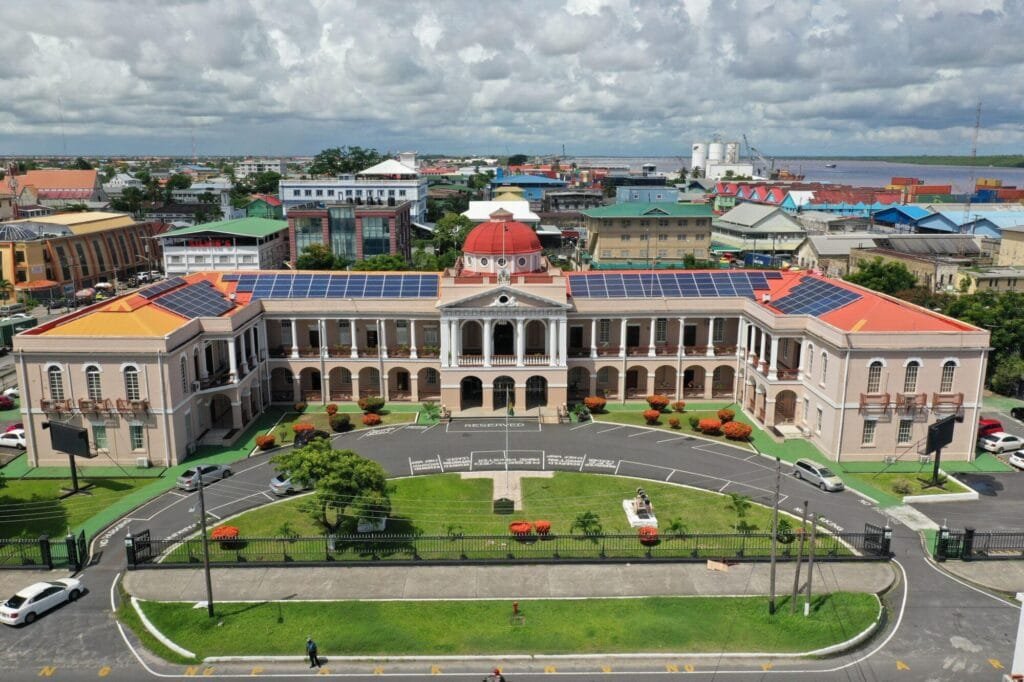
33. Presidents Can Be Elected Only Twice – Under Guyana’s constitution, anyone elected president after 2000 may be re-elected only once. The president also serves as commander-in-chief of Guyana’s armed forces.
34. The Caribbean Community Is Headquartered in Guyana – Georgetown is home to the headquarters of the Caribbean Community, or CARICOM. The organization coordinates economic cooperation and regional integration among Caribbean nations, strengthening Guyana’s political and economic ties to the Caribbean despite its location in South America.
35. Guyana Became an Oil Producer Only in 2019 – Commercial production from the offshore Liza field began on December 20, 2019, less than five years after the first major discovery in the Stabroek Block. The discovery transformed a country with no commercial petroleum production into one of the world’s fastest-growing oil economies.
36. The Economy Grew Nearly 20% in a Single Year – Guyana’s real gross domestic product expanded by 19.3% in 2025, while its non-oil economy grew by 14.3%. That followed even more dramatic growth of more than 40% in 2024, largely driven by rapidly increasing offshore petroleum production.
37. Oil Now Accounts for Almost Nine-Tenths of Exports – Guyana exported approximately US$17.8 billion worth of crude oil in 2025. Petroleum represented 88.4% of the country’s total export value, showing just how rapidly oil has reshaped an economy once dominated by agriculture and mining.
38. Gold Remains Guyana’s Second-Largest Export – Despite the extraordinary rise of petroleum, gold remains an important part of the Guyanese economy. The country exported about US$1.62 billion in raw gold during 2025, accounting for roughly 8% of all exports.
39. Guyana Saves Billions of Oil Dollars in a National Fund – Petroleum revenues are deposited into Guyana’s Natural Resource Fund, a sovereign wealth fund created to manage the country’s new oil income. By the end of April 2026, the fund held approximately US$4.1 billion even after billions had already been transferred to finance government spending.
40. Guyana’s Coins Tell the Story of Its Economy – Designs on Guyanese coins celebrate industries that supported the country long before the oil boom. The $1 coin features rice, the $5 coin depicts sugar cane, and the seven-sided $10 coin shows a traditional gold miner known locally as a “porknocker.”
Fun Facts About Guyana: History
41. Indigenous Farmers Were Shaping the Land Thousands of Years Ago – Archaeological mounds in the Upper Berbice region date to around 5,000 BCE. Indigenous communities built raised fields and canals to grow crops and manage fish in seasonally flooded areas, showing that people were actively engineering Guyana’s landscape thousands of years before European colonization.
42. A Dutch Fort Has Watched the Rivers Since the 1600s – Around 1616, the Dutch established Fort Kyk-Over-Al on a tiny island near the meeting of the Mazaruni and Cuyuni rivers. Its Dutch name means roughly “see over all,” an appropriate name for a trading and defensive post positioned to watch river traffic.
43. Georgetown Was Once Called Stabroek – The area surrounding Guyana’s present-day capital developed around a settlement called Stabroek. On May 5, 1812, the British combined Stabroek and several neighboring districts under the name Georgetown in honor of King George III.
44. Three Colonies Became British Guiana – The territories of Essequibo, Demerara, and Berbice were originally separate Dutch colonies. Britain formally acquired them from the Netherlands in the early 19th century, and in 1831 they were united into a single colony called British Guiana—the predecessor of modern Guyana.
45. A Massive Rebellion Erupted in Berbice in 1763 – On February 23, 1763, enslaved Africans launched an uprising in the Dutch colony of Berbice. Led by Cuffy, the rebellion eventually involved more than 2,500 enslaved people and challenged colonial control for roughly a year. Cuffy is remembered today as a national hero of Guyana.
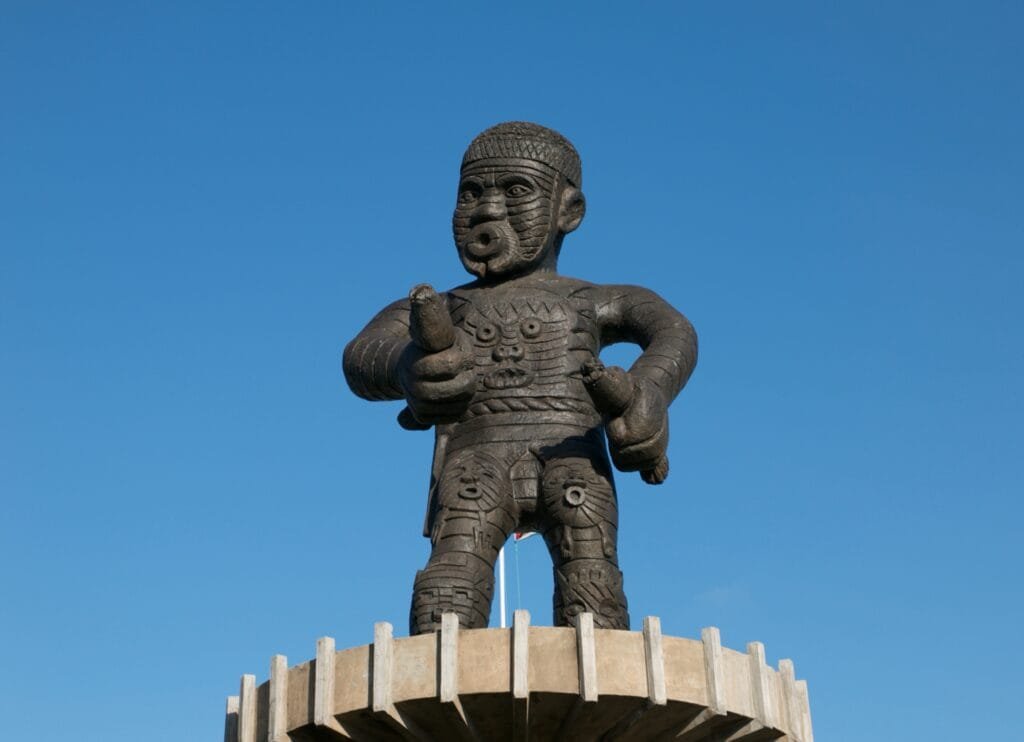
46. Thousands Rose Up Again in the Demerara Rebellion – Another major uprising began in Demerara on August 18, 1823. Jack Gladstone and his father Quamina became two of its best-known figures as enslaved plantation workers demanded freedom and better treatment. More than 200 enslaved people died during the rebellion and its suppression.
47. Freedom from Slavery Came in Two Stages – Slavery was legally abolished in British Guiana in 1834, but many formerly enslaved people were forced into an “apprenticeship” system that kept them tied to plantations. Full emancipation finally arrived on August 1, 1838, a date still commemorated as Emancipation Day.
48. Indentured Workers Reshaped Guyana’s Population – Plantation owners turned increasingly to immigrant labor after emancipation. Portuguese workers began arriving from Madeira in 1835, the first Indian indentured workers arrived in 1838, and Chinese workers followed in 1853. Nearly 239,000 Indians alone came to British Guiana before indentured immigration ended in 1917.
49. British Guiana Became Guyana in 1966 – After more than a century as a British colony, British Guiana gained independence on May 26, 1966, and adopted the name Guyana. The country’s new Parliament held its first National Assembly sitting on that same day.
50. Republic Day Was Chosen to Remember the 1763 Rebellion – Guyana became a republic on February 23, 1970, with Arthur Chung becoming its first president. The date was deliberately chosen because February 23 was also the anniversary of the 1763 Berbice Rebellion, linking the new republic to an earlier struggle against colonial oppression.