
Table of Contents
Bangladesh is a country shaped by enormous rivers, fertile floodplains, tropical forests, and one of the most densely populated landscapes on Earth. From the waterways of the Ganges-Brahmaputra delta and the mangrove forests of the Sundarbans to tea-covered hills, busy cities, and a long Bay of Bengal coastline, the country packs remarkable geographic and cultural variety into a relatively small area.
In this article, we’ll explore 50 amazing facts about Bangladesh covering its geography, plants and wildlife, culture, government and economy, and history. Along the way, you’ll discover unusual landscapes, rare animals, distinctive traditions, important industries, major historical events, and surprising details about one of South Asia’s most fascinating countries.
Bangladesh Quick Facts
| Official Name | People’s Republic of Bangladesh |
| Form of Government | Parliamentary Democracy |
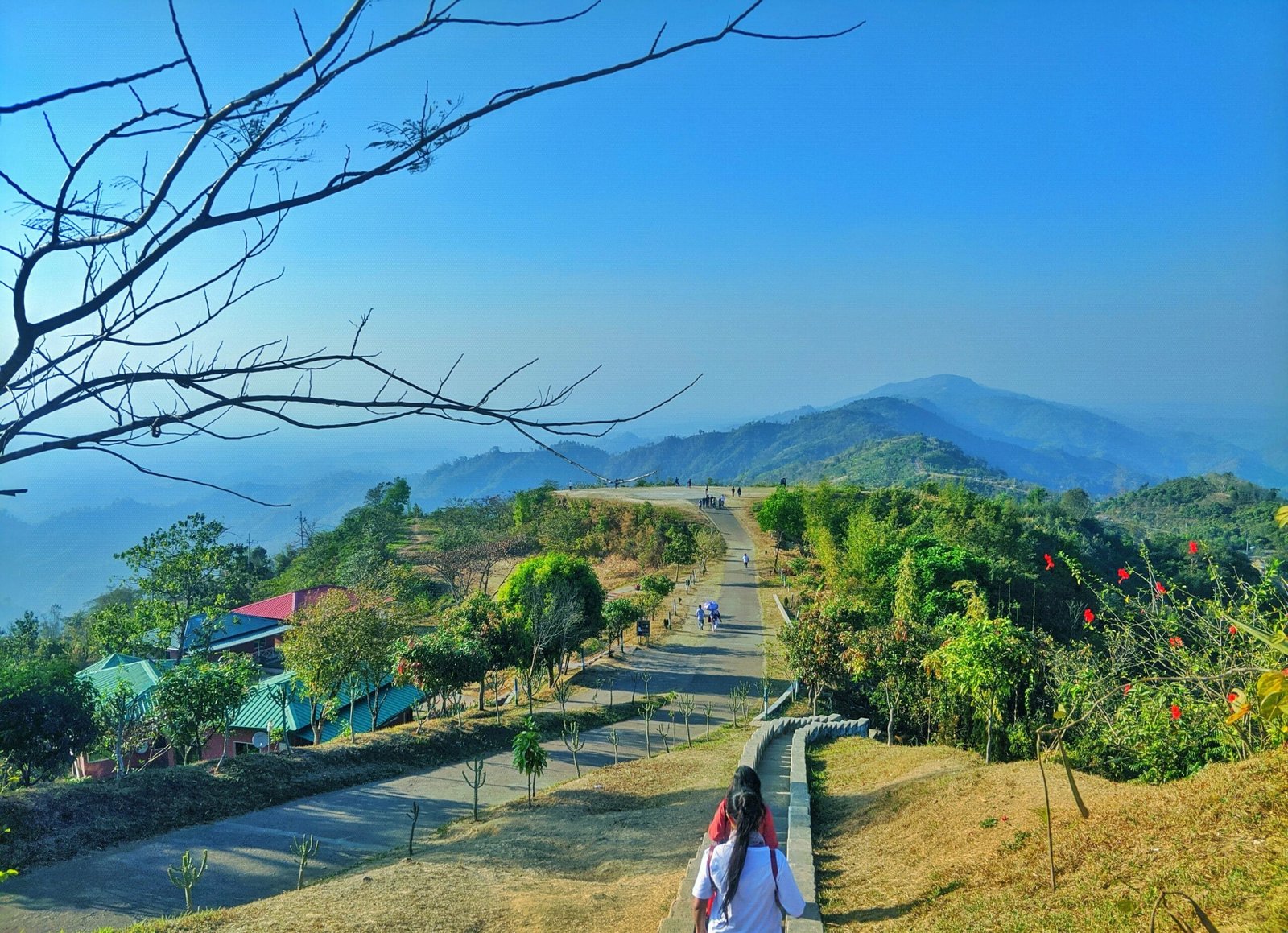
| Capital | Dhaka |
| Population | 165,650,475 |
| Official Language | Bengali |
| Money | Bangladeshi Taka |
| Area | 148,460 Square Kilometers |
| Major Mountain Ranges | Chittagong, Mowdok, Reng Tlang, Lushai, Sitakunda, Madhupur |
| Major Rivers | Padma, Jamuna, Meghna, Brahmaputra, Surma, Karnaphuli, Teesta, Atrai, Rupsha, Dhaleshwari |
| Country Code | +880 |
Bangladesh Flag

Bangladesh Interesting Places: Geography
1. Three Giant River Systems Built Most of Bangladesh – Bangladesh sits on the vast delta created by the Ganges, Brahmaputra, and Meghna river systems as they carry water and sediment toward the Bay of Bengal. Floodplains cover about 80% of the country, giving Bangladesh one of the most river-shaped landscapes on Earth.
2. The Meghna River Can Stretch 13 Kilometers Across – Near Bhola in southern Bangladesh, the Meghna reaches approximately 13 kilometers (8 miles) wide before emptying into the Bay of Bengal. The river carries the combined waters of several enormous river systems through multiple mouths along the country’s constantly changing delta coast.
3. New Islands Can Appear Inside Bangladesh’s Rivers – The Ganges, Jamuna, Padma, and Meghna continually erode their banks and deposit sediment elsewhere, creating temporary islands known locally as chars. Some become large enough for farming and permanent settlements, even though future floods and shifting river channels can eventually reshape or erase them.
4. Cox’s Bazar Has About 120 Kilometers of Unbroken Sandy Beach – The coastline around Cox’s Bazar stretches for roughly 120 kilometers (75 miles) along the Bay of Bengal. Considered one of the world’s longest uninterrupted stretches of natural sandy beach, it runs southward toward Teknaf near the border with Myanmar.
5. The World’s Largest Mangrove Forest Spreads Across Southwestern Bangladesh – The Sundarbans cover roughly 10,000 square kilometers across Bangladesh and neighboring India, with about 60% of the forest lying inside Bangladesh. A maze of tidal rivers, mudflats, creeks, and low islands constantly changes as sediment and seawater reshape the delta.
6. The Chittagong Hill Tracts Cover About One-Tenth of the Country – Southeastern Bangladesh contains a striking landscape of parallel hill ranges, forested valleys, rivers, and steep ridges known as the Chittagong Hill Tracts. The region covers approximately 13,295 square kilometers, creating terrain dramatically different from the low floodplains that dominate most of Bangladesh.
7. Bangladesh’s Largest Man-Made Lake Flooded an Entire River Valley – Kaptai Lake was created by damming the Karnaphuli River in the Chittagong Hill Tracts for hydroelectric power. The reservoir covers roughly 583 square kilometers at full surface area and winds between forested hills through a complicated network of bays, narrow channels, and submerged valleys.

Sundarban Forest, Bangladesh
8. Part of Dhaka Sits on an Ancient Elevated Terrace – The Madhupur Tract is a Pleistocene-age upland extending through central Bangladesh and covering more than 4,000 square kilometers. Its reddish clay terraces stand several meters above surrounding floodplains, and the southern portion of this much older landscape extends beneath parts of modern Dhaka.
9. Bangladesh’s Famous “Coral Island” Is Not Actually Made of Coral – Saint Martin’s Island lies off the country’s southeastern tip and is widely nicknamed Bangladesh’s coral island. Its underlying rock is actually ancient sandstone, but the surrounding shallow waters support the country’s only flourishing communities of reef-building corals.
10. Tanguar Haor Becomes an Enormous Seasonal Wetland – Tanguar Haor covers about 9,500 hectares in northeastern Bangladesh near the foothills of India’s Meghalaya region. During the monsoon, nearly the entire landscape floods, transforming low-lying basins, villages built on raised mounds, and surrounding floodplains into a broad inland waterscape.
Fun Facts about Bangladesh: Plants and Wildlife
11. Bangladesh’s Sundarbans Are Home to About 125 Bengal Tigers – The latest camera-trap survey estimated 125 tigers in the Bangladeshi Sundarbans, up from 114 in 2018. These tigers live in a remarkable mangrove environment of tidal creeks, muddy islands, and saline forests, making the Sundarbans the world’s only mangrove habitat occupied by wild tigers.
12. Bangladesh Supports the World’s Largest Known Population of Irrawaddy Dolphins – Surveys of the Sundarbans and nearby Bay of Bengal waters revealed roughly 6,000 Irrawaddy dolphins, far more than previously known from any other population. These unusual round-headed dolphins move between coastal waters, estuaries, and the maze of rivers flowing through the mangrove forest.
13. Ganges River Dolphins Navigate Bangladesh’s Muddy Rivers Almost Without Sight – Ganges River dolphins live in waterways where visibility can be extremely poor, and their tiny eyes provide little useful vision. Instead, they rely heavily on echolocation to hunt fish and shrimp, sending out sounds and interpreting the echoes that return from objects and prey around them.

14. Bangladesh Is Home to South Asia’s Only Ape – The western hoolock gibbon survives in fragmented evergreen forests of northeastern and southeastern Bangladesh and is the only ape species native to South Asia. These tailless primates travel through the canopy using their exceptionally long arms and communicate with loud, elaborate calls that can carry through the forest.
15. One of the Sundarbans’ Rarest Birds Has Bright Green Feet – The masked finfoot is an elusive waterbird that hides among mangrove creeks and overhanging vegetation in the Sundarbans. Its unusually large green, lobed feet help it both swim through the water and move among tangled mangrove branches, but habitat loss has made the species increasingly difficult to find.
16. Bangladesh Produces More Than Two-Thirds of the World’s Hilsa – Hilsa, known locally as ilish, is Bangladesh’s national fish and one of the country’s most culturally important species. The fish migrates from the sea into rivers to reproduce, and Bangladesh produces more than two-thirds of the world’s hilsa catch, amounting to hundreds of thousands of metric tons each year.
17. Bangladesh’s National Flower Grows Wild Across Its Wetlands – The white water lily, known locally as shapla, grows abundantly in ponds, marshes, and other shallow waterways throughout Bangladesh. Its importance goes beyond decoration: the long flower stalks are eaten as a vegetable, while the plant’s rhizomes and seeds are also used as food in some communities.
18. The Sundarbans May Have Been Named After the Sundari Tree – Sundari trees are among the dominant plants of Bangladesh’s famous mangrove forest and can grow to around 25 meters (82 feet) tall. One widely accepted explanation for the name “Sundarbans” traces it to these trees, whose specialized roots help them survive the waterlogged soils of the tidal delta.
19. Tens of Thousands of Migratory Waterbirds Gather at Tanguar Haor – Every northern winter, roughly 30,000 to 40,000 migratory waterbirds can converge on Tanguar Haor in northeastern Bangladesh, with exceptional years bringing even larger numbers. The enormous seasonal wetland supports at least 208 bird species as well as 135 species of fish and remnants of natural freshwater swamp forest.

20. Nearly 400 of Bangladesh’s Assessed Animal Species Face Extinction Threats – Bangladesh’s national Red List assessment evaluated 1,619 species ranging from mammals and birds to butterflies and freshwater fish. Of those, 390 were classified as threatened, including 56 Critically Endangered species, revealing remarkable biodiversity packed into a country considerably smaller than many individual U.S. states.
Bangladesh Culture Facts
21. Bangladesh Inspired the World to Celebrate International Mother Language Day – February 21 holds special importance in Bangladesh because of the 1952 movement to secure recognition for the Bangla language. Bangladesh later proposed an international observance celebrating linguistic diversity, and UNESCO approved the idea in 1999; International Mother Language Day has been observed worldwide every February 21 since 2000.
22. A New Year Parade Born Under Military Rule Became UNESCO Cultural Heritage – Dhaka University students and teachers created Mangal Shobhajatra in 1989 during a period of military rule, using colorful masks and enormous figures to express hope and resistance. The procession now takes place each April 14 during Pahela Baishakh, the Bengali New Year, and UNESCO recognized the tradition in 2016.
23. Dhaka’s Decorated Rickshaws Are Moving Works of Folk Art – Rickshaw artists transform the city’s three-wheeled vehicles with bright flowers, animals, movie stars, historical scenes, and elaborate patterns, effectively turning them into rolling art galleries. The craft became such a recognizable part of Dhaka’s identity that UNESCO added rickshaws and rickshaw painting to its Intangible Cultural Heritage list in 2023.
24. Jamdani Patterns Are Woven Directly Into the Fabric by Hand – Jamdani is a fine cotton textile traditionally produced on handlooms around Dhaka, with elaborate floral and geometric motifs inserted individually during weaving rather than printed afterward. The labor-intensive technique has been passed through generations of weaving families and was recognized by UNESCO as Intangible Cultural Heritage in 2013.
25. Bangladesh’s Baul Minstrels Follow a Spiritual Tradition Outside Organized Religion – Bauls are wandering singers whose philosophy draws influences from Sufism, Hindu devotional traditions, Buddhism, and other Bengali beliefs without belonging strictly to any one religion. They traditionally perform philosophical songs accompanied by instruments such as the one-stringed ektara, and UNESCO recognized Baul songs as Intangible Cultural Heritage in 2008.

26. Cool Sleeping Mats Are Woven From a Wetland Plant in Sylhet – Shital Pati craftspeople split and weave strips of murta cane into smooth mats traditionally used as bed coverings, sitting mats, and prayer mats. The craft is especially associated with low-lying villages around Sylhet, where knowledge is passed through families, and UNESCO recognized the weaving tradition in 2017.
27. Tangail Saree Weaving Joined UNESCO’s Heritage List in 2025 – Craftspeople in the Tangail region weave finely patterned sarees from cotton, silk, or jute using techniques passed through generations. The tradition is practiced particularly among the Hindu Basak and Muslim Jhola weaving communities, whose detailed designs and distinctive local patterns helped earn UNESCO recognition in 2025.
28. Traditional Racing Boats Can Carry 100 Rowers – Nouka baich boat races have long been part of cultural life in Bangladesh’s river communities, with crews rowing in rhythm while musicians beat drums and encourage them from aboard. Some traditional racing boats stretch 150 to 200 feet (46 to 61 meters) long and can carry as many as 100 rowers.
29. Bangladesh Has So Many Traditional Rice Cakes That One Exhibition Displayed 106 Kinds – Pitha are homemade cakes prepared from ingredients such as rice flour, coconut, sugar, and date-palm molasses, particularly during the cool winter harvest season. In 1991, a Bangladesh Shishu Academy exhibition displayed 106 varieties, while individual regions continue to maintain their own shapes, recipes, and names.
30. Bangladesh’s Largest Book Festival Grew From Books Spread on a Piece of Cloth – Publisher Chittaranjan Saha helped begin what became the Ekushey Book Fair in 1972 by displaying books on a piece of sackcloth outside Bangla Academy. The event gradually expanded into a major month-long February celebration of Bangla literature, publishing, and the cultural legacy of the Language Movement.
Bangladesh Facts: Government & Economy
31. Bangladesh’s Parliament Reserves 50 Seats for Women – The Jatiya Sangsad contains 350 seats, with 300 members directly elected from geographic constituencies. Another 50 seats are reserved for women and distributed among political parties through proportional representation, creating a second route for women to serve in the country’s national legislature.
32. Bangladesh’s Parliament Building Sits on a 215-Acre Complex – American architect Louis Kahn designed the monumental Jatiya Sangsad Bhaban in Dhaka, which opened for parliamentary use in 1982. The complex spreads across about 215 acres and is famous for its massive concrete walls, geometric openings, artificial lakes, and dramatic use of natural light.

33. Clothing Accounts for About Four-Fifths of Bangladesh’s Exports – Bangladesh exported about $38.7 billion worth of ready-made garments during the 2025–26 fiscal year, representing roughly 81% of the country’s merchandise exports. The industry grew from just $31.6 million in exports in 1983–84 and has made Bangladesh one of the world’s leading apparel-producing countries.
34. Bangladeshis Working Abroad Sent Home More Than $35 Billion in One Year – Worker remittances reached approximately $35.6 billion during the 2025–26 fiscal year, increasing more than 17% from the previous year. Money sent home from countries including Saudi Arabia, the United Kingdom, the United Arab Emirates, Malaysia, and the United States provides crucial income for millions of Bangladeshi families.
35. Bangladesh’s Economy Has Grown to More Than $450 Billion – Bangladesh recorded a gross domestic product of approximately $456 billion in 2025, compared with only about $53 billion in 2000. Manufacturing, agriculture, services, overseas remittances, and the enormous garment industry have all contributed to one of South Asia’s largest national economies.
36. A Bangladeshi Experiment Helped Spread Microcredit Around the World – Economist Muhammad Yunus began making tiny loans to poor villagers during the 1970s and later established Grameen Bank to expand the idea. Its collateral-free microcredit model inspired similar programs in more than 100 countries, and Yunus and Grameen Bank shared the 2006 Nobel Peace Prize.
37. Bangladesh Produces Nearly All of the Medicine It Uses – A pharmaceutical industry that was once heavily dependent on imports now supplies about 97% of Bangladesh’s domestic medicine market. Bangladeshi manufacturers also export medicines to more than 100 countries, producing everything from inexpensive generic drugs to vaccines, cancer treatments, and other sophisticated pharmaceuticals.
38. Bangladesh Is the World’s Leading Exporter of Jute Products – Jute has traditionally been called Bangladesh’s “golden fiber” because of its historic importance to agriculture and trade. The country is the world’s second-largest producer of raw jute and the leading exporter of jute and jute-based products, including sacks, textiles, ropes, carpets, and increasingly biodegradable alternatives to synthetic materials.
39. The Padma Bridge Directly Connects More Than 30 Million People to the Capital Region – The 6.15-kilometer (3.8-mile) Padma Bridge opened to road traffic in 2022, creating a direct link between southwestern Bangladesh and Dhaka. Government estimates indicate that more than 30 million people across an area covering roughly 29% of the country directly benefit from the connection.
40. Bangladesh Builds Ships for Customers in Europe, Africa, and Asia – More than 100 shipbuilders and 120 registered shipyards operate in Bangladesh, many along the country’s extensive river network. Bangladeshi yards have exported container vessels, ferries, tugboats, patrol craft, bulk carriers, and other ships while also supplying the enormous domestic market created by river transportation.
Fun Facts About Bangladesh: History
41. One of Bangladesh’s Earliest Cities Was Fortified More Than 2,300 Years Ago – Mahasthangarh developed along the Karatoya River around the 4th or 3rd century BCE and became one of ancient Bengal’s major urban centers. Its fortified core measures roughly 1.5 by 1.4 kilometers and remained an important center of settlement, trade, government, and religion for centuries.
42. A Buddhist Monastery in Bangladesh Influenced Architecture as Far Away as Cambodia – Somapura Mahavihara at Paharpur became a major Buddhist intellectual center between the 7th and 12th centuries. Its enormous monastery complex and distinctive architectural design influenced later Buddhist buildings across Southeast Asia, including temples in Myanmar, Indonesia, and Cambodia.
43. A 15th-Century City Near the Sundarbans Contained Hundreds of Mosques – The medieval city of Khalifatabad, now known as Bagerhat, was established by Khan Jahan during the 1400s near the northern edge of the Sundarbans. Spread across roughly 50 square kilometers, the city contained hundreds of mosques along with roads, bridges, water reservoirs, tombs, and other brick structures.
44. Dhaka Became the Capital of Mughal Bengal in 1610 – Mughal governor Islam Khan moved Bengal’s provincial capital to Dhaka and renamed it Jahangirnagar in honor of Emperor Jahangir. Its location along major river routes helped the city become an important administrative and commercial center, famous internationally for exporting exceptionally fine cotton muslin.
45. An Eight-Hour Battle Helped Establish British Power in Bengal – The Battle of Plassey was fought on June 23, 1757, between Bengal’s Nawab Siraj ud-Daulah and the British East India Company in what is now West Bengal, India. Although relatively small, the battle gave the company enormous political influence over Bengal, including the territory that later became Bangladesh.

46. Bangladesh Was Once the Eastern Half of a Country Divided by More Than 1,000 Miles – When British India was partitioned in 1947, present-day Bangladesh became East Bengal, part of the new state of Pakistan and later renamed East Pakistan. The country’s eastern and western wings were separated by more than 1,000 miles (1,600 kilometers) of Indian territory.
47. The Deadliest Tropical Cyclone on Record Struck Bangladesh in 1970 – The Bhola cyclone devastated coastal East Pakistan on November 12, 1970, killing an estimated 300,000 to 500,000 people. Anger over the central government’s slow disaster response intensified existing political tensions between East and West Pakistan only months before Bangladesh’s struggle for independence erupted.
48. East Pakistan’s Awami League Won an Absolute Majority in Pakistan’s 1970 Election – Sheikh Mujibur Rahman’s Awami League won enough seats in Pakistan’s National Assembly to control the legislature after the December 1970 election. When political leaders and the military government failed to transfer power, protests and confrontation escalated dramatically across East Pakistan.
49. Bangladesh’s Most Famous Independence Speech Had No Written Script – On March 7, 1971, Sheikh Mujibur Rahman addressed an enormous crowd in Dhaka and urged Bengalis to prepare for resistance as the political crisis deepened. The influential speech was delivered extemporaneously, survived through audio and film recordings, and was added to UNESCO’s Memory of the World Register in 2017.
50. The 1971 Liberation War Sent About 10 Million Refugees Into India – Following a Pakistani military crackdown in March 1971, a nine-month war engulfed East Pakistan and drove roughly 10 million refugees across the border into India. Pakistani forces surrendered in Dhaka on December 16, 1971, securing the independence of Bangladesh after one of the largest refugee crises of the 20th century.