
Table of Contents
Argentina is a country known for its rich culture, breathtaking landscapes, and fascinating history. From the vibrant streets of Buenos Aires to the stunning glaciers of Patagonia, Argentina is full of surprises. Whether you’re interested in Argentina fun facts, its historical milestones, or its most interesting places, this list will give you a deeper insight into what makes this South American nation so unique.
In this article, we’ll explore 50 interesting facts about Argentina, covering everything from its world-famous cuisine to its influence on global sports and music. Whether you’re a traveler planning a visit or simply curious about Argentina’s culture and history, you’ll discover plenty of interesting things about Argentina that will surprise and inspire you.
Quick Facts
| Official Name | The Argentine Republic |
| Form of Government | Federal Constitutional Republic |
| Capital | Buenos Aires |
| Population | 45,804,093 |
| Official Language | Spanish |
| Money | Argentine Peso |
| Area | 2,800,000 Square Kilometers |
| Major Mountain Ranges | Andes |
| Major Rivers | Parana |
| Country Code | +54 |
Argentinian Flag

Argentina Fun Facts: Geography
1. Argentina Is the Eighth-Largest Country in the World – Argentina covers about 2.78 million square kilometers (1.07 million square miles), making it the world’s eighth-largest country and the second-largest in South America after Brazil. Its territory stretches more than 3,600 kilometers from the subtropical north toward the cold islands and channels of Tierra del Fuego.
2. Argentina Stretches From Subtropical Forests to Subantarctic Islands – Argentina spans more than 30 degrees of latitude, creating an unusually wide range of climates. The north includes hot subtropical lowlands and forests, central Argentina is largely temperate, while Patagonia and Tierra del Fuego experience much colder, windier conditions approaching the subantarctic zone.
3. The Highest Mountain Outside Asia Rises in Argentina – The Andes form much of Argentina’s western frontier with Chile and contain Aconcagua, which reaches about 6,961 meters (22,838 feet) above sea level. Located in Mendoza Province, it is the highest mountain in both the Western and Southern hemispheres and the tallest peak anywhere outside Asia.
4. The Pampas Form One of the World’s Great Agricultural Regions – The Pampas stretch across much of central Argentina as broad, fertile grasslands with deep soils ideal for farming and livestock. This landscape became the heart of Argentina’s cattle and grain industries, producing enormous quantities of beef, wheat, corn, and soybeans for domestic use and international export.
5. Patagonia Contains Steppes, Glaciers, Mountains, and Vast Ice Fields – Southern Argentina’s Patagonia region combines dry windswept plains with Andean peaks, turquoise glacial lakes, and some of the largest ice fields outside the polar regions. Perito Moreno Glacier is especially famous for periodically advancing across Lago Argentino and forming an ice dam that eventually ruptures in spectacular collapses.

6. Iguazú Falls Contains 275 Individual Waterfalls – Argentina shares the spectacular Iguazú Falls with neighboring Brazil, where the Iguazú River plunges over a series of 275 waterfalls and cascades. The system stretches about 2.7 kilometers (1.7 miles) across and includes drops reaching roughly 80 meters (262 feet), surrounded by dense subtropical rainforest.
7. Ushuaia Is Known Around the World as the “End of the World” – Ushuaia sits on the Beagle Channel near the southern tip of Tierra del Fuego, surrounded by mountains, forests, and cold southern waters. Long promoted as the world’s southernmost city, it remains one of the planet’s southernmost major settlements and an important gateway for ships traveling to Antarctica.
8. The Lowest Point in the Americas Lies 105 Meters Below Sea Level – Laguna del Carbón in Santa Cruz Province sits approximately 105 meters (344 feet) below sea level, making it the lowest natural point in the Western Hemisphere. The lagoon lies within the Gran Bajo de San Julián, a large enclosed depression in the arid landscapes of southern Patagonia.
9. The Paraná River Flows for Nearly 4,900 Kilometers – The Paraná stretches about 4,880 kilometers (3,030 miles) through Brazil, Paraguay, and Argentina, making it the second-longest river in South America after the Amazon. In Argentina, its enormous river system eventually joins the Uruguay River to form the Río de la Plata estuary near Buenos Aires.
10. Argentina Has Maintained a Permanent Antarctic Presence Since 1904 – Argentina took control of a meteorological observatory on Laurie Island in the South Orkney Islands on February 22, 1904, creating what later became Base Orcadas. The country has maintained an uninterrupted presence there ever since, giving Argentina the longest continuous national presence in Antarctica.
Argentina Interesting Places: Nature and Wildlife
11. Argentina Is Home to Thousands of Vertebrate Species – Argentina’s enormous range of habitats supports nearly 3,000 vertebrate species, including roughly 1,000 bird species and close to 400 mammals. From subtropical forests and wetlands to the Andes, Pampas, Patagonia, and surrounding seas, the country contains 18 recognized ecoregions with remarkably different wildlife.
12. Iguazú National Park Protects Argentina’s Most Biodiverse Forest – The subtropical Paraná Forest surrounding Iguazú Falls contains the highest biological diversity of any ecoregion in Argentina. Jaguars, tapirs, capuchin monkeys, caimans, coatis, and more than 450 bird species live among towering trees, vines, ferns, and dense layers of rainforest vegetation.
13. Andean Condors Can Have Wingspans Over 3 Meters – The Andean condor is one of the largest flying birds on Earth, with wings stretching more than 3 meters (10 feet) from tip to tip. These massive scavengers use rising air currents to soar over the Andes with little effort and have been recorded flying at elevations approaching 7,000 meters.
14. Nearly Half a Million Magellanic Penguins Gather at Punta Tombo – Punta Tombo on the Patagonian coast protects the largest continental colony of Magellanic penguins, with almost half a million birds present during the breeding season. The penguins return from the sea to nest in burrows and sheltered patches across the dry coastal steppe.
15. Península Valdés Is One of the World’s Great Marine Wildlife Sanctuaries – Southern right whales gather in the sheltered gulfs around Península Valdés to mate and give birth, while elephant seals and sea lions breed along its shores. The peninsula is also famous for orcas that deliberately surge onto beaches while hunting young seals and sea lions.
16. Los Glaciares Protects Wildlife Beneath the Patagonian Ice Fields – Los Glaciares National Park protects more than 726,000 hectares of mountains, forests, lakes, and glaciers in southern Patagonia. Its wildlife includes guanacos, Andean condors, and the endangered huemul, a stocky native deer that survives in remote forests and mountain valleys near the Andes.

17. Some of the Largest Dinosaurs Ever Discovered Lived in Argentina – Argentina’s fossil-rich Patagonia has produced remains of enormous dinosaurs, including Argentinosaurus, one of the largest land animals ever known. Although its incomplete skeleton makes its exact size uncertain, scientists estimate this giant herbivore reached roughly 35 meters (115 feet) long and weighed around 70 metric tons.
18. The Iberá Wetlands Have Brought Jaguars Back After a 70-Year Absence – The Esteros del Iberá in Corrientes cover millions of hectares of marshes, lagoons, grasslands, and floating vegetation, forming one of the world’s great freshwater ecosystems. Conservation programs have successfully returned locally extinct wildlife, including giant anteaters and jaguars, with dozens of jaguars now living freely in the region.
19. Argentina’s National Bird Builds Oven-Shaped Nests From Mud – The rufous hornero constructs sturdy dome-shaped nests from mud and plant material, often attaching them to trees, fence posts, and buildings. Chosen as Argentina’s national bird in 1928, it shares symbolic status with the ceibo, whose brilliant red blossoms were officially declared the national flower in 1942.
20. Yerba Mate Is Found in More Than 90% of Argentine Homes – Yerba mate comes from Ilex paraguariensis, a native tree of the Paraná Forest whose leaves are dried and brewed into Argentina’s famous caffeinated infusion. Argentines consume around six kilograms of yerba per person each year, and sharing mate has become one of the country’s most recognizable social traditions.
Interesting Things About Argentina: People & Culture
21. Argentina Received One of the World’s Great Waves of European Immigration – Around six million European immigrants arrived in Argentina between 1870 and 1929, with more than three million settling permanently. Italians and Spaniards formed the largest groups, helping transform the country’s language, food, architecture, music, and cities; by 1914, about 30% of Argentina’s population had been born abroad.
22. Buenos Aires Earned the Nickname the “Paris of South America” – Argentina’s prosperity and enormous European immigration boom transformed Buenos Aires during the late 19th and early 20th centuries. French-inspired palaces, grand boulevards, elaborate theaters, landscaped parks, and ornate cafés gave neighborhoods such as Recoleta a distinctly European appearance that helped inspire the city’s famous comparison with Paris.
23. Tango Grew From the Multicultural Neighborhoods of the Río de la Plata – Tango emerged among working-class communities in Buenos Aires and Montevideo during the late 19th century, blending influences from European immigrants, Afro-Argentine and Afro-Uruguayan traditions, and local criollo culture. Its music, dance, poetry, and distinctive social world spread internationally, and UNESCO recognized tango as Intangible Cultural Heritage of Humanity in 2009.

24. Argentines Eat About 50 Kilograms of Beef Per Person Each Year – Beef remains deeply embedded in Argentine food culture, with consumption reaching about 49.9 kilograms (110 pounds) per person in 2025. The traditional asado turns grilled ribs, sausages, and other cuts of meat into a long social gathering shared with family and friends around the parrilla.
25. Argentina Is South America’s Largest Wine Producer – Argentina produced about 10.7 million hectoliters of wine in 2025, ranking sixth worldwide and first in South America. Mendoza is the heart of the industry, and Malbec has become the country’s emblematic grape, thriving in the sunny, high-altitude vineyards along the eastern slopes of the Andes.
26. Argentina Has Won the FIFA World Cup Three Times – Football occupies an enormous place in Argentine culture, from neighborhood clubs to massive stadium rivalries. The national team captured the FIFA World Cup in 1978, 1986, and 2022, with legends such as Diego Maradona and Lionel Messi becoming national icons far beyond the sport itself.
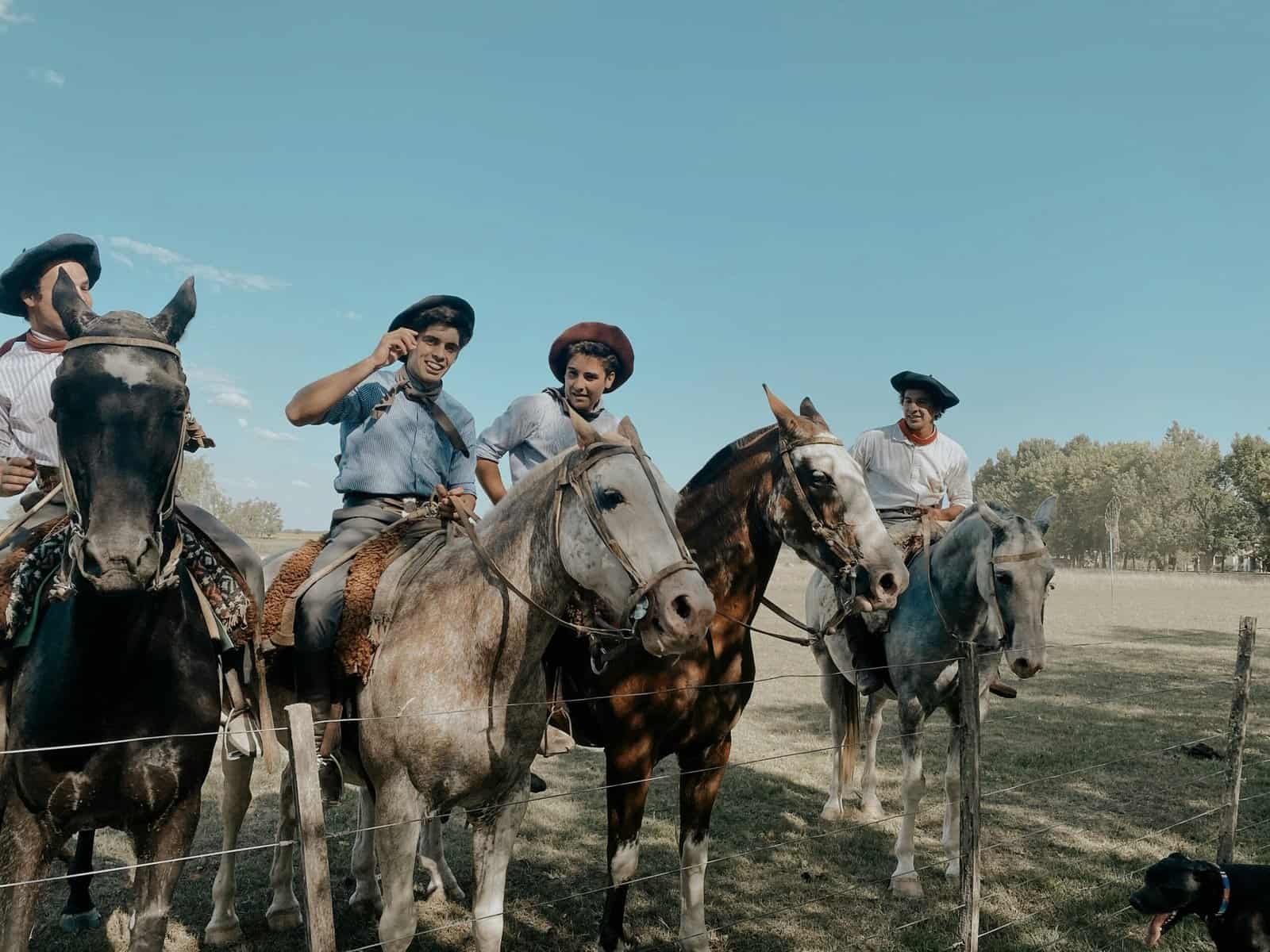
27. Argentina’s Official National Sport Is Played on Horseback – Pato combines fast horseback riding with elements resembling polo and basketball, as teams compete to carry and throw a handled ball through a vertical ring. The game has roots in Argentina’s rural culture dating back centuries and was formally declared the country’s national sport by law in 2017.
28. Argentine Spanish Commonly Uses “Vos” Instead of “Tú” – Throughout Argentina, informal speech commonly uses vos with distinctive verb forms such as vos tenés, vos querés, and vos podés. The famous Río de la Plata accent around Buenos Aires also developed a noticeably Italian-influenced intonation, reflecting the enormous immigration from Italy during the 19th and 20th centuries.
29. Buenos Aires Has More Bookstores Per Person Than Any Other Major City – Buenos Aires has more than 800 bookstores, equivalent to roughly 25 for every 100,000 residents according to the city’s tourism authority. Its literary culture is also celebrated through historic shops, late-night bookstores along Avenida Corrientes, and one of the Spanish-speaking world’s largest annual book fairs.
30. Sharing Mate Follows Its Own Social Ritual – Mate is traditionally passed around a group using a single gourd and metal straw called a bombilla. One person, known as the cebador, prepares and refills the drink before passing it to each person in turn, making the ritual a familiar expression of friendship, conversation, and hospitality throughout Argentina.
Argentina Facts: Government & Economy
31. Argentina Is Divided Into 23 Provinces and One Autonomous City – Argentina is a federal republic made up of 23 provinces plus the Autonomous City of Buenos Aires, which also serves as the national capital. Each province has its own constitution, governor, and legislature and retains powers that were not specifically delegated to the federal government.
32. Argentina Produced the World’s First Woman President in 1974 – Isabel Perón became president on July 1, 1974, after the death of her husband, President Juan Domingo Perón. She had been elected vice president the previous year and automatically succeeded him, becoming the first woman in the world to hold the office of president of a country.
33. Argentina Has Latin America’s Third-Largest Economy – Argentina recorded a gross domestic product of about $683 billion in 2025, placing it behind only Brazil and Mexico among Latin American economies. Its enormous agricultural sector is joined by manufacturing, services, energy production, and major reserves of natural gas and lithium.

34. Argentina Ranked Among the World’s Richest Countries in the Early 1900s – Economic historians estimate that Argentina had the world’s eighth-highest GDP per person in 1910, ahead of countries including France and Germany. Its relative position declined dramatically during the 20th century as other economies grew faster and Argentina experienced repeated periods of political instability, inflation, debt crises, and inconsistent economic policies.
35. Argentina’s 2001 Debt Crisis Produced the Largest Sovereign Default in History at the Time – After years of recession and mounting financial pressure, Argentina suspended payments on tens of billions of dollars in public debt in December 2001. More than $100 billion ultimately required restructuring, making the collapse the largest sovereign debt default the world had experienced up to that point.
36. Monthly Inflation Fell From 25.5% to 2.4% in Less Than a Year – Argentina entered 2024 with one of the world’s highest inflation rates, after monthly inflation reached 25.5% in December 2023. Under President Javier Milei’s stabilization program, which included major spending cuts, fiscal consolidation, subsidy reductions, and deregulation, monthly inflation fell to 2.4% by November 2024, although prices still rose 117.8% over the full year.
37. Argentina Is the World’s Largest Exporter of Soybean Oil and Soybean Meal – Argentina has developed an enormous soybean-processing industry centered along the Paraná River near Rosario, where crushing plants turn soybeans into oil and protein-rich animal feed. The country leads the world in exports of both products and is also one of the largest international suppliers of corn, wheat, and other agricultural commodities.
38. Argentina Helped Create Mercosur in 1991 – Argentina joined Brazil, Paraguay, and Uruguay in signing the Treaty of Asunción on March 26, 1991, laying the foundation for the Southern Common Market, better known as Mercosur. The bloc was created to expand regional trade and economic integration by reducing barriers between participating South American economies.
39. Argentina Was the First Latin American Country to Legalize Same-Sex Marriage – Argentina enacted Law 26,618 in July 2010, giving same-sex couples the same legal marriage rights as opposite-sex couples. The landmark legislation made Argentina the first country in Latin America and the tenth country in the world to establish marriage equality nationwide.
40. Argentina Holds About 19% of the World’s Identified Lithium Resources – The U.S. Geological Survey estimates that Argentina contains around 28 million metric tons of identified lithium resources, nearly one-fifth of the global total. Much of this lithium lies beneath high-altitude salt flats in Jujuy, Salta, and Catamarca, placing Argentina at the center of the rapidly growing battery and electric-vehicle supply chain.
Argentina History Facts: Key Moments in History
41. Argentina Declared Independence From Spain on July 9, 1816 – Representatives of the United Provinces of the Río de la Plata gathered at the Congress of Tucumán and formally broke political ties with the Spanish monarchy. The declaration completed a revolutionary process that had begun with the May Revolution in Buenos Aires six years earlier.
42. José de San Martín Helped Liberate Three South American Countries – General José de San Martín organized an ambitious military campaign designed to secure independence beyond Argentina’s borders. In 1817, his Army of the Andes crossed the mountains into Chile, helped defeat Spanish royalist forces there, and later sailed north to Peru, where San Martín proclaimed independence in 1821.
43. Nearly 30% of Argentina’s Population Was Foreign-Born by 1914 – Argentina became one of the world’s great destinations during the era of mass migration, receiving about 4.2 million immigrants between 1881 and 1914 alone. Italians and Spaniards dominated the arrivals, and by the 1914 census nearly three out of every ten people living in Argentina had been born abroad.
44. Juan and Eva Perón Created a Political Movement That Outlived Them Both – Juan Perón became president in 1946 with strong support from organized labor, while Eva Perón emerged as an influential advocate for workers, social welfare, and women’s political participation. The movement they built became known as Peronism and has remained one of the defining forces in Argentine politics for generations.

45. Argentina Was Ruled by a Military Dictatorship From 1976 to 1983 – After seizing power in a March 1976 coup, Argentina’s military government carried out a systematic campaign of kidnappings, torture, secret detention, and killings against perceived opponents. Thousands of people were forcibly disappeared, while hundreds of children were taken from detained or murdered parents and placed with other families.
46. The 1982 Falklands War Helped Bring Down Argentina’s Military Government – Argentine forces occupied the Falkland Islands, known in Argentina as the Malvinas, on April 2, 1982, prompting Britain to send a military task force to retake them. Argentina surrendered on June 14 after a 74-day conflict, and dictator Leopoldo Galtieri resigned just three days later as the already unpopular military regime rapidly lost power.
47. Argentina Restored Democracy in 1983 After More Than Seven Years of Dictatorship – Argentines returned to the polls on October 30, 1983, electing Raúl Alfonsín as president in a landmark transition back to constitutional government. After taking office on December 10, Alfonsín created the National Commission on the Disappearance of Persons to investigate human rights abuses committed during military rule.
48. Argentina’s Name Comes From the Latin Word for Silver – The name Argentina derives from argentum, the Latin word for silver, reflecting early European stories and expeditions associated with riches supposedly found around the Río de la Plata. A 1554 map used the expression Terra Argentea, while a 1602 poem titled Argentina helped establish the name in written usage.
49. Argentina Produced the First Pope From the Americas – Buenos Aires-born Cardinal Jorge Mario Bergoglio was elected pope on March 13, 2013, taking the name Francis in honor of Saint Francis of Assisi. He became the first pope from the Americas, the first Jesuit pope, and the first pontiff from outside Europe in more than 1,200 years.
50. Che Guevara Was Born in Argentina Before Becoming a Symbol of the Cuban Revolution – Ernesto “Che” Guevara was born in Rosario in 1928 and trained as a physician before becoming involved in revolutionary politics. He joined Fidel Castro’s movement in Mexico, became a commander during the Cuban Revolution, and later emerged as one of the most internationally recognizable revolutionary figures of the 20th century.