

Table of Contents
Ohio may be best known as the Buckeye State, but it has much more to offer than college football traditions and rolling farmland. From aviation pioneers and U.S. presidents to inventors such as Ohio-born Thomas Edison, whose most famous laboratory work later took place in Menlo Park, New Jersey, Ohio has played an important role in American history and culture.
Whether you’re interested in major cities, natural wonders, famous residents, or unusual state trivia, there are plenty of interesting facts about Ohio to discover. In this list, we’ll explore 50 fun facts about Ohio, covering everything from its historic achievements and unique landmarks to the cool things about Ohio that make it stand out!
Ohio Facts – Quick Facts
| Population | 11,900,510 |
| Capital City | Columbus |
| Statehood Granted | March 1,1803 |
| Abbreviation | OH |
| State Motto | With God, All Things Are Possible |
| State Nickname | The Buckeye State |
| State Bird | Northern Cardinal |
| State Flower | Scarlet Carnation |
| State Fruit | Pawpaw |
| State Tree | Ohio Buckeye |
| State Song | Beautiful Ohio |
| Major Airports | Cleveland Hopkins International Airport (CLE) John Glenn Columbus International Airport (CMH) Cincinnati/Northern Kentucky International Airport (CVG) |
| Major Sports Teams | Cleveland Brown (NFL) Cincinnati Bengals (NFL) Cleveland Indians (MLB) Cincinnati Reds (MLB) Cleveland Cavaliers (NBA) Columbus Blue Jackets (NHL) Columbus Crew (MLS) FC Cincinnati (MLS) |
| Largest College | The Ohio State University |
| Area Codes | (614) (380) (216) (440) (436) (330) (234) (513) (283) (937) (326) (419) (567) (740) (220) |
| Zip Codes | Ohio has 1,447 Zip Codes ranging from 43001 to 45999 |
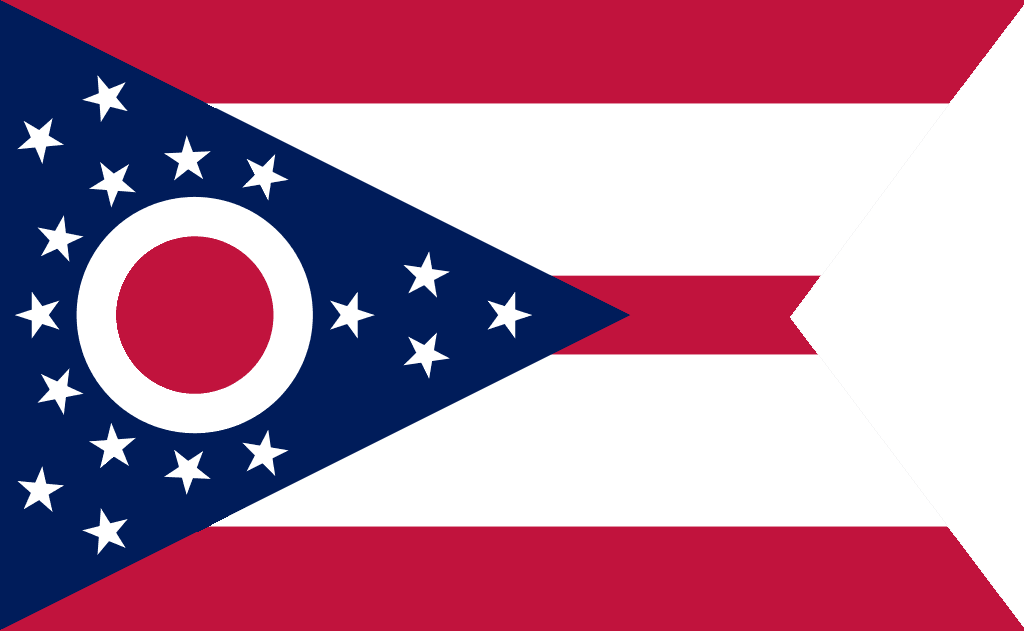
Ohio State Flag
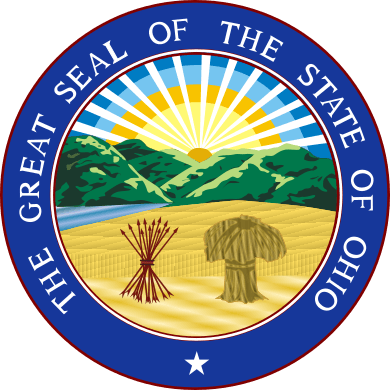
Ohio State Seal
Governor Of Ohio

How did Ohio get it’s name?
Ohio was named after the Ohio River, which runs along much of the state’s southern boundary. The river’s name comes from an Iroquoian term often interpreted as “great river.” Although Ohio is sometimes said to mean “beautiful river,” historians generally connect that description to the name French explorers used for the waterway.
When the state was created from part of the Northwest Territory, it adopted the river’s name. Ohio officially became the 17th state in 1803.
Fun Facts About Ohio: Geography
1. Ohio has a surprisingly varied landscape, ranging from the flat plains and farmland of the northwest to the forested hills, rocky cliffs, and deep valleys of the southeast.
2. Lake Erie forms Ohio’s northern boundary and gives the state approximately 312 miles of coastline. Its beaches, wetlands, islands, and harbors support recreation, wildlife, and shipping.
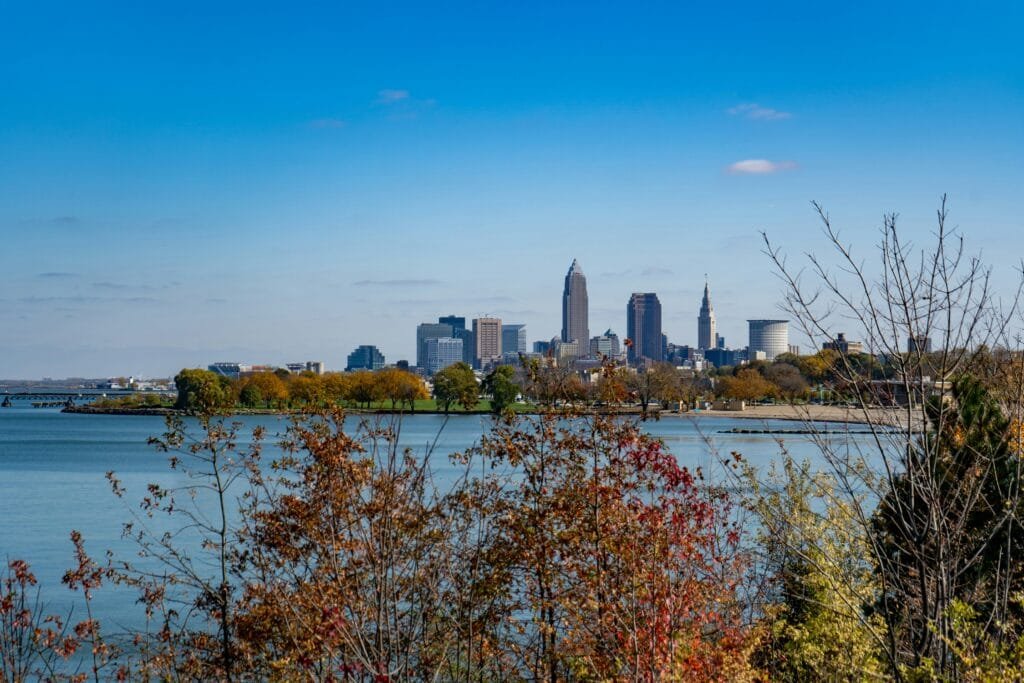
3. Ohio’s highest point is Campbell Hill, located near Bellefontaine. It rises 1,549 feet above sea level, although the surrounding landscape makes the summit appear more like a gentle hill than a mountain.
4. Much of northern and western Ohio was shaped by massive glaciers during the Ice Age. As the ice moved and melted, it flattened the land and left behind fertile soil, boulders, lakes, and other distinctive features.
5. Southeastern Ohio escaped the most recent glaciers, allowing its rugged hills, narrow valleys, caves, and sandstone formations to remain much more pronounced.
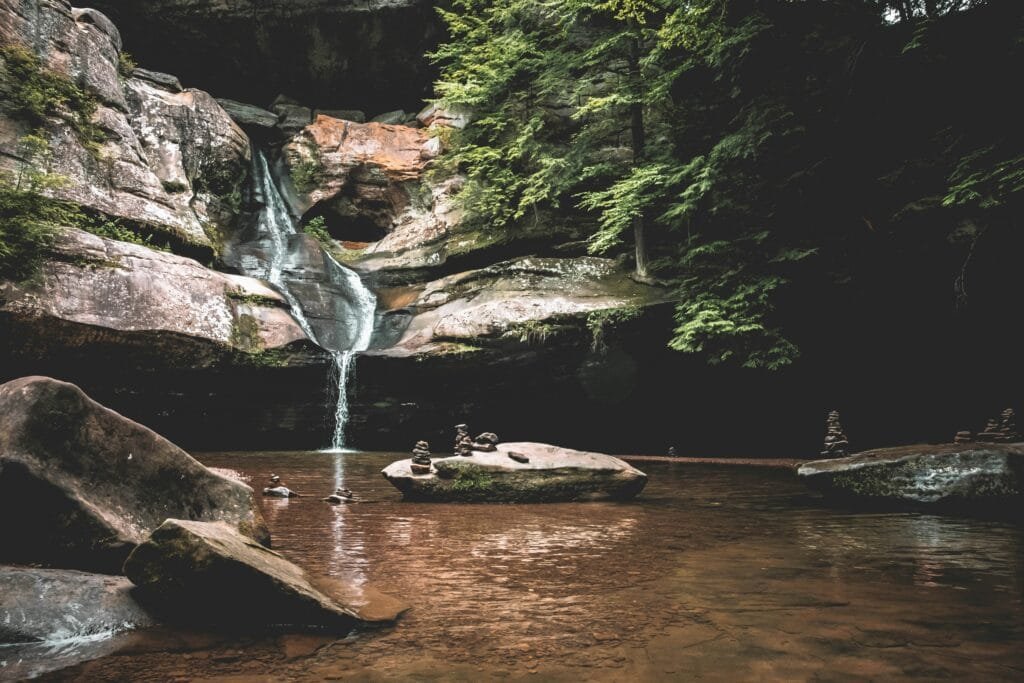
6. Hocking Hills is known for dramatic natural attractions such as cliffs, waterfalls, rock shelters, and narrow gorges. Many of these formations were carved from sandstone deposited hundreds of millions of years ago.
7. The Ohio River forms most of the state’s southern border, separating Ohio from Kentucky and part of West Virginia. It has played an important role in transportation, settlement, and trade throughout the state’s history.
8. The Cuyahoga River follows an unusual route through northeastern Ohio. It initially flows southwest before making a sharp turn near Akron and heading north toward Lake Erie, helping inspire its nickname, the “Crooked River.”
9. Cuyahoga Valley National Park contains forests, wetlands, steep ravines, waterfalls, and exposed rock ledges between Cleveland and Akron. The landscape reflects the combined influence of ancient seas, glaciers, and flowing rivers.
10. Ohio contains a natural watershed divide near Akron. Water north of the divide eventually reaches Lake Erie and the Atlantic Ocean, while water flowing south enters the Ohio River system and continues toward the Gulf of Mexico.
Interesting Things About Ohio: Nature
11. Ohio is known as the Buckeye State because of the Ohio buckeye tree. Its shiny brown seeds have pale markings that resemble the eye of a deer, although the seeds are poisonous if eaten raw.
12. The white-tailed deer is Ohio’s official state mammal. Once nearly eliminated from the state, deer are now found in forests, fields, suburbs, and other habitats throughout Ohio.
13. Ohio’s official state tree is the Ohio buckeye, a native tree that produces clusters of yellow-green flowers in spring before developing its distinctive round seeds.
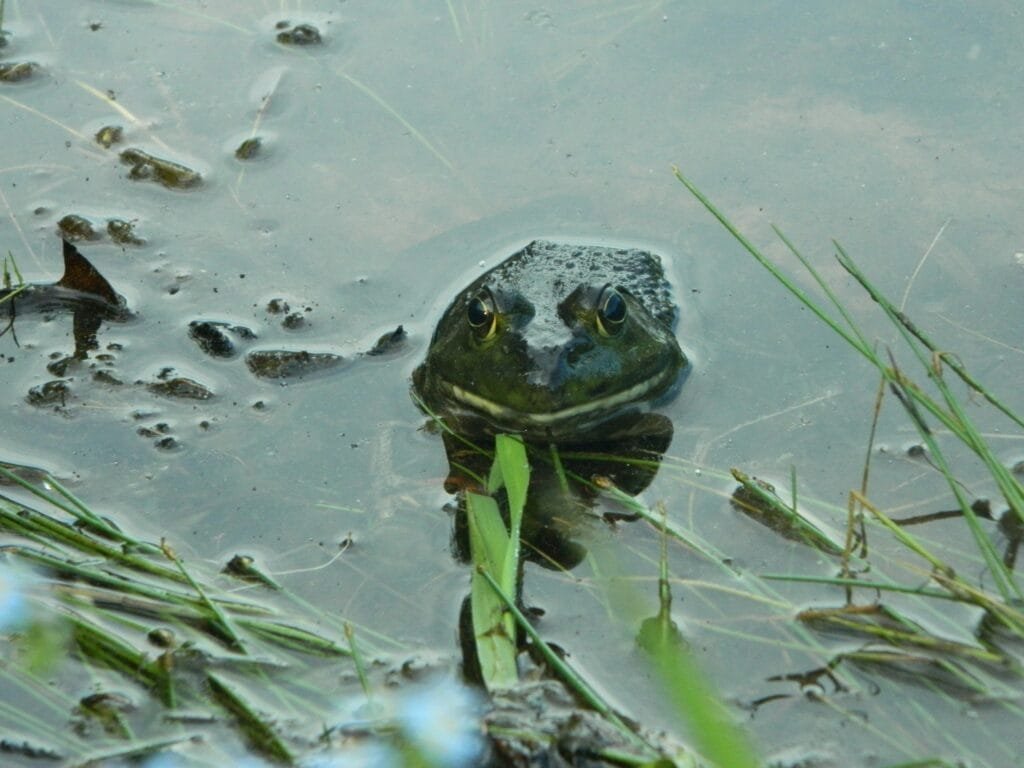
14. The American bullfrog is Ohio’s official state frog and the largest frog species found in the state. Its deep, booming call can often be heard near ponds, marshes, and slow-moving streams during warm summer evenings.
15. Ohio is home to carnivorous plants, including the purple pitcher plant. These unusual plants trap insects inside tube-shaped leaves, allowing them to survive in bogs where the soil contains few nutrients.
16. The eastern hellbender, one of the largest salamanders in North America, lives in some of Ohio’s clean, fast-moving streams. It absorbs oxygen through folds in its skin, making cool and well-oxygenated water essential to its survival.
17. The pawpaw (Asimina triloba) is native to Ohio and produces the largest edible fruit of any tree native to North America. Its soft, sweet flesh is often described as tasting like a mixture of banana, mango, and melon.

18. The Lake Erie watersnake (Nerodia sipedon insularum) is found mainly around the islands of western Lake Erie. Once federally listed as threatened, the harmless snake recovered through habitat protection and conservation efforts and was removed from the endangered species list in 2011.
19. Ohio’s temporary woodland pools provide important breeding grounds for spotted salamanders. Each spring, these secretive amphibians emerge from underground shelters and migrate to shallow pools to lay their eggs.
20. Beaver Marsh in Cuyahoga Valley National Park developed after beavers returned to the area and began building dams. Their activity transformed previously disturbed land into a thriving wetland that supports birds, fish, turtles, mammals, and many other forms of wildlife.
Cool Facts About Ohio : Famous People
21. Neil Armstrong, the first person to walk on the moon, was born in Wapakoneta and developed an interest in aviation years before commanding the historic Apollo 11 mission.

22. LeBron James was born in Akron and rose from local high school basketball fame to become one of the most accomplished players in NBA history.
23. Toni Morrison, the Nobel Prize-winning author of novels such as Beloved, was born in Lorain and drew inspiration from the stories and traditions she encountered while growing up there.
24. John Glenn, born in Cambridge and raised in New Concord, became the first American to orbit Earth before later representing Ohio in the U.S. Senate.
25. Steven Spielberg, the filmmaker behind movies such as Jaws, E.T., and Jurassic Park, was born in Cincinnati before becoming one of Hollywood’s most successful directors.
27. Paul Newman, the Academy Award-winning actor and philanthropist, grew up in Shaker Heights before starring in classics such as Cool Hand Luke and Butch Cassidy and the Sundance Kid.
28. Halle Berry was born in Cleveland and became the first Black woman to win the Academy Award for Best Actress for her performance in Monster’s Ball.
26. Annie Oakley, the legendary sharpshooter who became an international star with Buffalo Bill’s Wild West show, was born in Darke County in 1860.
29. Dean Martin, the singer, actor, and comedian known for his smooth voice and partnership with Jerry Lewis, was born in Steubenville and spoke Italian before learning English.
30. Simone Biles was born in Columbus and went on to become the most decorated gymnast in the history of the World Championships.
Interesting Things About Ohio: Government and Economy
31. Ohio has long been one of America’s leading manufacturing states, producing everything from automobiles and machinery to steel, plastics, and aerospace components.
32. Airstream’s iconic aluminum travel trailers are handcrafted at the company’s headquarters in Jackson Center, where workers rivet the shiny outer shells together by hand.
33. The state has had two official capitals: Chillicothe served first, while Columbus became the permanent capital in 1816.

34. Ohio’s original constitution gave the governor relatively little authority, placing much of the state government’s power in the hands of the General Assembly.
35. The state’s central location and extensive network of highways, railroads, airports, and waterways have made it an important center for shipping and distribution.
36. Nearly 1.4 billion tons of freight are transported to, from, or through Ohio each year, placing it among the nation’s busiest states for freight movement.
37. Manufacturing contributes a larger share of Ohio’s economy than it does in the United States as a whole, reflecting the state’s long history as an industrial powerhouse.
38. Agriculture remains an important part of Ohio’s economy, with farms producing major crops such as corn, soybeans, wheat, and tomatoes.
39. Ohio’s economy generated approximately $872.7 billion in gross domestic product in 2023, giving it one of the largest state economies in the country.
40. Columbus, Cleveland, and Cincinnati are Ohio’s largest economic centers, supporting major industries that include healthcare, finance, education, manufacturing, logistics, and professional services.
Important Facts About Ohio: History
41. Long before Ohio became a state, Indigenous peoples built enormous ceremonial earthworks across the region, including geometric complexes so precise that several are now recognized as a UNESCO World Heritage Site.
42. The Serpent Mound in southern Ohio is one of the world’s largest surviving animal-shaped earthworks, stretching more than 1,300 feet across a hilltop.
43. In 1795, the Treaty of Greenville transferred most of present-day Ohio to the United States after the Battle of Fallen Timbers, dramatically changing control of the region.
44. Ohio’s location directly across the river from slaveholding Kentucky made it one of the most important gateways to freedom on the Underground Railroad.
45. Oberlin became a major center of the abolitionist movement and was one of the earliest American colleges to regularly admit both women and Black students.
46. Cincinnati was once such a major center of pork processing that it earned the nickname “Porkopolis,” with livestock sometimes being driven through the city streets.

47. America’s first professional baseball team, the Cincinnati Red Stockings, was organized in 1869 and completed its first season without losing a game.
48. In 1908, a massive fire at Lake View School in Collinwood killed 172 students, two teachers, and a rescuer, making it one of the deadliest school disasters in American history.
49. The Cuyahoga River became so polluted by industrial waste that it caught fire repeatedly, and the heavily publicized 1969 fire helped build support for the modern environmental movement.
50. During World War II, Ohio factories produced enormous quantities of aircraft, vehicles, weapons, steel, and other military supplies, receiving more than $15 billion in wartime contracts.