
Table of Contents
Texas is a state shaped by enormous landscapes, sprawling cities, rugged deserts, fertile plains, and hundreds of miles of Gulf Coast. From the mountains of Big Bend and the pine forests of East Texas to vast cattle country, barrier islands, and booming metropolitan areas like Houston and Dallas, the Lone Star State contains an extraordinary amount of geographic and cultural variety.
In this article, we’ll explore 50 Interesting facts about Texas covering its geography, plants and wildlife, famous people, government and economy, and long history. Along the way, you’ll discover unusual landmarks, remarkable natural areas, influential Texans, powerful industries, major historical events, and plenty of surprising details about the second-largest state in America.
Texas Facts – Quick Facts
| Population | 31,709,821 |
| Capital City | Austin |
| Statehood Granted | December 29, 1845 |
| Abbreviation | TX |
| State Motto | Friendship |
| State Nickname | The Lone Star State |
| State Bird | Norther Mockingbird |
| State Flower | Bluebonnet |
| State Fruit | Texas Red Grapefruit |
| State Tree | Pecan Tree |
| State Song | Texas, Our Texas |
| Major Airports | Dallas Fort Worth International Airport (DFW) George Bush Intercontinental Airport (IAH) Austin-Bergstrom International Airport (AUS) San Antonio International Airport (SAT) |
| Major Sports Teams | Dallas Cowboys (NFL) Houston Texans (NFL) Dallas Mavericks (NBA) Houston Rockets (NBA) San Antonio Spurs (NBA) Houston Astros (MLB) Texas Rangers (MLB) Dallas Stars (NHL) Austin FC (MLS) FC Dallas (MLS) Houston Dynamo FC (MLS) |
| Largest College | Texas A&M University |
| Area Codes | Dallas, Plano & Irving: 945 Dallas, Plano & Irving: 972 Fort Worth, Arlington & Grand Prairie: 682 Fort Worth, Arlington & Grand Prairie: 817 San Antonio, Schertz & Seguin: 210 San Antonio, Schertz & Seguin: 726 Austin, Round Rock & San Marcos: 512 Austin, Round Rock & San Marcos: 737 Waco, Killeen & Temple: 254 Tyler, Longview & Marshall: 430 Tyler, Longview & Marshall: 903 Nacogdoches, Huntsville & Conroe: 936 Bryan, College Station & Bay City: 979 Lubbock, Amarillo & Plainview: 806 Abilene, San Angelo & Sweetwater: 325 Midland, Odessa & Big Spring: 432 El Paso, Socorro & Horizon City: 915 Wichita Falls, Denton & Gainesville: 940 Laredo, McAllen & Brownsville: 956 Corpus Christi, Victoria & Kingsville: 361 Beaumont, Port Arthur & Galveston: 409 New Braunfels, Del Rio & Kerrville: 830 |
| Zip Codes | Texas has 2,655 Zip Codes ranging from 73301 up to 88595 |
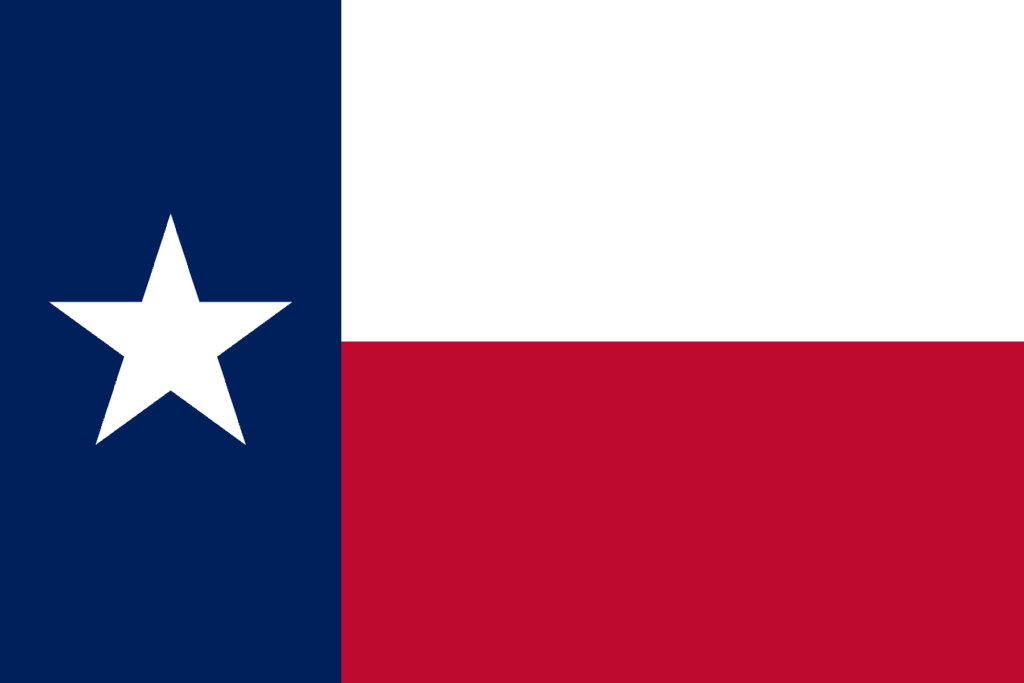
Texas State Flag
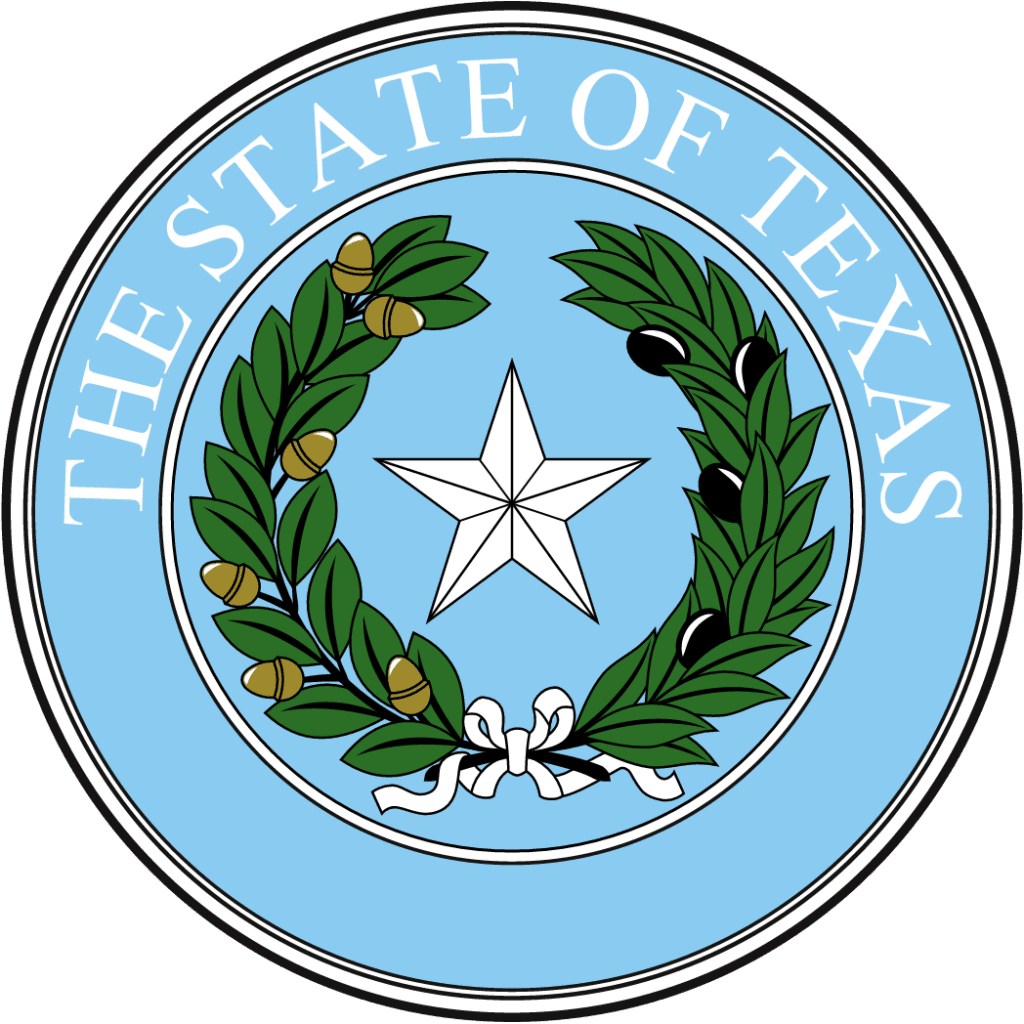
Texas State Seal
Governor Of Texas

How did Texas get it’s name?
Texas gets its name from the Caddo word táyshaʼ, meaning “friend” or “ally.” Spanish explorers heard the word from Indigenous peoples in the region and rendered it as Tejas.
Over time, Tejas became the Spanish name for the area, and the English spelling eventually became Texas. So the state’s name ultimately comes from an Indigenous word associated with friendship.
Fun Facts About Texas: Geography
1. Texas Has 367 Miles of Gulf Beaches – Texas stretches along 367 miles of Gulf coastline, but its coastal geography is much larger when bays and estuaries are included. More than 3,300 additional miles of shoreline wrap around places such as Galveston Bay, Matagorda Bay, and Laguna Madre.
2. The State’s Highest Point Rises 8,751 Feet Above Sea Level – Guadalupe Peak towers above the Chihuahuan Desert in far West Texas and is the highest point in the state. It stands within Guadalupe Mountains National Park, an unusually rugged landscape that contains the four highest peaks in Texas.
3. Palo Duro Canyon Stretches About 120 Miles – Palo Duro Canyon cuts through the Texas Panhandle for roughly 120 miles, reaching widths of about 20 miles and depths of up to 800 feet. Its colorful rock walls expose geological layers dating back hundreds of millions of years.
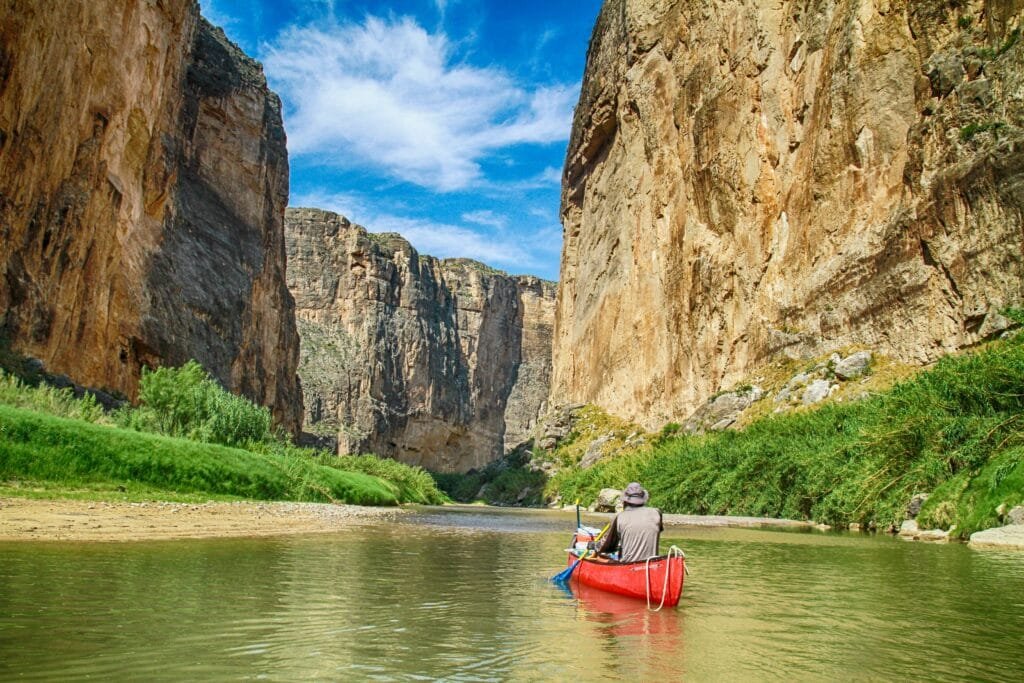
4. Santa Elena Canyon Has Walls 1,500 Feet High – The Rio Grande slices through limestone to form Santa Elena Canyon in Big Bend National Park. The canyon extends about eight miles, and in some places its towering 1,500-foot walls narrow the passage to only about 30 feet wide.
5. Padre Island Has 70 Miles of Undeveloped Barrier Island – Padre Island National Seashore protects approximately 70 miles of Texas coastline between the Gulf and Laguna Madre. The National Park Service identifies it as the longest stretch of undeveloped barrier island in the world, preserving beaches, dunes, tidal flats, and coastal prairie.
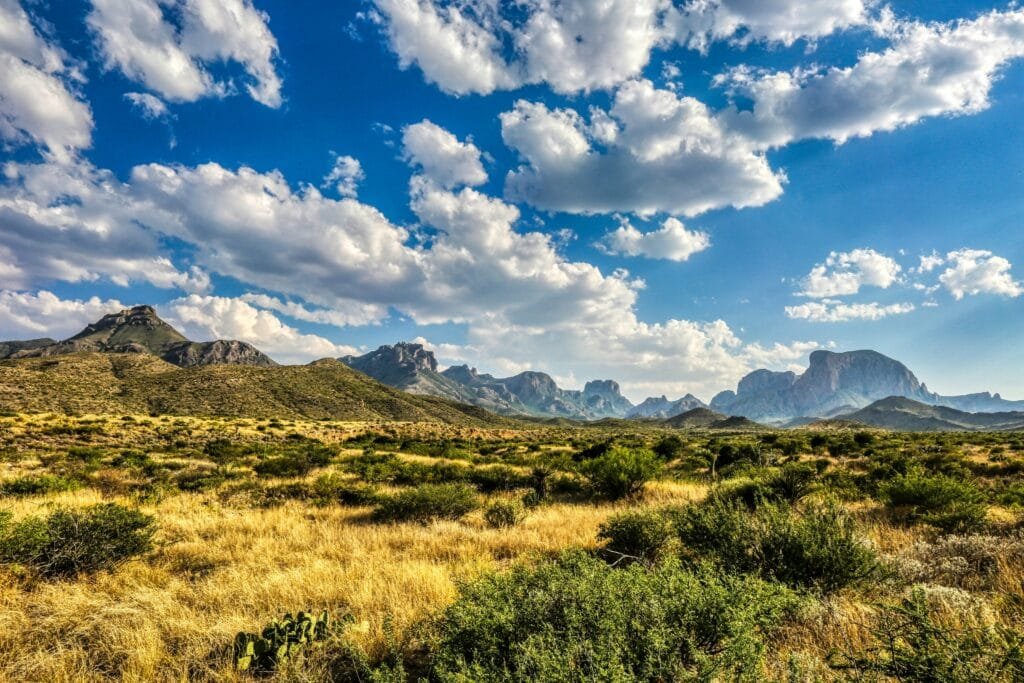
6. One of the World’s Few Hypersaline Lagoons Lies Along the Texas Coast – Laguna Madre is one of only about six hypersaline lagoon systems in the world, meaning portions of its water are saltier than the ocean. The lagoon is also remarkably shallow, averaging only about 3.6 feet deep.
7. West Texas Has Sand Dunes More Than 70 Feet Tall – Monahans Sandhills State Park provides access to a massive dune field extending for roughly 200 miles across West Texas and into New Mexico. Wind continually reshapes the landscape, where some individual dunes rise more than 70 feet high.
8. Enchanted Rock Rises 425 Feet Above the Hill Country – Enchanted Rock near Fredericksburg is a massive pink granite dome covering roughly 640 acres and reaching 1,825 feet above sea level. The granite beneath the landmark formed about a billion years ago, long before erosion exposed the rounded dome visible today.
9. A 350-Foot-Deep Sinkhole Opens in the Texas Hill Country – Devil’s Sinkhole near Rocksprings begins with a narrow vertical shaft that plunges into an enormous underground cavern. The chamber reaches about 350 feet deep and more than 320 feet across, making it one of Texas’s most dramatic karst formations.
10. A Major Fault Zone Helps Define the Texas Hill Country – The Balcones Fault Zone runs across south-central Texas and forms the dramatic eastern and southern edge of the Edwards Plateau. This geological boundary helps separate the rugged limestone terrain of the Hill Country from the lower Gulf Coastal Plain.
Interesting Facts About Texas: Nature
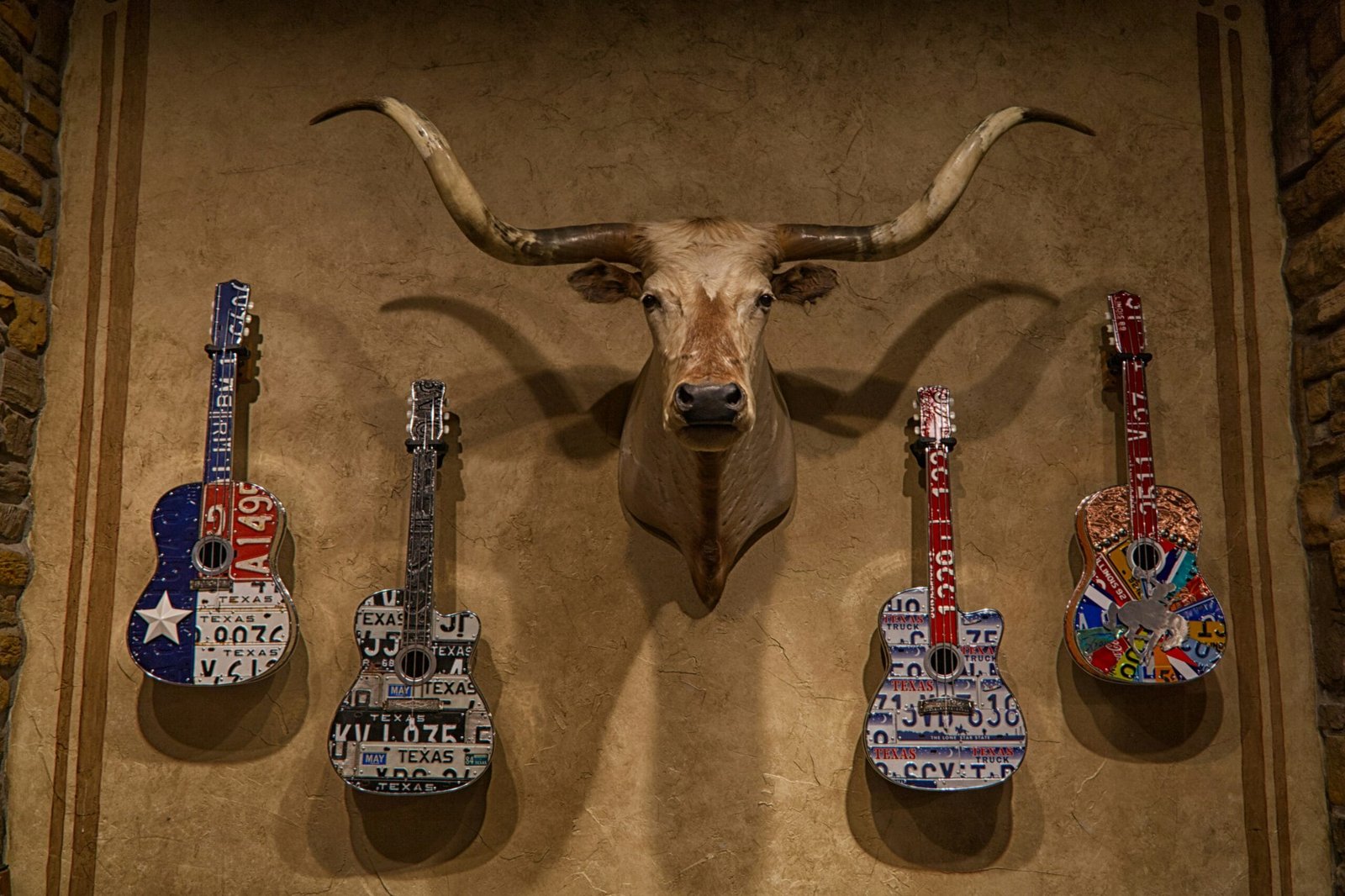
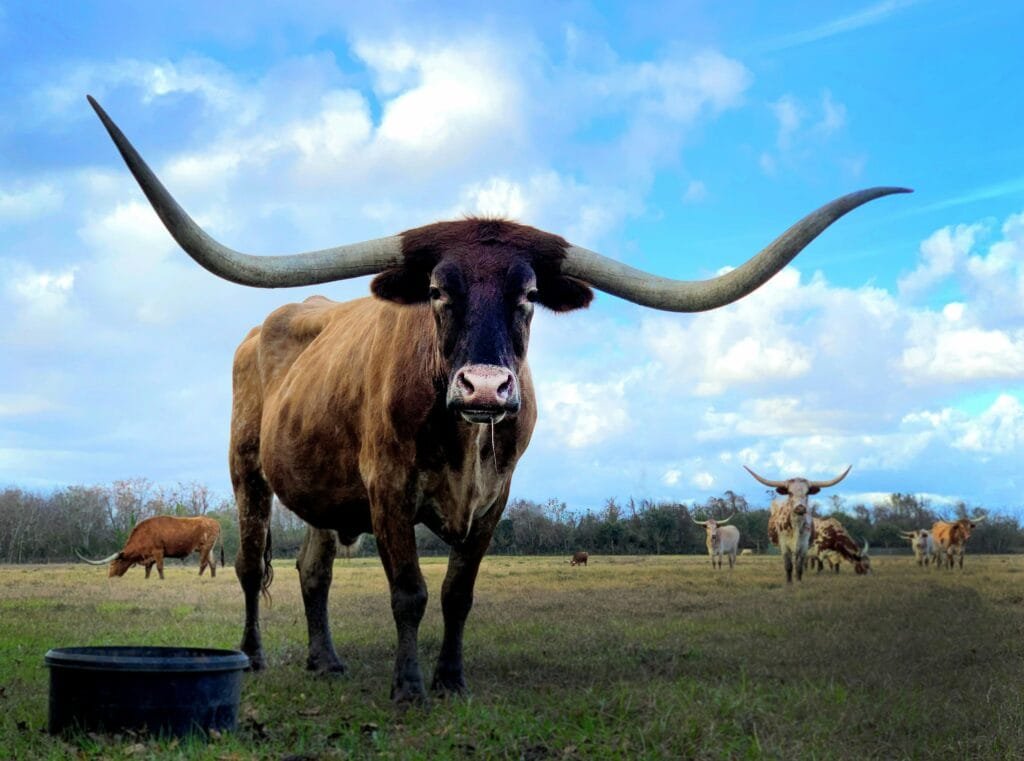
11. Texas Longhorns Became the State’s Official Large Mammal in 1995 – Texas Longhorns developed remarkable endurance after generations of cattle adapted to the state’s harsh climate with little human influence. Their ability to survive heat, scarce forage, disease, and difficult terrain helped make the distinctive long-horned cattle an enduring symbol of Texas.
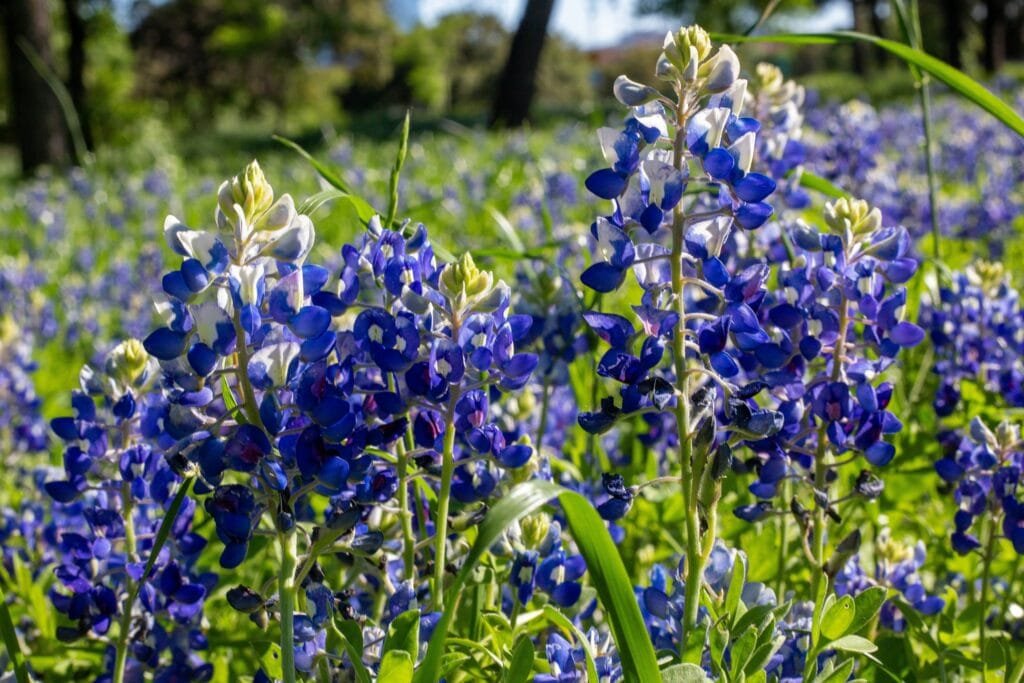
12. Texas’s State Flower Is Actually Several Different Bluebonnets – The bluebonnet became the official state flower in 1901, but the name applies to several species of Lupinus found across Texas. These include the familiar Texas bluebonnet as well as species adapted to the sandy plains, deserts, and other environments found around the state.
13. More Than 15 Million Bats Can Fill the Sky Near San Antonio – Bracken Cave supports more than 15 million Mexican free-tailed bats, making it the largest known bat colony in the world. Each summer, enormous numbers of females gather inside the cave to give birth before emerging in spectacular clouds to hunt insects after sunset.
14. Texas Horned Lizards Can Squirt Blood From Their Eyes – The Texas horned lizard has one of the strangest defenses of any animal in the state. When seriously threatened, the spiny reptile can increase pressure around its head and release a stream of blood from near its eyes, helping discourage predators such as coyotes and foxes.
15. More Kemp’s Ridley Turtles Nest at Padre Island Than Anywhere Else in the U.S. – Critically endangered Kemp’s ridley sea turtles nest along the South Texas coast, with Padre Island National Seashore protecting the country’s most important nesting beach for the species. Texas is also the only U.S. state within the turtle’s documented native nesting range.
16. Whooping Cranes Fly Nearly 2,500 Miles to Spend Winter in Texas – One of North America’s rarest birds makes an extraordinary migration from breeding grounds around Wood Buffalo National Park in Canada to the Texas Gulf Coast. After traveling roughly 2,450 miles, the cranes spend the winter around Aransas National Wildlife Refuge before flying north again in spring.
17. Alligator Gar Can Grow Eight Feet Long and Weigh More Than 300 Pounds – Texas rivers, reservoirs, and coastal bays still support strong populations of alligator gar, the largest species in the gar family. These enormous freshwater predators can reach eight feet in length, live for decades, and have two rows of large teeth lining each side of the upper jaw.
18. One Bird Breeds Nowhere in the World Except Central Texas – The golden-cheeked warbler nests and breeds exclusively in the oak and Ashe juniper woodlands of Central Texas. The small migratory bird even uses strips of shredding juniper bark to construct its nests before leaving Texas for Mexico and Central America later in the year.
19. An Endangered Plant Grows Naturally in Just One Texas River – Texas wild-rice is found nowhere naturally outside the San Marcos River in Central Texas. The unusual aquatic grass grows mostly underwater in clear, spring-fed currents near 72°F, producing ribbon-like leaves that can reach more than six feet long.
20. Texas Sits at the Crossroads of the Monarch Butterfly Migration – Monarchs traveling between central Mexico and breeding grounds across the United States and Canada funnel through Texas during both spring and fall. Migrating butterflies can travel around 50 miles in a day, relying on Texas milkweeds and flowering plants for reproduction, rest, and fuel along the journey.
Cool Facts About Texas: Famous People
21. Houston-Born Beyoncé Holds the Record for the Most Grammy Wins – Beyoncé was born in Houston in 1981 and first became famous as a member of Destiny’s Child. She has since won 35 Grammy Awards, more than any other artist in Grammy history, while also becoming the most-nominated artist with 99 nominations.

22. Willie Nelson Wrote “Crazy” Before Becoming an Outlaw Country Icon – Born in the small town of Abbott, Willie Nelson began writing songs as a child and later penned classics including “Crazy,” made famous by Patsy Cline. After returning to Texas in 1970, he became one of the central figures in the Outlaw Country movement that challenged Nashville conventions.
23. Selena Became the First Female Tejano Artist to Win Her Grammy Category – Selena Quintanilla was born in Lake Jackson and grew up around Corpus Christi before becoming the “Queen of Tejano.” In 1994, her album Live! earned the Grammy for Best Mexican-American Album, making her the first female Tejano performer to win the category.
24. A Texas-Born Aviator Had to Go to France to Earn Her Pilot’s License – Bessie Coleman, born in Atlanta, Texas, was rejected by American flight schools because she was a Black woman. She learned French, traveled to France, and in 1921 became the first African American woman to earn a pilot’s license.
25. A Texas Sharecropper’s Son Became World War II’s Most Decorated U.S. Combat Soldier – Audie Murphy grew up in a poor sharecropping family in Hunt County before joining the Army during World War II. He received the Medal of Honor and numerous other decorations, then moved to Hollywood and appeared in dozens of films, including the autobiographical To Hell and Back.
26. Barbara Jordan Became the First Black Woman Elected to Congress From the South – Houston-born Barbara Jordan first broke barriers in 1966 when she became the first Black woman elected to the Texas Legislature. In 1972, she won a U.S. House seat and became the first Black woman ever elected to Congress from the American South.
27. A Texas Hill Country Native Signed the Civil Rights Act of 1964 – Lyndon B. Johnson was born near Stonewall in the Texas Hill Country before becoming the 36th president of the United States. On July 2, 1964, he signed the Civil Rights Act, outlawing segregation in many public places and prohibiting major forms of employment discrimination.
28. A Houston-Born Physicist Helped Discover the Afterglow of the Big Bang – Robert Woodrow Wilson was born in Houston and later worked at Bell Laboratories, where he and Arno Penzias detected cosmic microwave background radiation. The accidental discovery provided powerful evidence for the Big Bang theory and earned the pair a share of the 1978 Nobel Prize in Physics.
29. Nolan Ryan Threw Seven No-Hitters and Struck Out 5,714 Batters – Refugio-born Nolan Ryan pitched for a record-tying 27 Major League seasons and became famous for a fastball that remained intimidating well into his 40s. He retired with seven no-hitters and 5,714 strikeouts, both Major League records that still stand.
30. George Foreman Regained the Heavyweight Championship at Age 45 – Born in Marshall, George Foreman won an Olympic boxing gold medal in 1968 before becoming heavyweight champion of the world. More than two decades later, he returned to the top by winning another heavyweight title at age 45, becoming the oldest heavyweight champion in boxing history at the time.
Interesting Things About Texas: Government and Economy
31. The Texas Legislature Meets for Just 140 Days Every Two Years – Regular legislative sessions begin in January of odd-numbered years and can last no more than 140 days. The governor can call additional special sessions, but each is limited to 30 days and lawmakers may consider only subjects placed on the agenda by the governor.
32. The Railroad Commission of Texas Does Not Regulate Railroads – Created in 1891 to oversee railroad rates, the Railroad Commission gradually became one of the state’s most important energy regulators. Its final railroad responsibilities were transferred away in 2005, and today it oversees industries including oil, natural gas, pipelines, and surface mining.
33. Texas Has No Individual State Income Tax – Texans do not pay a state tax on their individual income, and voters strengthened that policy in 2019 by approving a constitutional amendment prohibiting one. Texas instead relies heavily on sources such as sales taxes, business taxes, and other state revenues.
34. The Texas Governor Shares Power With Several Independently Elected Officials – Texas uses a “plural executive” system rather than concentrating most executive authority in the governor’s office. Officials including the lieutenant governor, attorney general, comptroller, and land commissioner are elected separately, limiting the governor’s direct control over major parts of state government.
35. Texas Has a $2.9 Trillion Economy – Texas produced about $2.9 trillion in gross domestic product in 2025. If the state were compared directly with independent countries, its economy would rank eighth in the world, larger than the economies of countries including Italy, Canada, and Russia.
36. Texas Has Led Every Other State in Exports for 24 Straight Years – Texas finished 2025 as the nation’s top exporting state for the 24th consecutive year. Its position along the Mexican border, major Gulf ports, enormous energy industry, manufacturing base, and transportation network have made international trade a major part of the Texas economy.
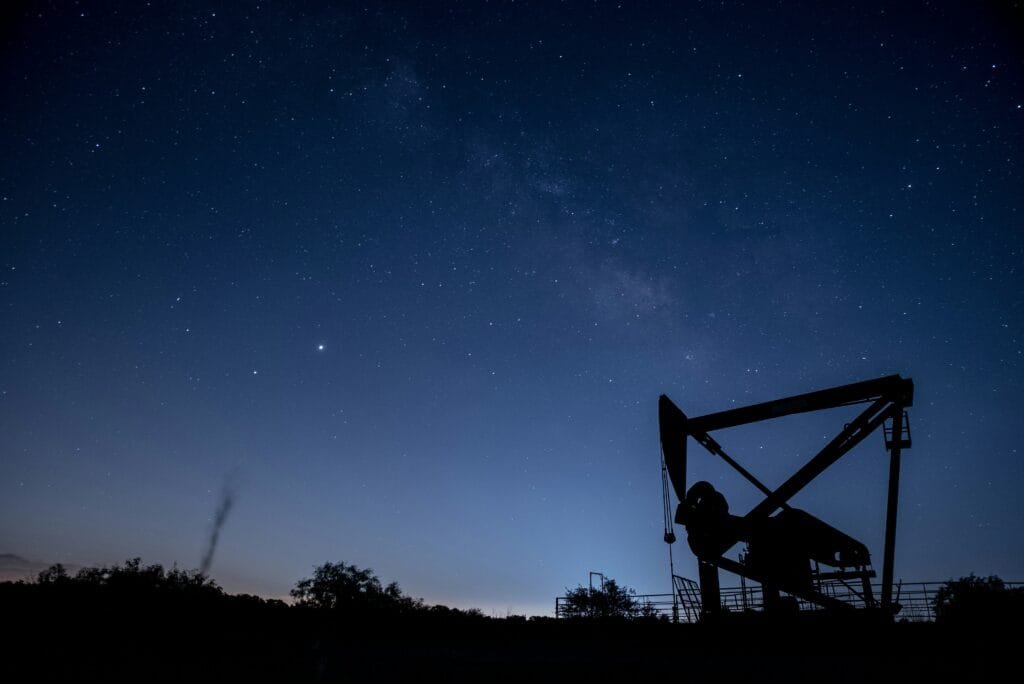
37. Texas Produced About 5.75 Million Barrels of Oil Per Day in 2025 – Texas oil fields averaged roughly 5.75 million barrels of crude oil production each day during 2025. Much of that output comes from West Texas, where the Permian Basin has become the most productive oil-producing region in the United States.
38. Texas Produces More Wind-Powered Electricity Than Any Other State – Texas had about 42,300 megawatts of installed wind-generating capacity by the end of 2024. Its turbines produced nearly three-tenths of all wind-generated electricity in the United States, with huge wind farms spread across the Panhandle, West Texas, and other windy regions.
39. Houston Has the Nation’s Largest Port for Waterborne Tonnage – The Houston Ship Channel complex includes more than 200 private and public terminals and handles more waterborne tonnage than any other U.S. port. In 2024 alone, the port ranked first nationally in foreign waterborne tonnage with about 220 million short tons.
40. Texas Is America’s Leading Semiconductor Exporting State – Texas has become a major center for semiconductor design and manufacturing, with large operations around Austin, Dallas, Sherman, and other cities. By 2025, the state had led the nation in semiconductor exports for 15 consecutive years, adding high-tech manufacturing to an economy long associated with oil and cattle.
Important Facts About Texas: History
41. A Caddo Ceremonial Center Thrived in East Texas More Than 1,200 Years Ago – Ancestral Caddo people established a major settlement near the Neches River around A.D. 850 and occupied the area for roughly 450 years. The community covered more than 110 acres and participated in trade networks that brought materials from places as distant as the Great Lakes and Gulf Coast.
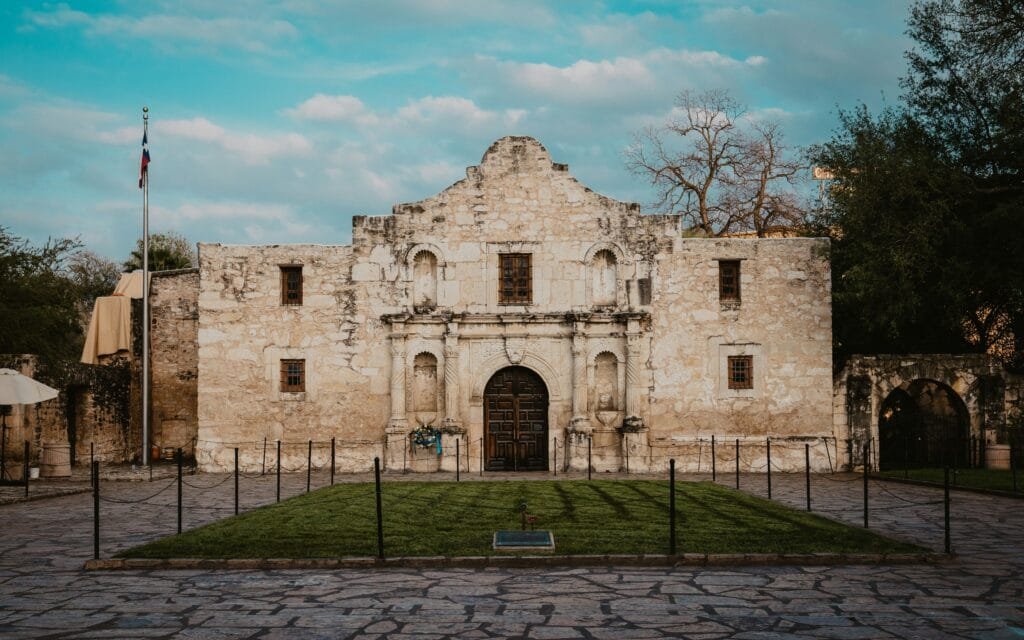
42. The Alamo Was a Spanish Mission Long Before the Texas Revolution – Mission San Antonio de Valero was founded in 1718 and moved to its present location in 1724. More than a century later, it became the Alamo battlefield, where Mexican forces besieged Texan defenders as delegates elsewhere in Texas declared independence on March 2, 1836.
43. The Battle That Secured Texas Independence Lasted Just 18 Minutes – On April 21, 1836, Sam Houston’s army attacked Mexican forces under General Santa Anna at San Jacinto. The fighting lasted only about 18 minutes, but the overwhelming Texan victory became the decisive military event of the Texas Revolution and effectively secured independence from Mexico.
44. Texas Spent Almost 10 Years as an Independent Republic – The Republic of Texas existed from 1836 until Texas joined the United States as the 28th state on December 29, 1845. According to the Texas State Library, the republic lasted exactly nine years, eleven months, and seventeen days before statehood ended its existence as an independent nation.
45. The First Battle of the Mexican-American War Was Fought in Texas – U.S. and Mexican forces clashed at Palo Alto near present-day Brownsville on May 8, 1846, only months after Texas joined the United States. The battle opened a two-year war that ended with Mexico surrendering an enormous area stretching from Texas toward the Pacific.
46. Juneteenth Began With an Announcement in Galveston – On June 19, 1865, Union Major General Gordon Granger arrived in Galveston and issued General Order No. 3, announcing that enslaved people in Texas were free. The date became known as Juneteenth and grew from a Texas commemoration into a holiday celebrated throughout the United States.
47. The Deadliest Natural Disaster in U.S. History Struck Galveston in 1900 – A powerful hurricane struck Galveston on September 8, 1900, pushing a storm surge of more than 15 feet across the low-lying island. At least 8,000 people were killed and more than 3,600 buildings were destroyed, permanently changing the city and how it protected itself from hurricanes.
48. The Spindletop Gusher Helped Launch the Texas Oil Age – Oil erupted from the Spindletop field near Beaumont on January 10, 1901, triggering one of America’s great petroleum booms. The discovery transformed Texas into a major oil-producing state and encouraged the rapid development of refineries, pipelines, storage facilities, and new oil companies along the Gulf Coast.
49. More Than 1,000 Women Earned Their Military Pilot Wings Through Training in Texas – During World War II, Avenger Field in Sweetwater became the training center for the Women Airforce Service Pilots, or WASP. Of more than 25,000 women who applied to the program, 1,074 ultimately earned their wings and flew military aircraft in noncombat roles that freed male pilots for overseas service.
50. Houston Became the Center of America’s Human Spaceflight Program in 1961 – NASA established the Manned Spacecraft Center in Houston in 1961 to support the rapidly expanding U.S. human spaceflight program. Later renamed Johnson Space Center, it became home to astronaut training and Mission Control for programs ranging from Gemini and Apollo to the International Space Station.