
Table of Contents
South Carolina is a state shaped by dramatic coastlines, historic cities, fertile low country marshes, and the rolling foothills of the Blue Ridge Mountains. From Charleston’s colorful streets and centuries-old architecture to barrier islands, waterfalls, and sprawling forests, the Palmetto State packs an impressive amount of variety into a relatively small corner of the American Southeast.
In this article, we’ll explore 50 interesting facts about South Carolina covering its geography, plants and wildlife, culture, government and economy, and long history. Along the way, you’ll discover unusual landmarks, distinctive traditions, remarkable natural areas, important historical events, and plenty of surprising details about one of America’s oldest states.
South Carolina Facts – Quick Facts
| Population | 5,570,274 |
| Capital City | Columbia |
| Statehood Granted | May 23, 1788 |
| Abbreviation | SC |
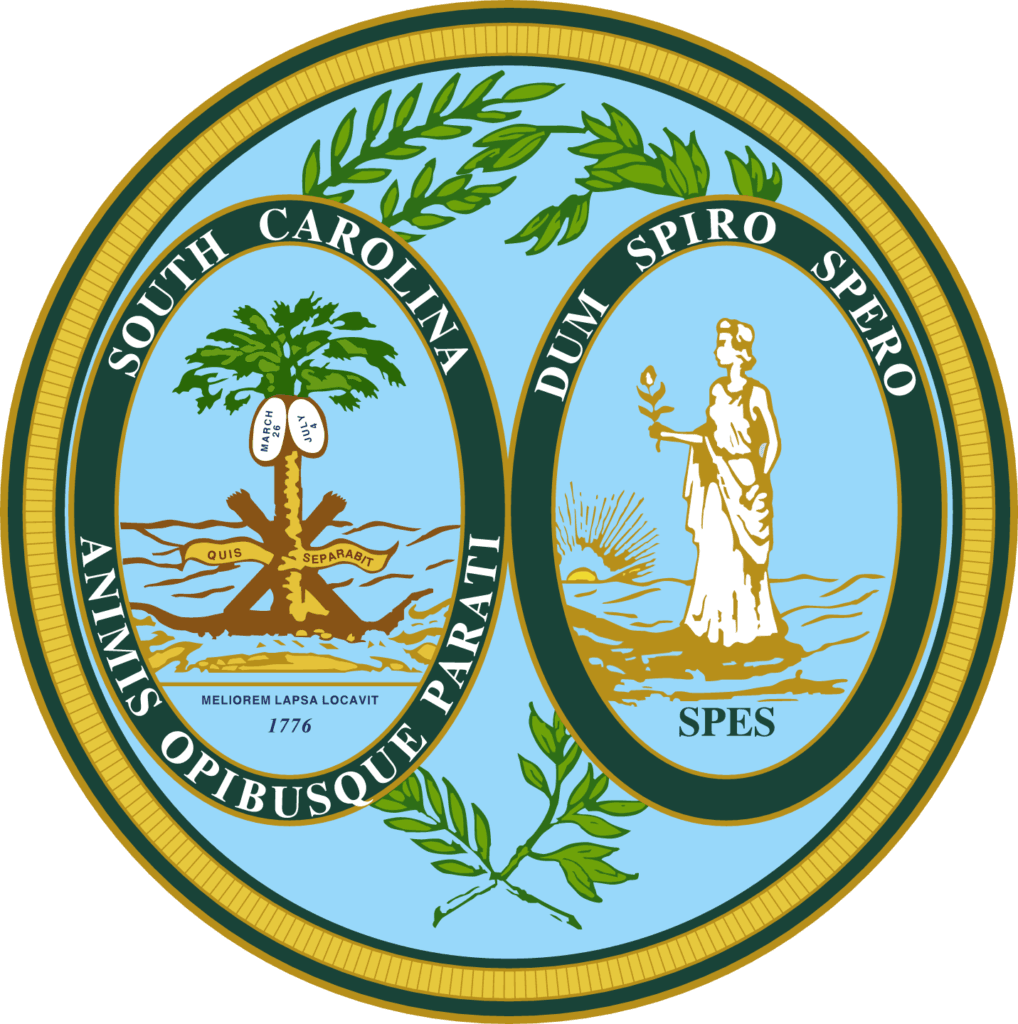
| State Motto | While I breathe, I hope |
| State Nickname | The Palmetto State |
| State Bird | Carolina Wren |
| State Flower | Yellow Jessamine |
| State Fruit | Peach |
| State Tree | Sabal Palmetto |
| State Song | Carolina |
| Major Airports | Charleston International Airport (CHS) Myrtle Beach International Airport (MYR) Greenville-Spartanburg International Airport (GSP) |
| Major Sports Teams | None |
| Largest College | University of South Carolina |
| Area Codes | (803) (839) (843) (854) (864) (821) |
| Zip Codes | South Carolina has 534 Zip Codes ranging from 29001 up to 29999 |
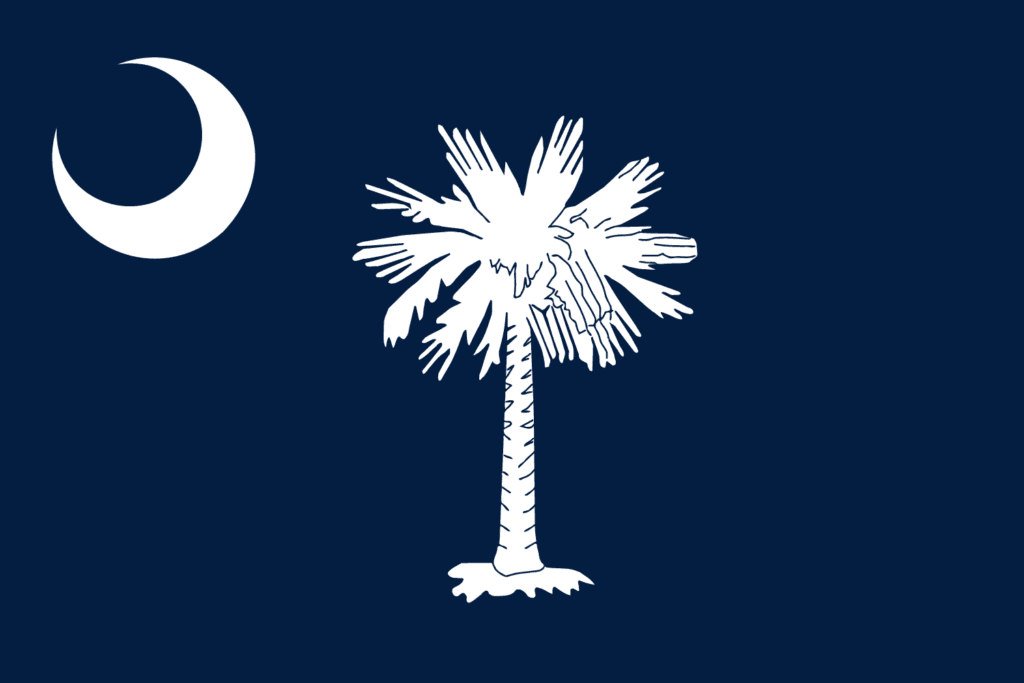
South Carolina State Flag
South Carolina State Seal
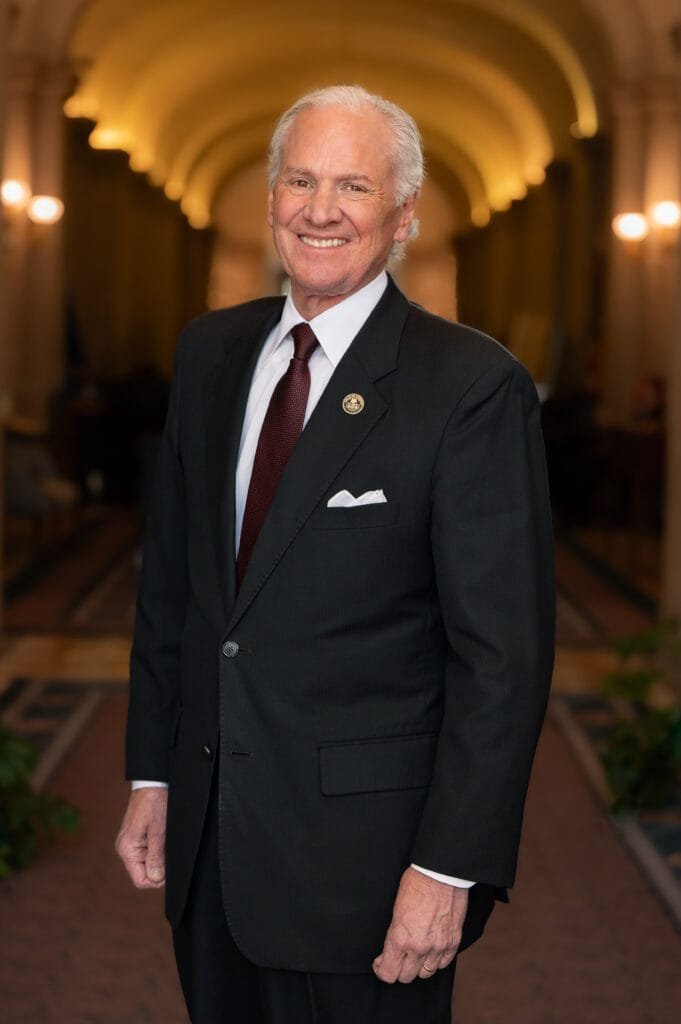
Governor Of South Carolina
How did South Carolina get it’s name?
South Carolina got its name from King Charles I of England. The word Carolina comes from Carolus, the Latin form of Charles.
When King Charles II granted the Carolina colony to eight Lords Proprietors in 1663, the territory was named in honor of his father, Charles I. The colony was later divided into North Carolina and South Carolina, with the split becoming permanent in the early 1700s.
Fun Facts About South Carolina: Geography
1. South Carolina Packs Mountains, Rolling Hills, and Coastal Lowlands Into One State – South Carolina’s landscape is broadly divided into the Blue Ridge, Piedmont, and Coastal Plain provinces. The Piedmont alone covers about 10,788 square miles and extends from the mountains toward the Fall Line near Columbia.
2. The State’s Highest Point Sits on the North Carolina Border – Sassafras Mountain rises 3,553 feet (1,083 meters) above sea level in the Blue Ridge Mountains of Pickens County. An observation tower at the summit offers panoramic views across South Carolina, North Carolina, and Georgia.
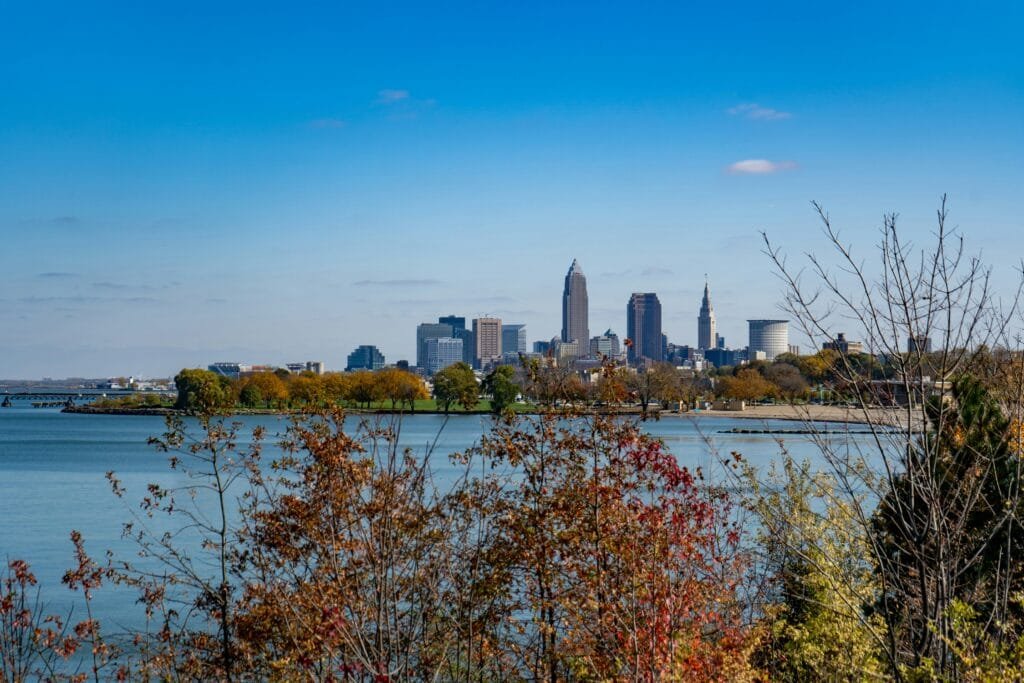
3. A Geological Boundary Runs Near Columbia – The Fall Line marks the transition between South Carolina’s rocky Piedmont and the softer sediments of the Coastal Plain. Rivers crossing this zone historically developed rapids and falls, creating natural locations for settlements, mills, and transportation routes.
4. Raven Cliff Falls Drops About 420 Feet – Matthews Creek plunges down the Blue Ridge Escarpment at Raven Cliff Falls, one of South Carolina’s most dramatic waterfalls. The escarpment itself drops roughly 2,000 feet toward the Piedmont, helping create the concentration of waterfalls found in this mountainous corner of the state.
5. Around 35 Barrier Islands Line the Coast – South Carolina has roughly 35 barrier islands, including well-known examples such as Hilton Head, Kiawah, Edisto, and Hunting Island. These constantly changing strips of sand absorb wave energy and help shield inland marshes and the mainland from coastal storms.
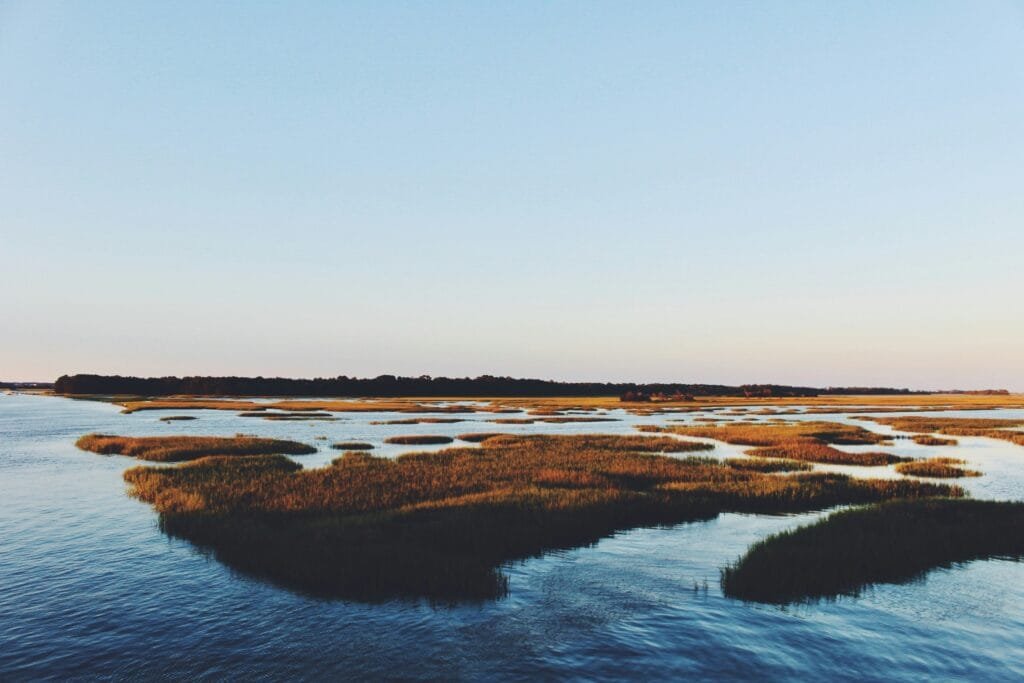
6. Thousands of Tiny Islands Hide Inside the Coastal Marshes – South Carolina’s tidal wetlands contain approximately 3,500 hammock, or hummock, islands located behind the barrier islands. About 90% occur in the marshes and waterways of Charleston, Colleton, and Beaufort counties, and some are smaller than a single acre.
7. Strange Oval Depressions Dot the Coastal Plain – South Carolina contains unusual landforms called Carolina Bays, shallow depressions often surrounded by sandy rims. They vary dramatically in size, and geological evidence indicates that wind, water, and changing environmental conditions helped shape them over long periods of time.
8. Congaree Protects a Rare Ancient Floodplain – Congaree National Park preserves around 27,000 acres of floodplain and contains the largest intact area of old-growth bottomland hardwood forest in the southeastern United States. Floodwaters from the Congaree and Wateree rivers regularly spread nutrients and sediment across the forest floor.
9. South Carolina’s Largest Lake Covers 110,000 Acres – Lake Marion is a man-made reservoir so large that it is sometimes called South Carolina’s “inland sea.” Created by damming the Santee River, the lake covers about 110,000 acres and has approximately 315 miles of shoreline.
10. One of America’s Longest Blackwater Rivers Flows Entirely Through South Carolina – The Edisto River system stretches about 250 miles and is one of the longest freely flowing blackwater rivers in North America. Its tea-colored water gets its distinctive appearance from tannins released by decaying vegetation in the swamps and forests along its course.
Interesting Facts About South Carolina: Nature
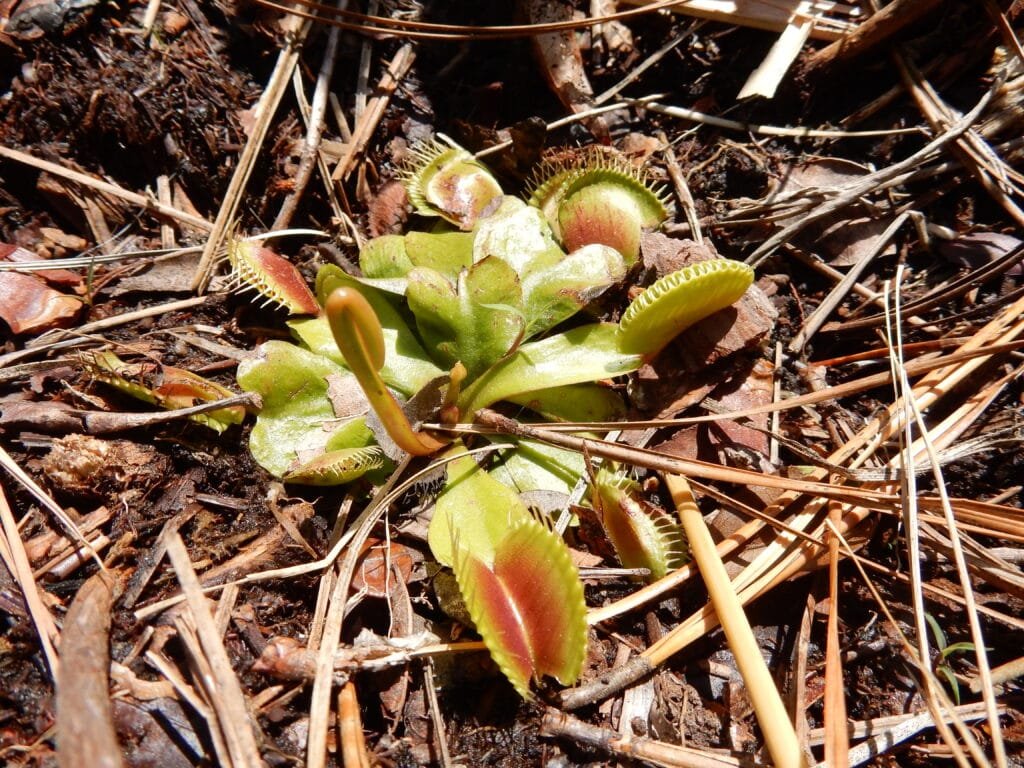
11. Venus Flytraps Grow Wild in South Carolina – The famous Venus flytrap (Dionaea muscipula) has one of the smallest natural ranges of any well-known carnivorous plant. It is native only to the coastal regions of North and South Carolina, and in South Carolina its remaining wild populations are concentrated in Horry County.
12. Loggerhead Sea Turtles Are the State Reptile – South Carolina designated the loggerhead sea turtle as its official state reptile in 1988. These massive marine turtles have unusually powerful jaws that allow them to crush hard-shelled prey such as crabs, conchs, and whelks before returning to beaches along the coast to nest.
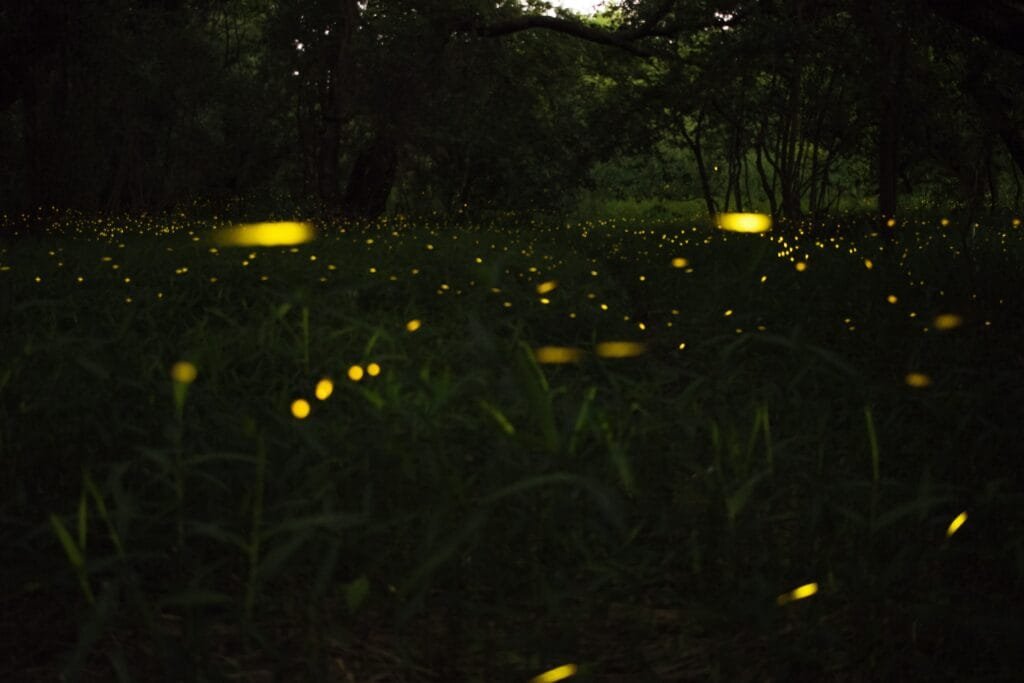
13. Thousands of Fireflies Can Flash at the Same Time – Congaree National Park is home to the synchronous firefly Photuris frontalis. During a brief period each May, large groups coordinate their flashes into repeating patterns, creating a natural light show that attracts thousands of visitors to the park.
14. Congaree Has Trees Taller Than a 15-Story Building – Congaree National Park contains one of the greatest concentrations of champion-sized trees in North America. Its forest canopy averages more than 100 feet high, while a national champion loblolly pine has been measured at approximately 170 feet tall with a trunk circumference exceeding 15 feet.
15. Lowcountry Dolphins Push Fish Onto the Shore to Catch Them – Bottlenose dolphins along South Carolina’s coast practice an unusual hunting technique called strand feeding. Groups drive fish onto exposed mud banks and briefly slide partially out of the water to capture them, a specialized behavior seen in only a limited number of dolphin populations.
16. South Carolina Has Two Separate Black Bear Populations – Black bears live in two main regions of the state: one population inhabits the mountains and upper Piedmont, while another occupies the Coastal Plain. Male bears can roam enormous territories, with individual home ranges ranging from about 18 to 160 square miles.
17. Wood Storks Made a Remarkable Comeback in the State – South Carolina recorded its first successful wood stork nesting in 1981, when only a handful of nests were present. By 2023, biologists counted nearly 4,000 nests, making the state an increasingly important breeding area for America’s only native stork species.
18. The Palmetto Is More Than Just a State Symbol – The cabbage palmetto (Sabal palmetto) is South Carolina’s official state tree and grows naturally along the coastal region. Its trunk is unusually resistant to marine wood-boring organisms called shipworms, which is one reason palmetto timber has historically been useful around waterfronts.
19. South Carolina’s Marsh Grass Can Grow Nearly Eight Feet Tall – Smooth cordgrass, commonly called Spartina, dominates many of the state’s salt marshes. The plant can tolerate salty tidal water through special adaptations and may grow almost eight feet tall, providing food and shelter for countless animals living in Lowcountry estuaries.
20. Oyster Reefs Act Like Living Coastal Defenses – South Carolina’s oyster reefs do much more than produce seafood. Living reefs filter large amounts of water, provide habitat for fish, shrimp, and crabs, and reduce shoreline erosion by absorbing wave energy, which is why conservation projects use recycled oyster shells to construct new reefs.
Cool Facts About South Carolina: Famous People
21. James Brown Was Born in South Carolina – The legendary “Godfather of Soul” was born near Barnwell in 1933. Brown became one of the most influential performers in popular music, helping shape soul, funk, and eventually hip-hop, and was inducted into the Rock & Roll Hall of Fame’s first class in 1986.
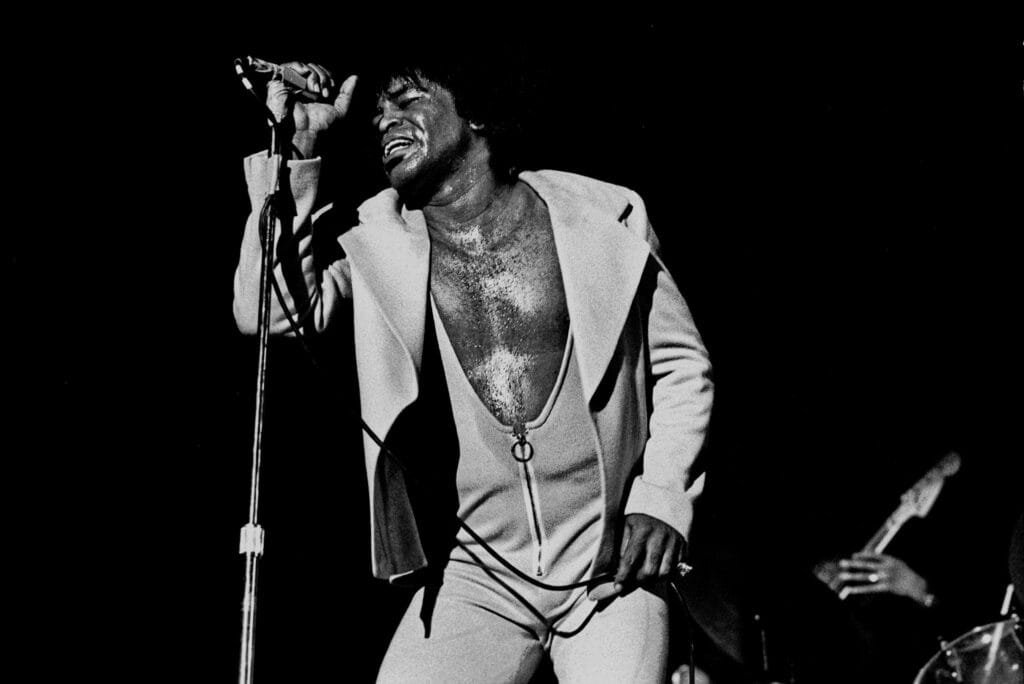
22. Dizzy Gillespie Came From the Small Town of Cheraw – Jazz trumpeter Dizzy Gillespie was born in Cheraw, South Carolina, in 1917. He became one of the pioneers of bebop, and his distinctive bent trumpet became so closely associated with him that it now appears in the logo of the Cheraw Arts Commission.
23. Althea Gibson Broke One of Tennis’s Biggest Racial Barriers – Born in Silver, South Carolina, Althea Gibson became the first Black player to compete in the U.S. National Championships in 1950. She later became the first Black player to win Wimbledon and eventually collected 11 major titles across singles and doubles
24. Joe Frazier Was the First Boxer to Defeat Muhammad Ali – “Smokin’ Joe” Frazier was born in Beaufort, South Carolina, in 1944. After winning Olympic gold in 1964, he became heavyweight champion and handed Muhammad Ali his first professional defeat in their famous 1971 “Fight of the Century.”
25. Ronald McNair Became the Second Black American in Space – Astronaut and physicist Ronald McNair was born in Lake City, South Carolina, in 1950. He earned a doctorate in physics from MIT before NASA selected him as an astronaut, and in 1984 he became the second Black American to travel into space.
27. Eartha Kitt Went From Rural South Carolina to International Stardom – Eartha Kitt was born in the tiny town of North, South Carolina, in 1927. She became an internationally known singer, dancer, and actress, recording the Christmas classic “Santa Baby” and later portraying Catwoman on the 1960s television series Batman.
28. Vanna White Grew Up in North Myrtle Beach – Wheel of Fortune star Vanna White grew up in North Myrtle Beach, South Carolina. She became the show’s regular co-host in 1982 and eventually became one of the most recognizable personalities in American game-show history.
26. Chadwick Boseman Wrote and Staged Plays While Still in High School – Before becoming Black Panther, Chadwick Boseman grew up in Anderson, South Carolina, and attended T.L. Hanna High School. After a classmate was killed, Boseman wrote a play called Crossroads and staged it at his school, beginning the storytelling career that eventually took him to Hollywood.
29. Viola Davis Became an EGOT Winner – Viola Davis was born in St. Matthews, South Carolina, in 1965. After winning Emmy, Oscar, and Tony awards for her acting, she completed the rare EGOT in 2023 by winning a Grammy for narrating the audiobook of her memoir, Finding Me.
30. Darius Rucker Found Success in Two Completely Different Genres – Charleston native Darius Rucker first became famous as the lead singer of Hootie & the Blowfish, whose Cracked Rear View became one of the best-selling albums in U.S. history. He later reinvented himself as a country singer and won a Grammy for his version of “Wagon Wheel.”
Interesting Things About South Carolina: Government and Economy
31. South Carolina Is Divided Into 46 Counties – The state has 46 counties, ranging from heavily populated Greenville and Charleston counties to much smaller rural communities. County governments handle services such as law enforcement, infrastructure, elections, emergency services, and local administration.
32. The State Legislature Has 170 Members – South Carolina’s General Assembly consists of a 124-member House of Representatives and a 46-member Senate. The legislature normally begins its annual session on the second Tuesday in January and continues until the second Thursday in May
33. State Lawmakers Help Elect South Carolina’s Judges – South Carolina has an unusual judicial selection system in which many state judges are elected by a joint vote of the General Assembly rather than directly by voters. Candidates first pass through a judicial merit-selection process before lawmakers vote.

34. South Carolina Governors Serve Four-Year Terms – The state constitution establishes a four-year term for governor. South Carolina also independently elects several other statewide officials, including the attorney general, treasurer, secretary of state, superintendent of education, and commissioner of agriculture.
35. South Carolina’s Economy Produced Nearly $379 Billion in 2025 – The state’s current-dollar gross domestic product reached approximately $378.8 billion in 2025. Its inflation-adjusted economy grew 3.1% during the year, tying Florida for the fastest annual real GDP growth among the states.
36. South Carolina Exported $38.5 Billion Worth of Goods in 2025 – International exports reached a seven-year high of $38.5 billion. Passenger vehicles alone generated about $9.8 billion in exports, giving South Carolina an 18% share of all U.S. completed passenger-vehicle export sales.
37. BMW’s Massive Spartanburg Plant Exports Cars Around the World – BMW’s Spartanburg factory employs more than 11,000 people and has produced more than 7 million vehicles since opening in 1994. In 2025 alone, the plant exported nearly 200,000 BMWs valued at approximately $9 billion.
38. South Carolina’s Ports Support Roughly One in Nine State Jobs – The South Carolina Ports system generates an estimated $87 billion in annual statewide economic activity. Port-related industries support about one in every nine jobs in South Carolina, demonstrating how important Charleston Harbor is to businesses far beyond the coast.
39. Boeing Builds 787 Dreamliners in North Charleston – Boeing South Carolina manufactures major sections of the 787 Dreamliner, performs final assembly, and delivers completed airplanes to customers around the world. The North Charleston facility is now the exclusive final-assembly location for the 787 program.
40. Agribusiness Contributes More Than $51 Billion to the Economy – Farming is only one part of South Carolina’s enormous agribusiness sector, which also includes forestry, food processing, packaging, and related industries. The sector generates more than $51.8 billion in annual economic impact and accounts for more than 259,000 direct jobs statewide.
Important Facts About South Carolina: History
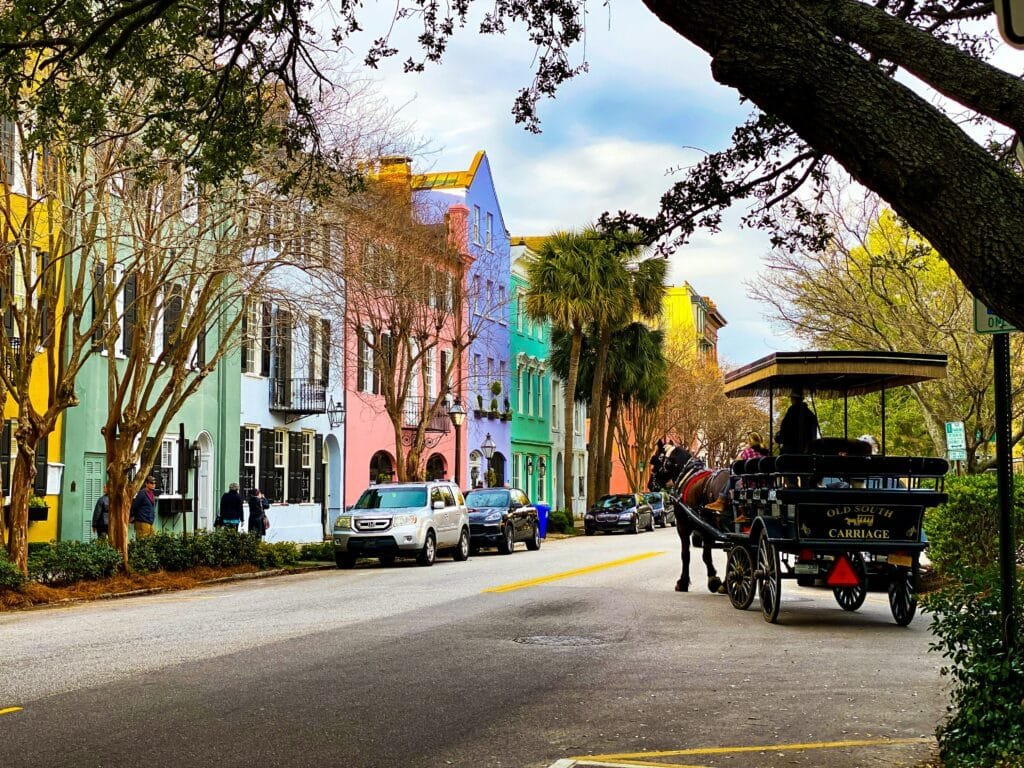
41. Charleston Began as a Colonial Settlement in 1670 – English settlers established Charles Town on the Ashley River in 1670 before later moving the community to the peninsula where modern Charleston stands. It became the political, economic, and cultural center of colonial South Carolina and one of British America’s most important ports.
42. The Stono Rebellion Was the Largest Slave Revolt in Britain’s Mainland Colonies – On September 9, 1739, a group of enslaved people near Charleston launched an armed uprising and began marching toward Spanish Florida, where freedom had been promised to escapees. Their numbers grew during the march, making Stono the largest organized violent resistance to slavery in British colonial North America.
43. America’s First Museum Was Founded in Charleston in 1773 – Members of the Charleston Library Society established a museum on January 12, 1773, initially to collect and study the natural history of South Carolina. The institution developed into today’s Charleston Museum, which is widely regarded as the oldest museum in the United States.
44. Palmetto Logs Helped Defeat a British Fleet – In June 1776, South Carolina defenders fought from an unfinished fort on Sullivan’s Island constructed largely from palmetto logs and sand. The soft logs absorbed much of the impact from British cannon fire, and after a nine-hour battle the Royal Navy withdrew. The palmetto later became one of South Carolina’s defining state symbols.
45. Four South Carolinians Signed the Declaration of Independence – South Carolina’s signers were Edward Rutledge, Thomas Heyward Jr., Thomas Lynch Jr., and Arthur Middleton. Thomas Lynch Jr. was only 26 when the Declaration was adopted, making him one of its youngest signers.
46. The Battle of Cowpens Helped Turn the Revolutionary War in the South – On January 17, 1781, American forces led by Daniel Morgan defeated British troops commanded by Banastre Tarleton near present-day Chesnee. The victory at Cowpens became a major turning point in the Southern Campaign and contributed to the sequence of events that ended with the British surrender at Yorktown.
47. South Carolina Was the Eighth State to Ratify the U.S. Constitution – South Carolina approved the Constitution in May 1788, becoming the eighth state to ratify the new framework of government. New Hampshire followed the next month as the ninth state, providing the number required for the Constitution to take effect.
48. The American Civil War Began in Charleston Harbor – South Carolina became the first state to leave the Union in 1860. On April 12, 1861, Confederate artillery opened fire on the U.S. garrison at Fort Sumter in Charleston Harbor, beginning the military conflict that became the American Civil War.
49. Robert Smalls Sailed Himself and His Family to Freedom – Beaufort-born Robert Smalls was an enslaved pilot aboard the Confederate transport ship Planter. On May 13, 1862, Smalls and other enslaved crew members took control of the vessel, picked up their families, navigated past Confederate defenses, and delivered the ship to the U.S. Navy. Smalls later served in the South Carolina legislature and the U.S. Congress.
50. Fort Jackson Has Trained Soldiers for America’s Wars for More Than a Century – Established near Columbia in 1917 during World War I, Fort Jackson became a major Army training center during World War II, preparing tens of thousands of soldiers for service in Europe and the Pacific. It later trained troops for Korea, Vietnam, Desert Storm, Iraq, and Afghanistan, and today remains the Army’s largest initial-entry training center.